Why we remember shared experiences so much more
There are workdays that, after a few weeks, become indistinguishable from one another. Meetings, emails, calls, and everyday activities often end up blending together in memory.
Then there are experiences that stay with us for years.
A challenge faced as a team in the heart of Rome.
A treasure hunt through alleys and monuments.
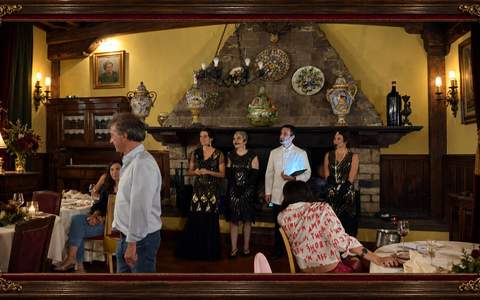
A murder mystery dinner where everyone becomes an investigator.
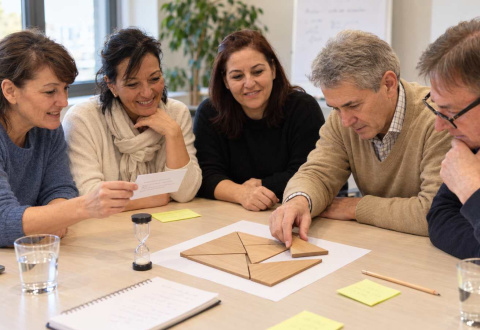
A cooking team building where colleagues who barely knew each other find themselves preparing a traditional dish together.
Why do we remember these moments far more than a normal workday?
The answer comes from cognitive psychology and neuroscience: our brains assign greater value to memories linked to emotions, relationships, and shared experiences.
And this is precisely where Team Building becomes an extraordinary tool for business growth.
Memory doesn’t record everything the same way
Every day we receive thousands of pieces of information.
But the brain doesn’t keep everything.
If it did, it would be impossible to tell what’s important from what isn’t.
That’s why it selects memories based on a few key elements:
-
emotional involvement;
-
novelty;
-
surprise;
-
social interaction;
-
personal meaning.
Team Building activities bring all these factors together, creating experiences that stay in memory far longer than ordinary activities.
A day nobody will forget
The group meets in front of the Pantheon.
The teams receive a tablet.
The first mission seems simple.
Spot a hidden detail on the façade.
Someone looks up.
Another checks the map.
A colleague suggests a solution.
Ideas start to circulate.
Laughter replaces shyness.
Time passes without anyone noticing.
At the end of the day, not everyone will remember the final score.
But everyone will remember that moment when an impossible solution came thanks to the contribution of the entire team.
That’s exactly what makes shared experiences memorable.
The role of emotions in memory
Emotions and memories are closely connected
Neuroscience shows that events experienced with a strong emotional component are consolidated more effectively in long-term memory.
During a Team Building, positive emotions come into play such as:
Enthusiasm
Every new challenge increases engagement.
Curiosity
Discovering unknown places and stories keeps attention high.
Fun
A smile makes learning easier and strengthens bonds.
Satisfaction
Reaching a goal together creates a positive shared memory.
Pride
Overcoming a difficult test boosts confidence in the group.
Why shared experiences strengthen the team
The value of collaboration
When more people face a common challenge, a collective memory is created.
Each participant keeps their own perspective.
But the memory becomes the property of the entire group.
That’s why, even after many years, a simple photo or a sentence is enough to bring back emotions experienced together.
Companies that invest in shared experiences build a stronger organizational culture.
Rome: a city that amplifies emotions
Landmarks become part of the experience
The Capital offers perfect settings for creating lasting memories.
Colosseum
A universal symbol that turns every activity into something extraordinary.
Pantheon
Its architecture continues to amaze after nearly two thousand years.
Piazza Navona
Its fountains and its history become part of the storytelling.
Trevi Fountain
A place that brings together tradition, emotion, and wishes.
Trastevere
Its alleys make every mission even more engaging.
Castel Sant’Angelo
Perfect for investigative activities and historical stories.
Isola Tiberina
A place full of charm that invites discovery.
Why Team Building really works
Skills that last over time
Memorable experiences produce real benefits even after the event ends.
Communication
People learn to share information more effectively.
Leadership
Skills often unknown until then emerge.
Problem Solving
Every challenge requires new strategies.
Trust
Collaborating in a positive context strengthens professional relationships.
Creativity
The brain links new ideas with pleasant emotions.
The power of storytelling
Every experience tells a story.
A mission.
A mystery to solve.
A team that overcomes obstacles.
Storytelling allows the brain to organize memories like a narrative.
And that’s exactly why Team Building experiences are far more memorable than a simple meeting.
From individual memory to collective recall
Companies are made of people.
People are made of memories.
Every shared experience helps build a stronger company culture.
A Team Building isn’t only a recreational activity.
It’s an investment in the organization’s collective memory.
Photos will end up in a folder.
Rankings will be forgotten.
Awards will be put away in a drawer.
But the emotions experienced together will continue to be talked about for years.
And that’s the greatest value of a shared experience.