




HANDS IN THE DOUGH
Cooking class and team building in Rome
Prepare fresh pasta, build your brigade, and bring the results of teamwork to the table
At the beginning, there is only flour, eggs, water, and a worktable. Then come the first decisions: who will prepare the dough, who will check the quantities, who will watch the chef, who will organize the tools, and who will manage to keep the group together as time begins to run out.
Pasta Together – Hands in the Dough is a team-building cooking class in Rome devoted to Italian cuisine and, in particular, the preparation of handmade fresh pasta.
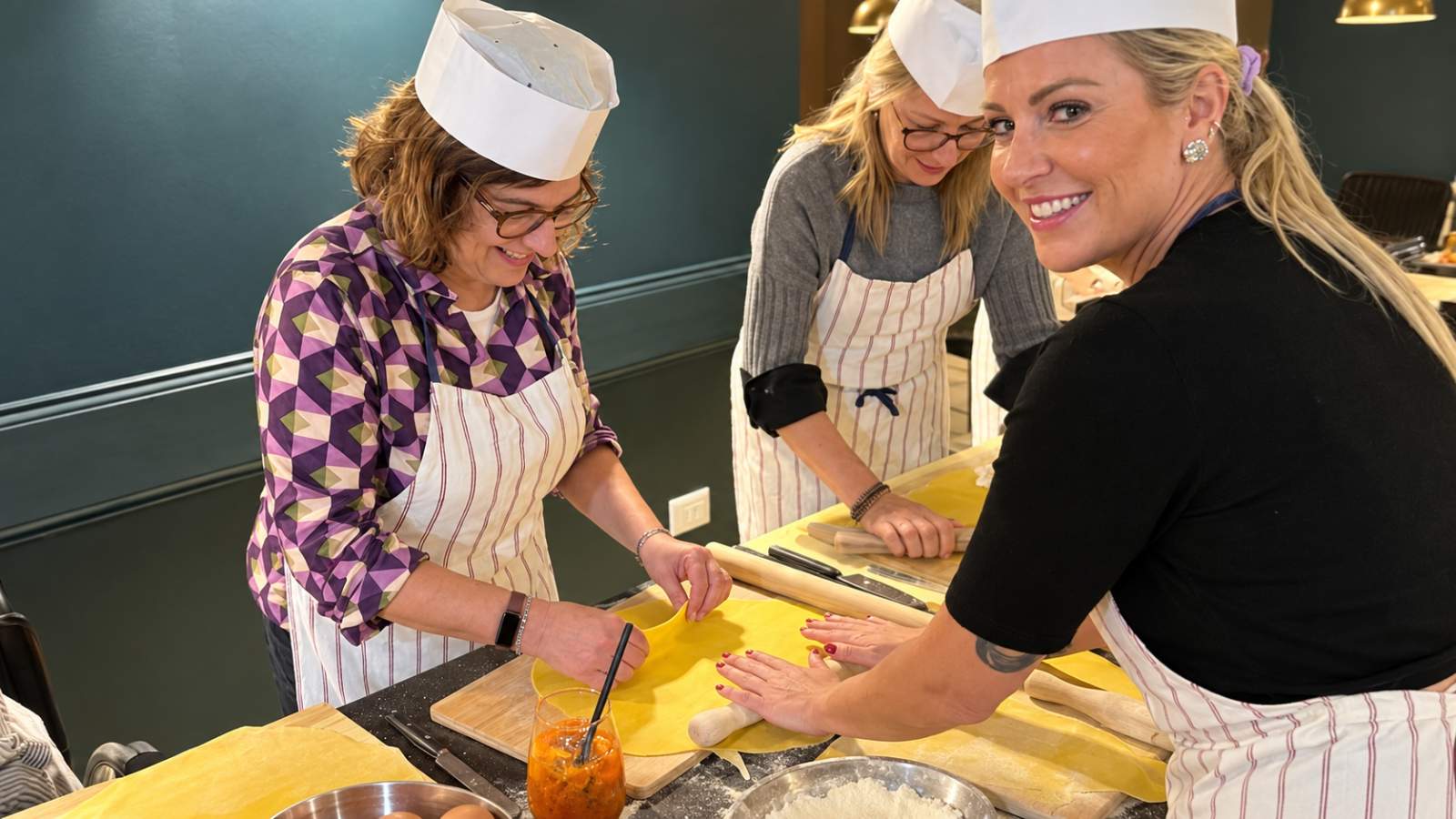
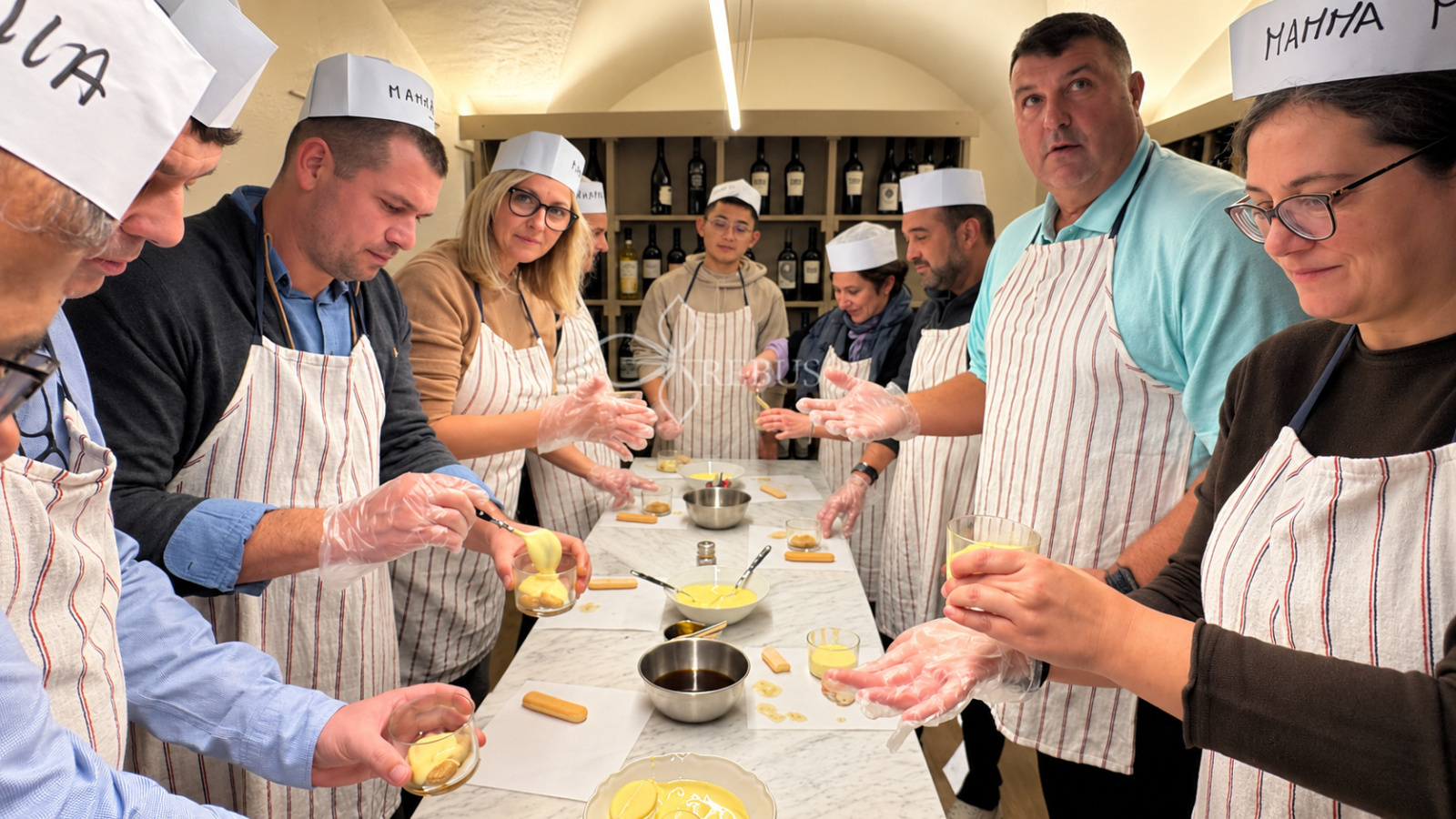
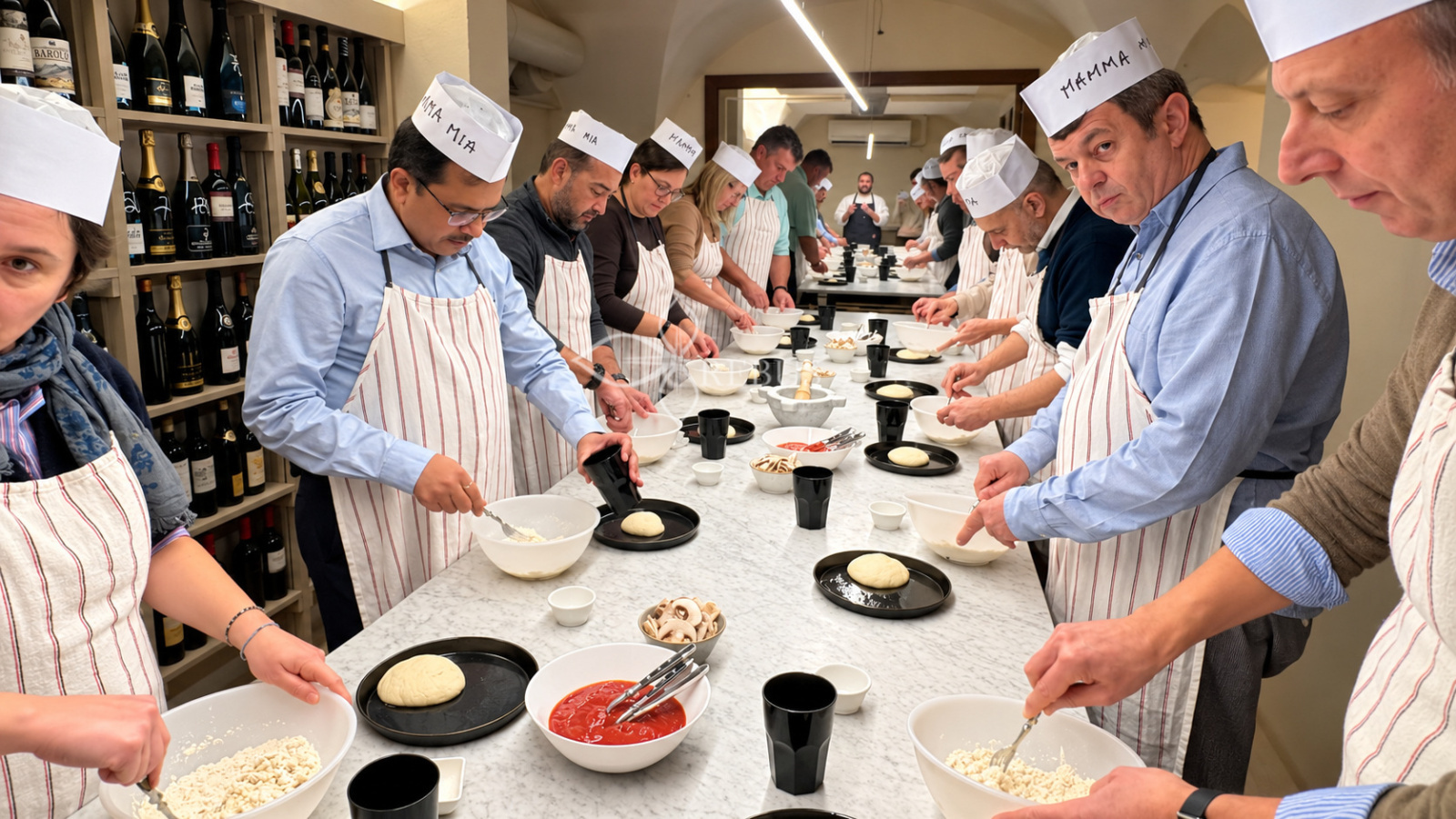
Guided by a professional chef, participants step into the kitchen, split into brigades, and work together through every stage of preparation. They don't just watch a demonstration: they knead, experiment, exchange ideas, and transform simple ingredients into a dish to share.
Each team needs to find its own rhythm. Some groups immediately assign roles and responsibilities; others prefer to observe, try things out, and adjust their approach as they work. Some focus on precision, others on creativity, while some manage to surprise everyone with an unexpected solution.
The final result depends on more than just manual skill. Communication, organization, listening, and attention to detail are all essential. Just as in the workplace, success comes from balancing different skills.
And when the pasta finally reaches the table, every dish tells a story about the team that prepared it.
Location: Rome, with the venue selected according to the number of participants.
Duration: to be agreed based on the menu and event program.
Contact us to receive a personalized proposal with menu, venue, available options, and a tailored quote.
HOW THE COOKING CLASS WORKS
Welcome and forming the brigades
The experience begins with an introduction to the chef, the menu, and the culinary mission.
The group is divided into brigades. Each team receives its own workstation, ingredients, and tools. Before starting, participants decide how to organize themselves: they can assign specific roles or take turns at the different stages of preparation.
The chef's demonstration
The chef introduces the ingredients and demonstrates the main steps: quantities, dough consistency, kneading, resting, rolling, and making the selected pasta shape.
This is an important moment, as the teams need to observe, ask questions, and quickly turn the instructions they receive into a shared way of working.
Hands-on preparation
The actual preparation begins.
The brigades knead the dough, check its consistency, correct any mistakes, and learn to coordinate their movements and timing. Differences emerge straight away: some people follow every instruction precisely, others prefer to experiment, and still others manage to maintain order and focus at their workstation.
The kitchen table thus becomes a small laboratory for exploring group dynamics.
A creative touch
Depending on the menu and chosen format, teams can personalize the pasta shape, filling, sauce, or final presentation.
This is the moment when technique and imagination need to find a balance. An original idea is useful only if the group can bring it to life together.
The final meal
At the end of the preparation, the dishes are presented, tasted, and shared.
In the challenge version, the chef can comment on the results and score the brigades. In the collaborative version, all the dishes become part of a shared meal.
The finale is more than just a tasting: it is the moment when the group recognizes the tangible result of its work.
WHY CHOOSE HANDS IN THE DOUGH
Pasta Together is an accessible, convivial experience that can engage people of different ages, roles, and personalities.
The kitchen creates an informal environment where professional distances fade. Managers, colleagues, and new team members share the same table, face the same minor setbacks, and contribute to the same result.
Choosing this cooking class means:
- enjoying an authentic Italian experience;
- actively engaging all participants;
- strengthening collaboration in a pleasant setting;
- valuing different skills and personalities;
- encouraging more spontaneous connections;
- sharing a tangible result;
- ending the activity with a convivial tasting.
It is particularly well suited to international groups looking to discover Italian culture through an immediate, universal language: food.
What makes this experience unique
What sets Pasta Together apart is the journey from ingredients to finished dish.
The team starts with simple ingredients and must gradually build a method, coordination, and trust. Each stage depends on the one before it: information that isn't shared, a forgotten step, or an unclear division of tasks can affect the final result.
Fresh pasta also makes it impossible to work entirely alone. The dough must be checked, the pasta sheet requires attention, and the different preparations need to be ready at the same time.
The final dish therefore becomes a visible representation of the team's work.
The point is not simply to decide who made the best pasta. The real goal is to understand how people with different strengths can find a common rhythm.
COLLABORATION OR ITALIAN PASTA CHALLENGE
Pasta Together turns Italian culinary tradition into a hands-on collaborative experience.
The chef introduces the basic techniques, demonstrates how to work the dough, and guides the brigades through the preparation. However, participants must organize their own workspace, assign tasks, and follow the schedule and steps.
Depending on the chosen format, the experience can be more collaborative or become a true Italian Pasta Challenge, with a final score based on several factors:
- brigade organization;
- dough quality;
- technical execution;
- dish presentation;
- creativity;
- collaboration;
- time management.
You don't need to be an experienced cook. Those with more experience can support the group, but don't necessarily have to take charge. Observation, precision, organization, and the ability to encourage others can also be decisive strengths.
WHAT YOU'LL DISCOVER
During Pasta Together, you'll discover that:
- a simple recipe can require complex organization;
- careful listening saves time;
- precision and creativity need to go hand in hand;
- asking for help is a skill, not a weakness;
- mistakes are easier to fix when they're shared;
- people with different abilities can contribute to the same result;
- sharing a meal can strengthen professional relationships.
You'll also discover techniques, skills, and interesting facts about making Italian fresh pasta, learning how to recognize the dough's consistency, roll out the pasta sheet, and make the shape specified on the menu.
WHO THIS IS IDEAL FOR
Pasta Together is particularly well suited to:
- Italian and international companies;
- incentive groups visiting Rome;
- newly formed teams;
- onboarding programs;
- meetings between different offices or departments;
- informal corporate events;
- activities for clients and partners;
- teams looking to improve communication and collaboration;
- groups who prefer an accessible indoor activity;
- companies looking for an authentic Italian experience.
The format can be adapted to the number of participants, the available space, and the desired level of competition.
SKILLS AND GROUP DYNAMICS
Skills developed
The activity encourages the development and observation of:
- collaboration;
- communication;
- active listening;
- organization;
- time management;
- shared leadership;
- problem-solving;
- creativity;
- precision;
- adaptability;
- role allocation;
- the ability to work toward goals;
- handling unexpected challenges;
- mutual trust.
An expert's perspective: the kitchen as an organizational laboratory
A kitchen brigade is a small organizational system.
It has a clear goal, limited resources, roles to assign, and a sequence of tasks to follow. Time pressure makes certain behaviors visible that might otherwise remain hidden in a traditional activity.
During the cooking class, it's possible to observe:
- how decisions are made;
- who shares information spontaneously;
- who takes the lead;
- how the group responds to a mistake;
- whether roles are shared or centralized;
- how much space is given to other people's ideas;
- how time and priorities are managed.
This is why the kitchen can become an effective tool for experiential learning. Feedback is immediate: if the process is working, the brigade works smoothly; if something isn't working, the group needs to notice and adjust its approach.
On request, the experience can include a brief debriefing on the group dynamics observed during the preparation.
CUSTOMIZATION OPTIONS
Pasta Together can be designed as a mainly convivial experience or with a more dynamic, competitive structure.
Possible customizations include:
- choice of pasta shape;
- making filled pasta;
- a menu inspired by Roman or regional traditions;
- a mystery box of ingredients to use;
- a prize for the best brigade;
- technical assessment by the chef;
- customized aprons or materials;
- a brief awards ceremony at the end;
- a debriefing on group dynamics;
- facilitation in English for international groups.
The menu and arrangements are defined according to the venue, duration, and characteristics of the group.
FAQ AND USEFUL INFORMATION
Do I need to know how to cook?
No. The activity is suitable even for people who have never made fresh pasta. The chef demonstrates every step and guides the teams as they work.
What do participants prepare?
The menu is agreed upon before the event. The experience focuses on fresh pasta and can include different shapes, fillings, sauces, or other Italian dishes.
Is the activity competitive?
It can be. You can organize a challenge between brigades with a final score or choose a completely collaborative, convivial format.
Is it suitable for international groups?
Yes. Italian cuisine is particularly popular with international incentive groups. English-language facilitation and any language requirements must be agreed during the planning stage.
Can allergies or dietary requirements be accommodated?
Dietary requirements must be communicated in advance. Vegetarian, vegan, or other alternatives can be discussed with the chef and venue. For severe allergies or coeliac disease, it is necessary to check procedures, facilities, and the possibility of cross-contamination in advance.
Where does the cooking class take place?
For groups of fewer than 45 participants, the cooking class takes place at our cooking school in Rome's historic center. For larger groups, a venue is available in the Santa Maria Maggiore area. In the Trastevere / Portuense area, we can organize the experience for groups of up to 250 participants.
How long does the activity last?
The duration depends on the menu and the number of participants and is agreed as part of the corporate program.
How is the venue selected?
The venue is chosen according to the number of participants, the menu, the space required, and availability. Our school in the historic center accommodates groups of fewer than 45 participants; the other venues can host larger groups, with the Trastevere / Portuense venue available for up to 250 people.
OUR VENUES IN ROME
WHERE WE GET HANDS-ON WITH PASTA
The venue is selected according to the number of participants and the event setup. Three options are available in different areas of Rome.
Historic center
Fewer than 45 participants
Our cooking school in Rome's historic center, where you can make fresh pasta and enjoy the brigade experience.
Santa Maria Maggiore
Larger groups
A venue in the Santa Maria Maggiore area for cooking classes with larger groups.
Trastevere / Portuense
Up to 250 participants
A venue in the Trastevere / Portuense area for welcoming large groups and organizing activities for up to 250 people.
Customizable venue and program. The venue, menu, and brigade arrangements are agreed according to the group's needs, the space required, and availability.

