

FREDERICK II
Follow the traces of the Stupor Mundi through a city born from the encounter of cultures, dynasties and traditions
An ancient seal has disappeared.
According to the game's story, it belonged to the court of Frederick II of Swabia, the emperor remembered by history as the Stupor Mundi: wonder of the world. Before it was stolen, the seal was divided into fragments and hidden among the palaces, streets and markets of Palermo's historic center.
Finding it requires more than knowing history. You must observe the architecture, decipher symbols, question the city and understand the messages left along the route.
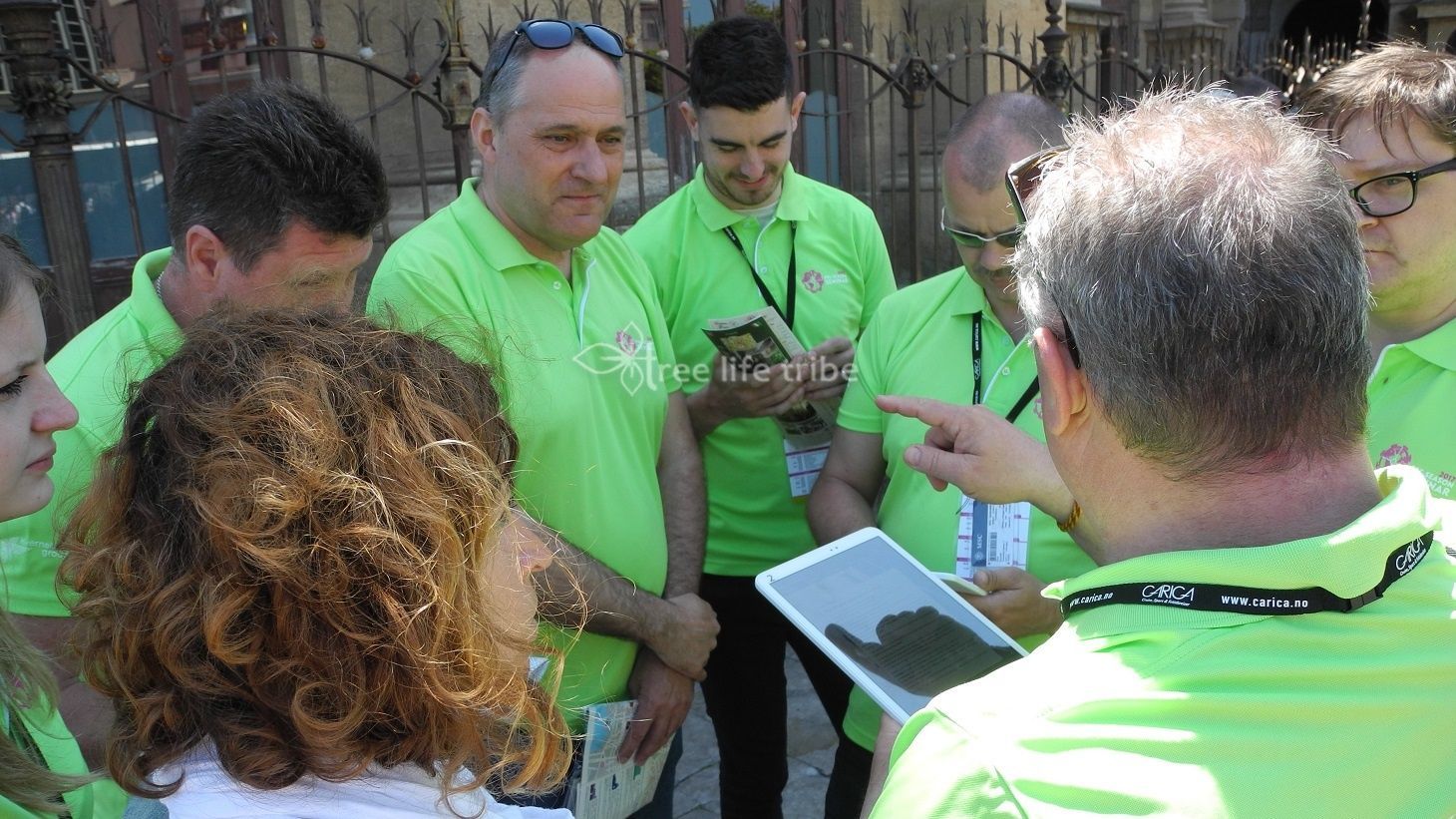
Equipped with a tablet, teams cross the historic center following an interactive map. From the Cathedral to the alleyways of Ballarò, passing Palazzo Asmundo, Palazzo Conte Federico and the landmarks of Arab-Norman Palermo, each stop helps you win a new part of the mission.
Riddles, photographs, creative challenges, team competitions and hidden clues lead participants to the final question.
Which team will manage to reassemble the Seal of the Stupor Mundi?
WHY CHOOSE FREDERICK II
The treasure hunt dedicated to Frederick II offers an enjoyable way to experience Palermo, combining cultural discovery, collaboration and friendly competition.
There's no need to rush from one place to another. To achieve a good result, it's more important to observe, compare information and make good use of the skills of the team members.
The activity is particularly effective because it:
- turns a city visit into a participatory experience;
- lets you discover Palermo without following a traditional lecture;
- engages people with different interests and skills;
- combines history, architecture, traditions and food culture;
- gives teams genuine strategic freedom;
- can include a guide, an actor and street food stops;
- is also suitable for international groups;
- keeps competition enjoyable and accessible.
The tablet guides participants, but does not replace observation. To solve many challenges, you have to look up, read the city and discuss things with your teammates.
What makes this route unique
The format's identity stems from the encounter between the figure of Frederick II and Palermo's multicultural character.
Arab-Norman and Swabian history do not coincide perfectly: they belong to different historical periods. Frederick II, however, inherited the Kingdom of Sicily and grew up in a Palermo where languages, traditions and knowledge from the Latin, Greek, Arab and Jewish worlds continued to coexist.
The route uses this rich historical layering as a game mechanic. Each stop symbolically represents one of the qualities associated with Frederick's court:
- knowledge, to correctly interpret the clues;
- observation, to recognize architectural details;
- diplomacy, to engage with people and teams;
- strategy, to choose the most effective route;
- curiosity, to look beyond appearances;
- collaboration, to piece together the final solution.
THE MISSION AND HOW TO PLAY
A mission at the court of Frederick II
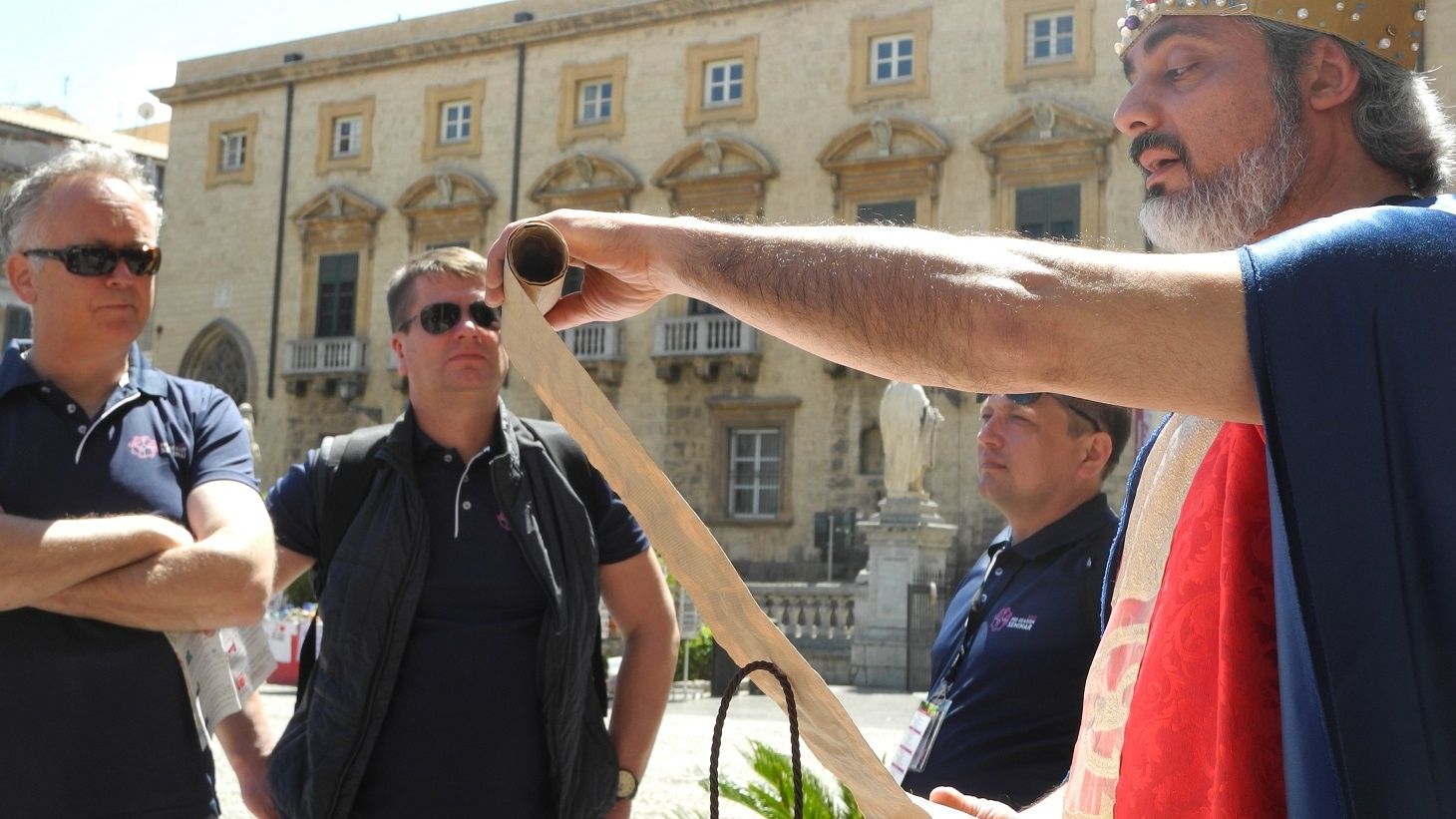
The game begins with a message symbolically attributed to the emperor:
The group is divided into balanced teams, and each team receives a tablet containing the app, the map and the first instructions.
From that moment on, each team can devise its own strategy. Some groups start at the Cathedral, immediately following the emperor's trail; others head to Ballarò, convinced that the market holds a hidden message; still others prefer to visit the historic palaces, where coats of arms, towers and decorations might reveal the decisive combination.
There isn't necessarily a single order in which to tackle the challenges. Navigation, time management and the choice of priorities can change the standings.
A cultural game, not a history exam
No prior knowledge is required to answer the questions.
Each answer can be found by observing a monument, analyzing an image, reading a short passage in the app or piecing together information spread across multiple challenges.
Instead of simply asking for a date, the game might ask you to:
- recognize a coat of arms;
- compare two architectural details;
- identify a symbol on a façade;
- reconstruct a dynastic succession;
- decode a phrase using a cipher wheel;
- match a monument with the correct cultural influence;
- complete a map;
- interpret a message attributed to Frederick's court.
The historical content remains rigorous, but is transformed into an experience.
How the challenge works
Each team:
- receives a tablet with our app;
- uses the map to navigate Palermo's historic center;
- chooses the order in which to tackle the available stops;
- solves riddles and observation questions;
- takes photographs and completes creative challenges;
- communicates with the Game Master;
- can interact with the other groups;
- receives bonuses, messages and clues;
- takes on challenges with an actor, if included;
- wins the fragments needed to solve the final question.
Some challenges award points, while others let teams recover parts of the seal or words essential to the finale. Teams must therefore strike a balance between the number of missions completed and the importance of the clues collected.
Strategy and team formation
Participants are divided into balanced teams based on the group's overall size.
From the very first message, each team interprets the mission differently. Some immediately appoint someone to manage the map and distribute assignments; others stay together and discuss every answer. Some prioritize cultural challenges, others look for hidden bonuses in the market, while others prefer to head straight to the historic palaces.
The fastest team won't necessarily win. Overlooking a symbol, failing to share a discovery or using a hint too soon can compromise the final solution.
WHAT YOU'LL DISCOVER
- Why Frederick II was called the Stupor Mundi.
- The emperor's connection with Palermo and its Cathedral.
- How Arab, Byzantine, Norman and Latin cultures contributed to the city's identity.
- The architecture and hidden symbols along the streets of the historic center.
- The lively atmosphere of the Ballarò market.
- The history of Palazzo Asmundo and the ancient tower of Palazzo Conte Federico.
- How observation, listening and strategy affect a team's results.
Arab-Norman Palermo and the legacy of Frederick II
The route's cultural value stems from medieval Palermo's extraordinary ability to welcome and reinterpret different cultural languages.
During the Norman period, Latin, Byzantine and Islamic craftspeople and traditions contributed to the construction of buildings in which architectural, decorative and symbolic elements from different worlds found a new balance. This cultural dialogue underpins the city's Arab-Norman identity.
Frederick II belonged to the subsequent Swabian dynasty, but inherited this cosmopolitan environment. Raised in Palermo, he developed a court known for its interest in law, science, poetry, philosophy, languages and the cultures of the Mediterranean.
The treasure hunt therefore tells the story of a historical transition: from the great Norman era to the Swabian court of the Stupor Mundi. It does not present the two periods as identical, but invites participants to recognize continuities, changes and influences.
Photographs that tell the story of the experience
Along the route, participants are given photography missions inspired by Palermo's history and daily life.
Teams may be invited to:
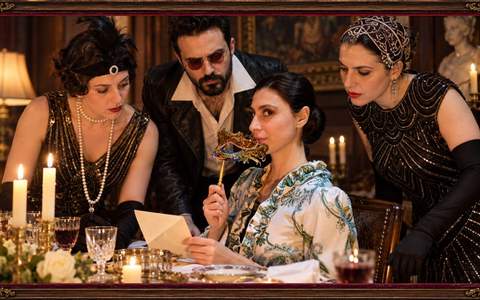
- symbolically recreate a scene from court life;
- play ambassadors sent by the emperor;
- depict the encounter between different cultures;
- find an unusual angle of the Cathedral;
- photograph the colors and ingredients of the market;
- politely and respectfully involve a local person;
- take the most creative photograph dedicated to the Stupor Mundi.
The photographs contribute to the standings and become a shared memento of the event.
IDEAL FOR WHICH COMPANIES
The Frederick II treasure hunt is especially suitable for:
- companies seeking a relaxed, cultural team-building activity;
- international groups interested in discovering Palermo;
- conferences and incentive events held in the Sicilian capital;
- teams with different ages and levels of knowledge;
- companies looking to encourage socializing and collaboration;
- groups that prefer a competition without too much pressure;
- organizations interested in culture, art and food;
- companies that want to include a guide, actor or tastings;
- groups looking for a customizable and accessible activity.
The difficulty, route length and level of competition can be adapted to participants' needs.
SKILLS DEVELOPED
Communication
The information gathered must be shared clearly. A detail noticed by just one person can prove decisive for the whole team.
Navigation
Teams use the digital map to plan their route and reach the stops as efficiently as possible.
Problem-solving
Riddles and challenges require participants to connect historical facts, images, symbols and observations of their surroundings.
Time management
Each team has to decide which missions to tackle, how long to spend on an answer and when to ask for a clue.
Collaboration
The result depends on the team's ability to assign roles and involve people with different skills.
Strategic thinking
Not all stops are worth the same number of points. Participants must decide whether to focus on bonuses, more complex challenges or the clues needed for the finale.
Creativity
The photography missions encourage participants to interpret history with a light touch, imagination and team spirit.
Intercultural curiosity
The route stimulates interest in the traditions, religions and languages that helped shape Palermo's identity.
ACTORS, STREET FOOD AND THE FINALE
An actor playing Frederick II
On request, an actor playing Frederick II can appear during the route or wait for the teams at the end of the mission. The meeting turns the awards ceremony into a short theatrical finale: only those who have recovered the correct information will be able to present themselves before the emperor and answer his final question.
Palermo street food
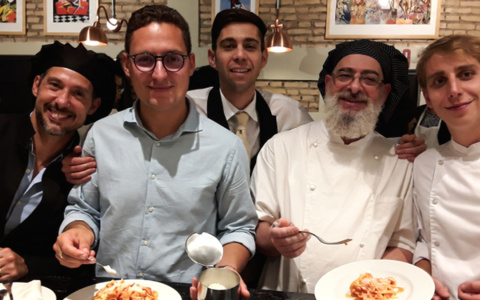
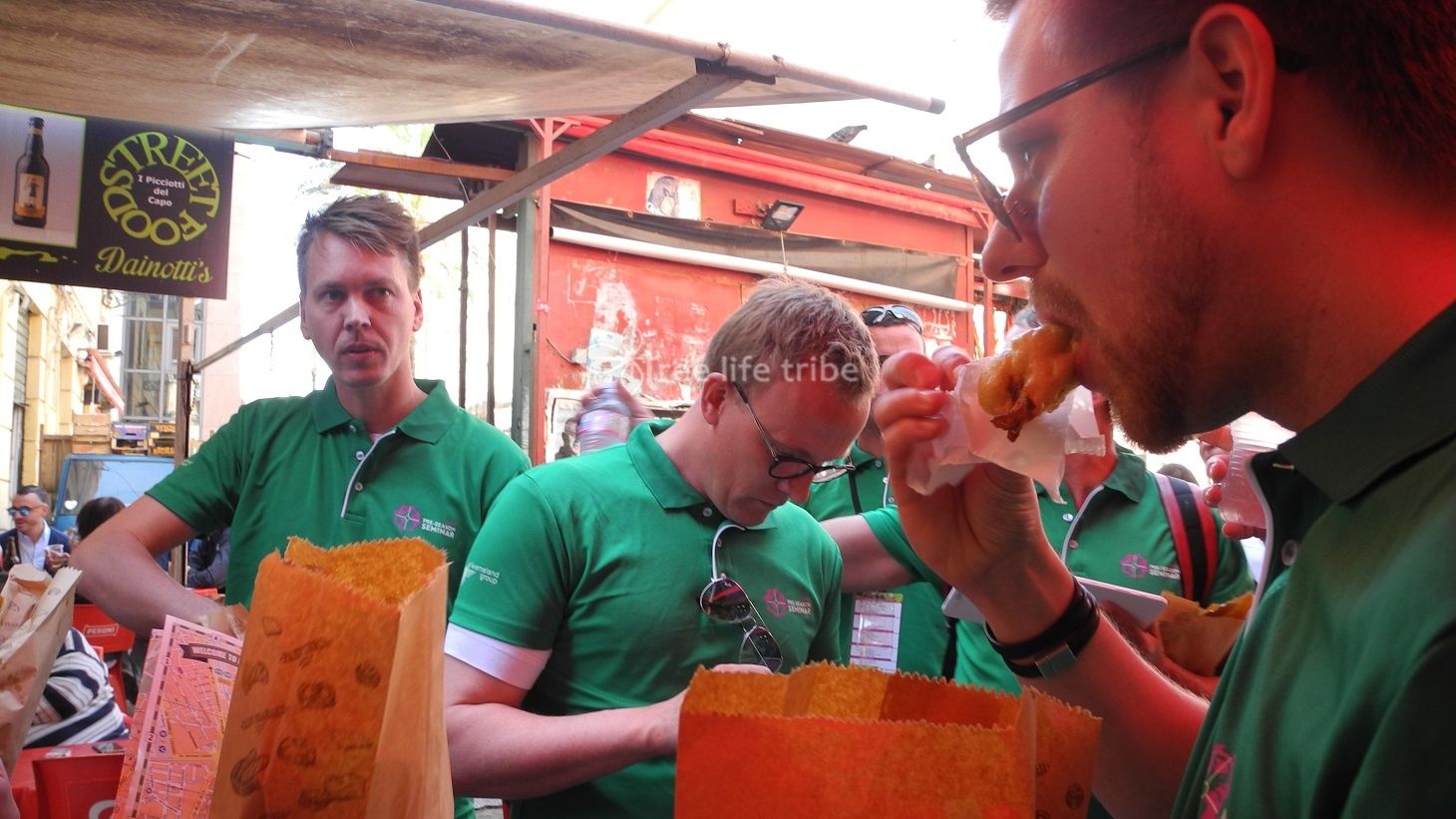
The route passes through an area famous for its food culture. On request, the game can include one or more street food stops.
Panelle, crocchè, sfincione, arancine and other specialties can make for an enjoyable break or a sensory challenge. The food component must be agreed upon in advance, taking allergies, intolerances and dietary preferences into account.
Street food doesn't interrupt the mission: it becomes part of it, telling the story of Palermo's connection with the market and conviviality.
The finale before the Stupor Mundi
As time is about to run out, the teams receive the final message.
The fragments collected must be arranged and linked to the information gathered at different points around the city. Only the correct sequence allows teams to reconstruct the seal and answer the final question.
On request, Frederick II himself can be there to welcome the participants.
The emperor listens to the answers, checks the seal and gives the finalists one last challenge. The winning team won't necessarily be the one that ran the most, but the one that understood Palermo, managed its time and turned individual skills into a shared achievement.
The finale can be followed by an awards ceremony, aperitif, lunch or dinner.
FAQ
Do you need to know about the history of Frederick II?
No. All the necessary information is available in the app, in the clues and at the places visited. Curiosity and observation skills are more important than historical knowledge.
Does the treasure hunt include a guide?
The route can be completed without a guide, using tablets and the app. On request, a licensed guide can be added to provide more historical and artistic context.
Do you go inside monuments and palaces?
Visits inside are optional and must be arranged in advance. They depend on the chosen setup, opening hours, availability and any admission tickets required.
Is the activity suitable for international groups?
Yes. The content can be prepared in multiple languages, and teams can be organized according to the group's composition.
Can we meet an actor playing Frederick II?
Yes. Frederick II's appearance can be added during the route or at the finale, subject to availability and agreement on the format.
Can we add a tasting?
Yes. A street food stop, aperitif or food experience can be arranged. Please let us know about allergies and dietary requirements in advance.
EXPLORE PALERMO'S HISTORIC CENTER
ROUTE AND POINTS OF INTEREST
The possible itinerary takes in one of the most fascinating parts of the historic center.
-
Palermo Cathedral
The Cathedral is the narrative heart of the mission. The tomb of Frederick II is located here, made of red porphyry and situated in the area of the royal tombs alongside those of other key figures in the history of the Kingdom of Sicily.
Its architecture tells the story of the city's transformations over the centuries. Norman, Gothic, Renaissance, Baroque and Neoclassical elements coexist in the same complex, making the Cathedral a true stone archive.
The challenges may focus on the towers, portals, exterior decorations and symbols associated with imperial power. Any visit to the monument area and royal tombs must be arranged according to opening hours, tickets and the setup chosen for the event.
-
Palazzo Asmundo
Overlooking the Cathedral, Palazzo Asmundo offers a privileged vantage point over monumental Palermo.
Its rooms, decorations and collections tell the story of a period after Frederick II's, but help us understand how the center of the city's power changed over the centuries. In the game, it can become the home of a guardian, a symbolic archive or the place where a document needed for the mission can be found.
Any challenge inside the building is subject to the venue's availability and must be scheduled in advance.
-
Palazzo Conte Federico
Palazzo Conte Federico preserves one of the route's most interesting landmarks: its oldest section includes a 12th-century Arab-Norman tower, built along the city's ancient walls.
Coats of arms, mullioned windows and architectural layers can become subjects for observation and keys to deciphering a message. The palace is particularly well suited to representing the transition between medieval and aristocratic Palermo.
Here too, visits to the interiors are only included in the specific packages that expressly provide for them.
-
Ballarò
From the architecture of power, the route moves to the more popular side of the city.
Ballarò is a lively, noisy and colorful market, where goods, aromas, voices and traditions create a completely different experience. Here, the skills required aren't just historical: you have to observe quickly, recognize ingredients, spot a detail and sometimes interact with local people.
The market lets teams connect with everyday, spontaneous and deeply Mediterranean Palermo.
Other possible points of interest
Depending on the duration and route selected, the treasure hunt can include or pass by:
-
Palazzo dei Normanni
-
Palatine Chapel
-
Porta Nuova
-
San Giovanni degli Eremiti
-
Via Vittorio Emanuele, the ancient Cassaro
-
Quattro Canti
-
Piazza Pretoria
-
Fontana Pretoria
-
Church of San Cataldo
-
Church of the Martorana
-
Casa Professa
-
Piazza Bologni
Customizable route. The actual points of interest are finalized during the planning stage, taking into account the starting point, the finale, the time available and any requested visits inside.