





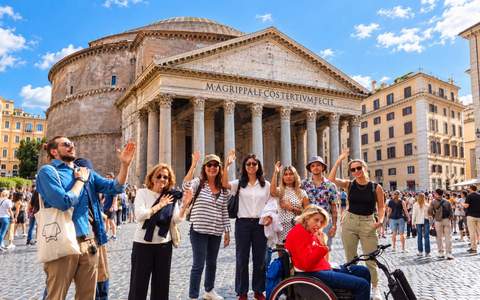


















The Dolce Vita with the Apettes: Rome becomes a three-wheel Team Building adventure
There is a Rome you visit with a guide. A Rome you cross on foot, with a camera in hand. And then there is a completely different Rome: the one you discover as a team, aboard a distinctive Italian apetta, chasing clues, choosing strategies, and turning every corner of the city into a possible challenge.
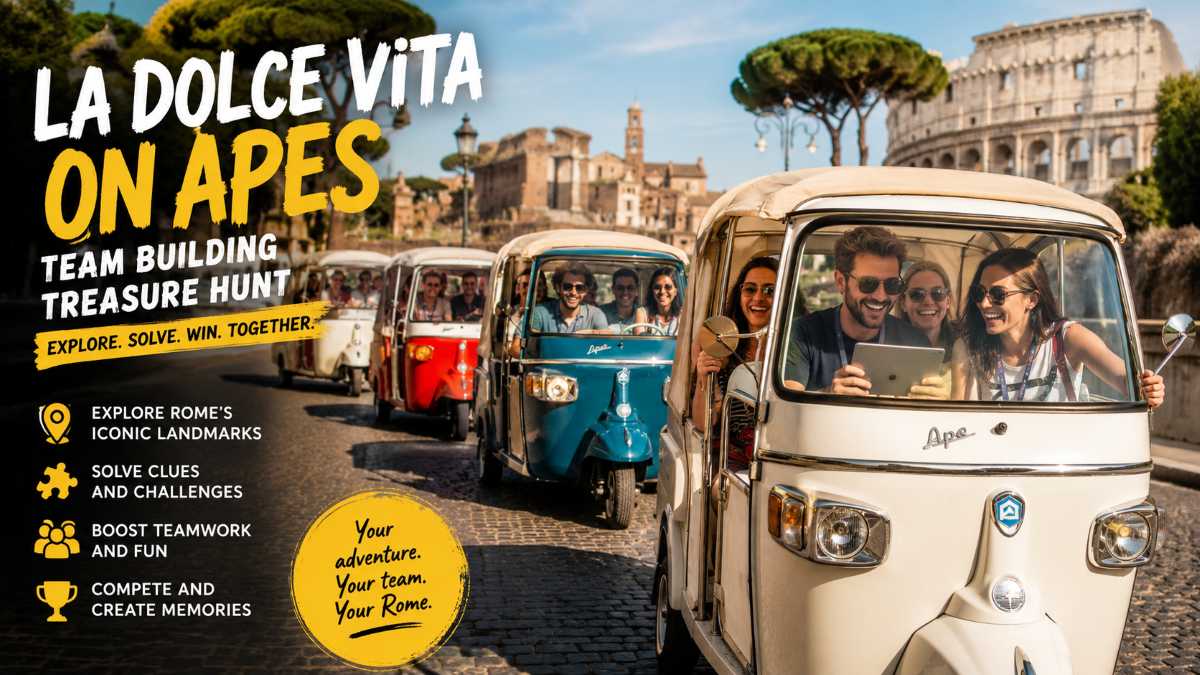
It is from this idea that The Dolce Vita with the Apettes was born, an original Team Building experience that takes participants to discover the Capital through an engaging treasure hunt on wheels.
It is not just a tour and it is not a traditional sightseeing visit.
It is a different way to experience Rome.
Together.
When Rome becomes the biggest outdoor team game
Imagine the moment of departure.
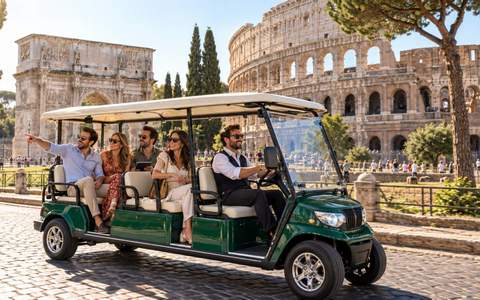
Teams climb aboard the apettes. In front of them there is not a simple preset itinerary to follow passively, but an entire city that can turn into a playing field.
A clue appears on the App.
A choice must be made.
What will be the next destination?
The Vatican? Aventine Hill? The Colosseum? Or a scenic stop that can deliver crucial bonus points?
This is exactly where Dolce Vita on an Apetta becomes a real Team Building experience: each crew must interact, observe, decide, and build its own strategy.
Not all teams will make the same choices.
Not all will follow the same route.
And each decision can have an impact on the final standings.
Rome, with its incredible layering of history, monuments, and viewpoints, becomes a giant open-air game board.
The Dolce Vita on an Apetta: a treasure hunt, but with a completely new pace
The most fascinating feature of this experience is precisely the way you move around.
Italian apettes make it possible to quickly cover different areas of the city, avoiding long walks and making the activity dynamic and accessible even for groups with different needs.
The journey becomes part of the game.
Between one mission and the next, Rome keeps changing its scenery.
At one moment you are faced with the grandeur of ancient Rome.
Shortly after, you head toward one of its most suggestive panoramic spots.
Then you travel along streets that lead to the Tiber, the Vatican, or other symbolic places in the Capital.
Every move creates a new chapter of the experience.
And it is exactly this alternation of movement, discovery, competition, and collaboration that makes The Dolce Vita a particularly effective option for corporate events, incentives, and international groups.
Interactive App: the digital brain of the challenge
If the apettes are the way to move around Rome, the App is the strategic heart of the experience.
Each team uses technology to receive information, identify missions, solve puzzles, and track its position in the competition.
The city is not simply described.
It must be interpreted.
An architectural detail can become the answer to a question.
A statue can hide a clue.
A seemingly minor viewpoint can turn into a photo mission.
The technology also makes the experience more dynamic thanks to:
Geolocated riddles
Teams must reach specific areas of the city to activate or complete the challenges.
Photo missions
Creativity, observation, and initiative come into play through challenges that require interpreting Rome also through images.
Real-time leaderboards
The competition stays alive throughout the entire route, increasing engagement and motivation among participants.
Chat and interaction with the Game Master
The game maintains a constant connection with the organizers, creating a smooth and interactive experience.
Strategic choices
There is not always just one path to follow. The team’s decisions can influence the outcome of the challenge.
Key Points of Interest (POIs): a Rome to discover curve by curve
One of the most interesting elements of The Dolce Vita with the Apettes is the opportunity to visit some of Rome’s most representative and surprising places.
The route can be customized based on the needs of the event, but the philosophy of the experience remains the same: alternate iconic locations, panoramas, curiosities, and challenges.
Vatican City and St. Peter’s Square: the impact of scale
The journey can lead to the Vatican area, where the grandeur of St. Peter’s Square completely changes how you perceive the city.
For an international team, it is one of the most immediate and recognizable images of Rome.
But during a treasure hunt, even a famous place can be viewed from a different perspective.
The question is not only: “What are we looking at?”
The real question becomes:
“What’s slipping past us?”
And it is precisely this ability to look beyond the obvious—one of the skills the experience most strongly stimulates.
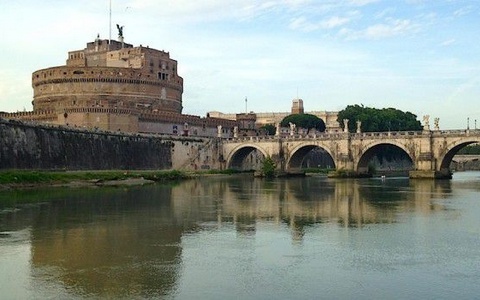
Castel Sant’Angelo and the charm of strategic Rome
Few places tell the story of Rome’s transformation like Castel Sant’Angelo.
Born as a mausoleum and, over the centuries, turned into a fortress, a refuge, and a residence, it perfectly reflects the idea of adaptation.
A quality that, not by chance, also belongs to the most effective teams.
The teams taking part in La Dolce Vita must be able to adjust their strategy, react to unexpected events, and make quick decisions.
Sometimes the best solution is not the one planned at the beginning.
It is the one you manage to find along the way.
Aventine Hill: panoramas, mysteries, and strategic decisions
The route can lead to one of the most fascinating corners of the Capital: Aventine Hill.
Here, Rome changes pace.
The streets become quieter, the panoramas more open, and the city suddenly seems to pull away.
But the game continues here too.
The Orange Garden
From above Aventine Hill, the Orange Garden offers one of the most breathtaking panoramas in the city.
For a team, it can become a visual break, a moment for observation, and naturally, a possible strategic stop.
Because in a treasure hunt, there are not only big challenges.
The ability to pause, observe, and notice a detail can make the difference.
The Keyhole: seeing what seems impossible
Among the most curious stops is the famous Aventine Hill Keyhole, one of those places that can still surprise even people who know Rome well.
Through a small opening, an unexpected perspective is created on the Dome of St. Peter’s.
It is a perfect metaphor for teamwork.
Sometimes the solution is right in front of us.
You just need to find the right point of view.
Circo Massimo and the Colosseum: the grandeur of Ancient Rome
The journey continues among the great symbols of Ancient Rome.
Circo Massimo, with its immense history tied to competitions and shows, seems almost naturally set to become part of a team-to-team challenge.
Competition, however, in a modern Team Building has a different meaning.
It is not only about coming in first.
It is about understanding how to get there.
Who makes the decisions?
Who observes better?
Who manages to coordinate the information?
Who keeps the group focused when time is running out?
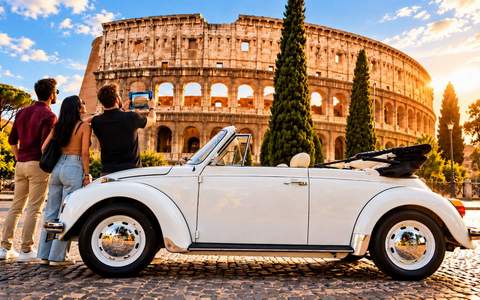
A short distance away, the Colosseum reminds you how Rome can transform history into an experience that still feels exceptionally engaging today.
But The Dolce Vita does not limit itself to using monuments as simple backdrops.
It turns them into narrative elements.
Every place can become a clue.
Every detail can change the game.
The Lungotevere: Rome changes perspective
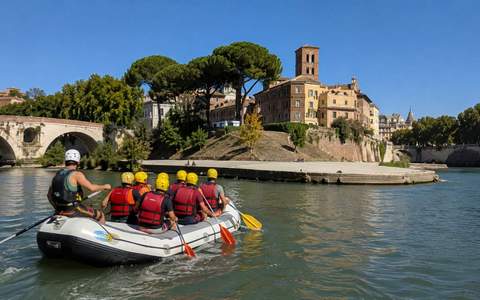
Among the most evocative parts of the experience are the transfers along the Lungotevere.
Here, the city offers a different perspective.
Traffic seems far away, bridges connect stories and neighborhoods, while the river accompanies the route like an invisible thread.
It is one of the moments when the experience manages to convey the sense of “Dolce Vita” the most.
Not the Rome to consume quickly.
But the Rome to move through.
To observe.
To share.
On board the apettes, even the simple transfer from one stop to the next becomes an integral part of the adventure.
Why does The Dolce Vita with the Apettes work as Team Building?
An effective corporate activity must manage to engage people with different personalities, roles, and skills.
The Dolce Vita achieves this through a simple yet powerful mechanism: it puts the group in front of shared goals.
To earn points, it is not enough to know Rome.
You have to collaborate.
Communication becomes essential
Each team must interact quickly.
Information must circulate.
Insights must be shared.
Whoever has spotted a detail must communicate it to the others.
Whoever has an idea must be able to persuade the group.
Communication is not explained theoretically.
It is practiced.
Problem solving comes from the experience
A riddle is not always solved on the first try.
A choice may turn out to be less effective than expected.
A seemingly irrelevant detail can become decisive.
This is where problem solving comes into play.
Participants learn to gather information, compare assumptions, and look for solutions together.
Leadership becomes shared
During a normal workday, roles are often clearly defined.
During an urban treasure hunt, however, different abilities can emerge.
The quietest person may notice the decisive detail.
Someone who usually does not lead the group may have the best intuition.
Someone with stronger organizational skills can become the team’s reference point.
That is how Team Building allows you to observe dynamics that, in an office, might remain hidden.
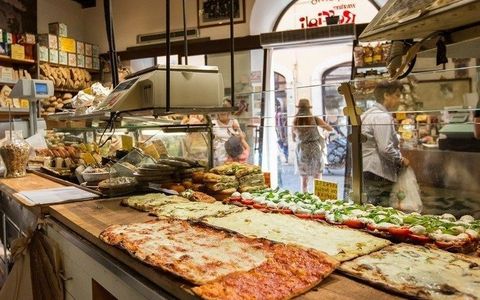
Street Food break: even taste can become part of the game
Rome is not just monuments.
It is also flavors.
That is why The Dolce Vita can be enhanced with a dedicated break for Roman Street Food.
Supplì, pizza by the slice, maritozzi, artisan gelato, and other local specialties can make the route an even more complete experience.
And naturally, the break itself can also become part of the challenge.
Because when the game is built well, every moment can offer an opportunity for collaboration.
A bite can become a question.
A gastronomic tradition can hide a curiosity.
A simple pause can turn into a chance for networking and sharing.
For which companies is The Dolce Vita on an Apetta ideal?
This experience is particularly suited to organizations that want to propose an original, dynamic activity strongly connected to the city of Rome.
It is ideal for:
-
corporate conventions;
-
meetings;
-
incentives;
-
events after the congress;
-
international teams;
-
companies with international guests;
-
multi-generational groups;
-
sales teams;
-
managers and executives;
-
large teams;
-
networking activities.
The ability to experience Rome without necessarily having to face long walks also makes this format particularly interesting for mixed groups.
A perfect experience for international teams
For those coming to Rome from abroad, The Dolce Vita is far more than a simple corporate activity.
It is a way to connect with the city right away.
Instead of organizing separately a sightseeing visit moment and a Team Building activity, the two experiences merge.
Participants collaborate.
They discover Rome.
They compete.
They laugh.
They take photos.
They make decisions.
And they build shared memories.
This is especially important for international teams, where people may come from different cultures, departments, and countries.
The game becomes a universal language.
Cinematic Rome and the spirit of the Dolce Vita
The very name of the experience evokes an imagery that Rome has made famous around the world.
The city of cinema.
Of terraces.
Of fountains.
Of great streets.
Of unexpected encounters.
And above all, the ability to turn a simple journey into a story.
On board an apetta, Rome takes on a different rhythm.
It is not as fast as a taxi.
It is not as tiring as a long walk.
It is a trip that lets you look around, talk with colleagues, and get ready for the next challenge.
Every curve can change the scenery.
Every stop can change the leaderboard.
Every team builds its own story.
And maybe that is exactly the most authentic part of the experience.
There is not just one Dolce Vita.
There is the one lived by every team.
Skills developed during the experience
The lightness of the game should not make you forget the educational value of the activity.
Throughout the route, many essential soft skills are stimulated as well—important even in the workplace.
Collaboration
The outcome depends on the ability to work toward a shared goal.
Communication
Information must be shared quickly and effectively.
Problem solving
Riddles and missions require observation and the ability to find solutions.
Time management
Teams must decide how to make the best use of the available time.
Shared leadership
Different people can take on leadership roles at different moments.
Decision-making ability
Every choice can influence the route and the final result.
Creativity
Photo missions and tests often require original ideas.
Observation
Rome is full of details that normally go unnoticed.
During the game, learning to see becomes part of the challenge.
The Dolce Vita with the Apettes: the real goal is to experience Rome together
At the end of the day, someone will check the leaderboard.
Someone will remember the toughest riddle.
Another person will keep the funniest photo.
But what will probably last the longest will be another thing.
The memory of a shared experience.
Because the value of Team Building is not measured only at the moment when it takes place.
It is also measured in the conversations that happen afterward.
In the references the team will keep making.
In the shared pictures.
In the moments when someone will say:
“Do you remember when we chose that road?”
The Dolce Vita with the Apettes turns Rome into this.
A collective memory.
An adventure.
A challenge.
And a surprising way to rediscover how effective working together can be when you step outside your usual patterns.
Because sometimes, to find team spirit, you do not need a meeting room.
A remarkable city can be enough.
A group of colleagues.
A few clues.
And Rome waiting around the next curve.
FAQ – The Dolce Vita with the Apettes
How long does the The Dolce Vita on an Apetta experience last?
The activity generally lasts about three hours, with the possibility to customize some aspects of the experience according to the event’s needs.
Do I need to know Rome to participate?
No. You do not need to know the city. Clues and missions are guided through the interactive App, which supports the teams throughout the route.
How many people can participate?
The activity can be organized for small groups and adapted for corporate events with many participants as well, by dividing people into crews and teams.
Which places in Rome can be visited?
The route can be customized and may include, among others, Vatican City, St. Peter’s Square, Castel Sant’Angelo, Aventine Hill, Orange Garden, Keyhole, Circo Massimo, the Colosseum, and the Lungotevere.
Is it possible to include a food break?
Yes. Upon request, the experience can be enhanced with a stop dedicated to Street Food or with a friendly final moment.
Why choose apettes for a Team Building in Rome?
Because they allow you to experience a dynamic and original adventure, covering different areas of the city in a short time, alternating game, culture, panoramas, collaboration, and competition.
If you want to experience this or similar experiences, click here, you will find our proposals:
Request a free quote and receive all the information about your Team Building experience.
Request a quote