




































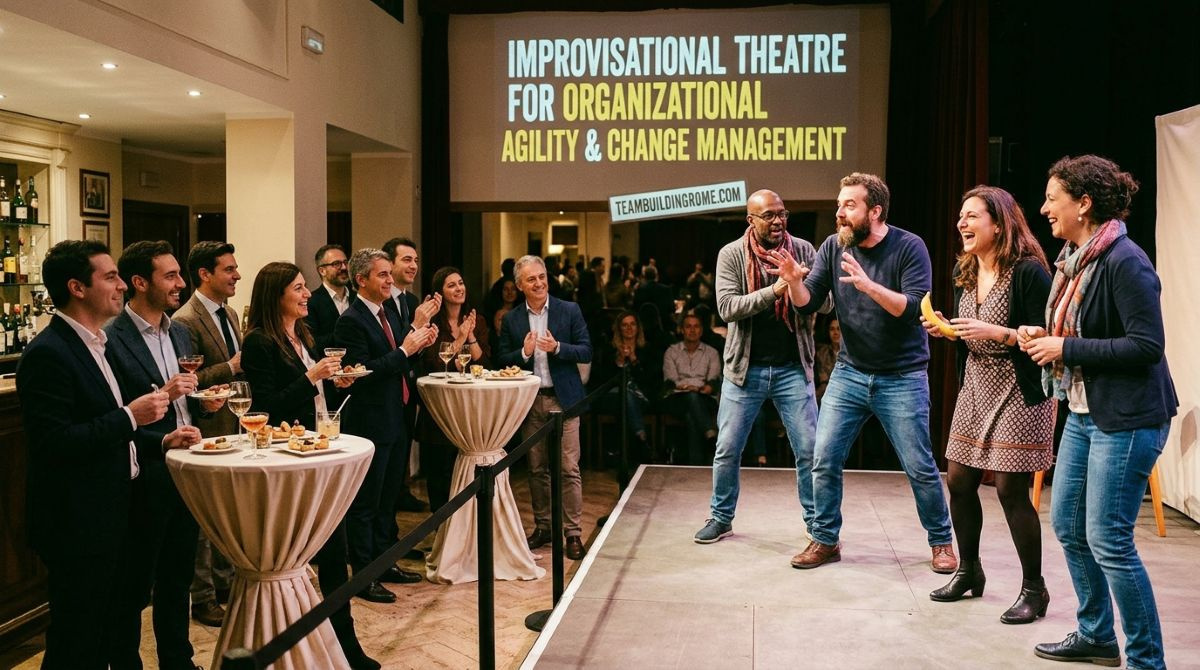
Improvisational Theatre for Organizational Agility and Change Management
When change doesn’t follow the script
Imagine a scene.
A person enters a room and starts telling a story. They know how they want to begin, perhaps they even have an idea of the direction to take. Then, suddenly, another actor arrives and changes everything.
“We’re on a ship.”
The first actor might reply:
“No, we’re really in an office.”
The scene would stall.
Or they could say:
“Yes, and we’re in the middle of a storm.”
In a few seconds, what looked like an interruption becomes an opportunity.
This is where Improvisation Theatre Applied to Team Building meets one of the major themes in today’s organizations: the ability to respond quickly to change without losing effectiveness, collaboration, and mutual trust.
At work, after all, change rarely arrives according to the planned script.
Priorities shift. A new client comes in. A project is modified. A technology transforms processes. A market requires an immediate response. A decision made in the morning may require rethinking the work by the afternoon.
The problem isn’t just managing change.
The real challenge is learning how to stay within the change.
And that’s exactly the core of a theatre improvisation workshop dedicated to Organizational Agility and Change Management.
The “Yes, and…” rule: the principle that changes the conversation
Accept first, then build
In improvisation theatre, there’s a fundamental rule: “Yes, and…”, meaning “Yes, and…”.
It means accepting what the other person brings into the scene and adding something to keep the story moving forward.
It doesn’t mean agreeing all the time.
It doesn’t mean giving up critical thinking.
Instead, it means preventing the first reaction from automatically being the urge to shut things down.
How many times, during a business meeting, a new idea meets responses like:
-
“It won’t work.”
-
“We’ve always done it this way.”
-
“It’s not the right time.”
-
“We don’t have the budget.”
-
“It’s too complicated.”
Many of these observations can be legitimate. The issue arises when “No, but…” becomes the organization’s automatic response.
“Yes, and…” opens up a different space.
“Yes, the idea is interesting—let’s see how we could adapt it to our resources.”
“Yes, the project has changed—and we can identify which skills we need to handle this new situation.”
“Yes, we have a problem, and we can turn it into an opportunity to find a different solution.”
Linguistic change is small.
The impact on team behavior can be enormous.
Improvisation techniques have also been studied in relation to management training, teamwork, creativity, and the willingness to experiment with new responses.
A team-building where mistakes don’t stop the game
One of the main obstacles to organizational agility is the fear of making mistakes.
When people are afraid of judgment, they tend to choose the safest answer.
They wait.
They ask for confirmation.
They avoid putting themselves out there.
They stick to procedures they already know.
But an organization that must face new scenarios can’t always wait until it has all the available information.
It has to learn to make decisions, observe what happens, adjust direction, and keep moving.
The Improvisation Theatre Team Building creates a protected environment where this behavior can be tried out through play.
An unexpected response isn’t necessarily considered a mistake.
It can become the starting point for the next scene.
A wrong word can turn into a narrative element.
An apparently absurd idea can generate a creative solution.
A difficulty can force the group to collaborate.
This is exactly where the game becomes a metaphor for the company.
In the workshop, participants discover in a concrete way that not controlling everything doesn’t mean losing control of the outcome.
Improvisation Theatre and Organizational Agility
What does it really mean to be an agile organization?
Organizational agility is often associated with speed.
But being fast isn’t enough.
An organization can make decisions quickly and, at the same time, move in the wrong direction.
True agility requires several capabilities:
-
listening to what’s changing;
-
quickly understanding the new scenario;
-
sharing information;
-
adapting decisions;
-
collaborating with people and diverse expertise;
-
experimenting;
-
learning from mistakes;
-
modifying strategy when necessary.
Improvisation theatre trains many of these dynamics through situations that continuously evolve.
There is no complete script.
It’s not possible to prepare all the answers.
To move forward, participants must truly listen.
They need to observe.
They must accept others’ contributions.
They have to step in at the right moment.
They must trust the group.
And that’s the big difference between a simple creative activity and a workshop designed for Change Management.
The goal isn’t to turn employees into actors.
The goal is to use the language of improvisation to build organizational skills.
The literature on the relationship between improvisation and organizational change has explored organizations’ ability to deal with complex and dynamic contexts, considering improvisation as a possible way to interpret continuous change.
From control to the ability to respond
In many companies, there’s an implicit belief:
“If we plan everything perfectly, we’ll be ready for anything.”
Planning is essential.
But no plan can account for every possible variable.
So today’s market requires a balance between two skills:
Planning and knowing how to improvise when the plan isn’t enough.
Improvisation isn’t the absence of preparation.
A good improviser has techniques, experience, listening skills, and discipline.
They simply use those skills to deal with something they can’t fully know in advance.
The same applies to a business team.
An agile group isn’t a group that works without rules.
It’s a group that has enough trust, communication, and shared competencies to be able to respond when the situation changes.
The workshop: from the stage to business life
One scene after another
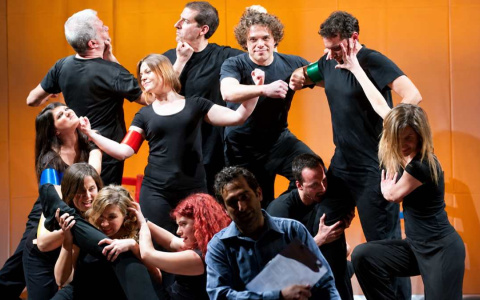
The journey can begin with simple exercises.
Participants move through the space.
They listen to instructions.
They have to react to sudden signals.
They switch roles.
They build collective stories.
They accept unexpected proposals.
Gradually, the group’s energy changes.
At the beginning, someone watches.
Someone laughs.
Someone thinks: “I’m not cut out for theatre.”
And that’s one of the most interesting moments.
Because the workshop doesn’t require acting abilities.
You don’t need to know scripts.
You don’t have to memorize lines.
The group works on improvisation, relationship-building, and the ability to construct together.
The scene becomes a training ground.
And each exercise comes with a question:
How do I react when someone suddenly changes my plan?
The judgment block: one of the enemies of innovation
“What if I make a fool of myself?”
It’s probably one of the most common questions at the start of an improvisation activity.
But behind this phrase there’s an even bigger theme.
Fear of judgment can block:
-
creativity;
-
participation;
-
sharing ideas;
-
the ability to take responsibility;
-
experimentation;
-
innovation.
In a workplace environment, fear of being judged can lead people to not share what they truly think.
Improvisation temporarily flips this logic.
There is no perfect answer to prepare beforehand.
The answer has to emerge from the interaction.
And if something doesn’t work, the group can recover.
This is one of the most powerful lessons of the activity:
You don’t need to be perfect to contribute. You need to be present.
Rome, a city that teaches how to change without losing what makes it itself
Theatre of Marcellus: the stage as a metaphor for transformation
Rome is an extraordinary city for telling the story of the relationship between identity and change.
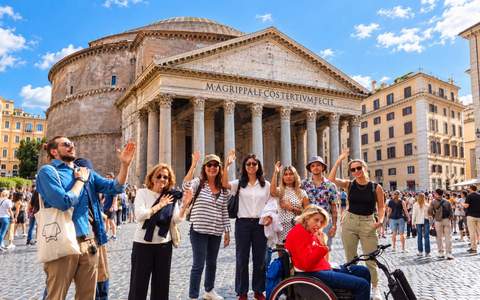
A symbolic example is the Teatro di Marcello, one of the most evocative places in ancient Rome.
Its history tells a story of continuous transformation: originally a large building meant for performances, over the centuries it changed function, becoming also a fortress, and then integrating into later urban planning transformations.
The structure changes.
The function changes.
The context changes.
Yet its identity continues to dialogue with the city.
It’s a perfect metaphor for organizations.
Changing doesn’t necessarily mean erasing what we are.
It can mean reinterpreting skills, experience, and values to face a new scenario.
A workshop dedicated to improvisation can therefore find in Rome a particularly powerful narrative setting—turning the city itself into a source of inspiration for discussing evolution, adaptation, and creativity.
From the Opera House to the business scene
Even the Teatro dell’Opera di Roma is an important reference point in the tradition of the Capital’s performing arts.
A theatre is the place where every role matters.
The audience sees the final result, but behind the scenes there’s a complex system made of people, skills, timing, coordination, and the ability to respond to surprises.
One element can change.
A technical detail can require a solution.
A performance can depend on the perfect connection between many people.
The same dynamic exists in business.
An organization is a shared big stage.
And when something changes, the question isn’t:
“Who messed up the script?”
But:
“How can we keep the scene going together?”
Rome preserves an ancient theatrical tradition and still hosts important places dedicated to the performing arts.
“Yes, and…”: a new language for Change Management
Why is change often perceived as a threat?
Every change brings with it an element of uncertainty.
People may wonder:
-
What will happen to my role?
-
Will I have to learn new skills?
-
Will my way of working be changed?
-
Will I be able to adapt?
-
Will I lose something I know?
Change Management can’t be limited to communicating a new procedure.
It must also work on emotions and behaviors.
“Yes, and…” provides a simple but effective metaphor.
Before building an answer, we need to acknowledge the reality we’re facing.
Denying change doesn’t make it disappear.
Accepting it doesn’t mean suffering it.
It means starting to work on it.
Yes, the scenario has changed. And now what can we build?
This is the question the workshop brings onto the stage and, afterward, into business reflection.
Skills developed through Improvisation Theatre
Active listening
In improvisation, you can’t think only about your own line.
You have to listen to what the other person has said.
That’s how the team learns to pay greater attention to signals, words, and colleagues’ contributions.
Adaptability
The scenario can change at any moment.
Participants train their ability to modify their behavior quickly without freezing.
Communication
Every scene requires clarity.
Confusing communication can make collective building harder.
Trust
Accepting a colleague’s proposal means recognizing that the result doesn’t depend on just one person.
Creativity
When there’s no written script, the group must generate new possibilities.
Overcoming the fear of judgment
The workshop helps participants experiment in an environment where mistakes can become creative material.
Shared leadership
In some scenes, one person guides.
In the next scene, another participant may propose the direction.
Leadership therefore becomes more fluid and distributed.
Creative problem-solving
An unexpected event isn’t simply eliminated.
It can become part of the solution.
An example: when the project changes suddenly
Let’s imagine an exercise.
A group receives an initial situation:
“You have to organize a big corporate event.”
Participants begin building the project.
Then a surprise comes in.
The budget is reduced.
The venue is no longer available.
A client changes the goal.
The time is cut in half.
In the real world, these situations can generate stress.
In the workshop, they become game material.
The group has to continue.
It can’t go back and pretend nothing happened.
It has to accept the new condition and build a response.
“Yes, the venue isn’t available—and we can completely rethink the format.”
“Yes, we have less time, and we can focus the activities on the priority objectives.”
“Yes, the client has changed their request, and we can use what we’ve already built in a different way.”
This is agility.
Not always having the answer ready.
But being able to build it together.
For which companies is this Team Building ideal?
Companies going through a transformation
Mergers, reorganizations, new processes, new technologies, and new work models can create uncertainty.
The workshop can become an experiential space for working on adaptation.
Teams that need to improve collaboration
Improvisation makes one thing clear: if I only listen to myself, the scene doesn’t work.
Innovative companies
Startups, tech companies, and organizations committed to digital transformation can use this format to work on experimentation and rapid response.
International teams
Theatrical language and body-based work can facilitate connection even in multicultural groups, reducing dependence on verbal communication alone.
Managers and leadership figures
For those who lead people, improvisation can be an interesting training ground for handling uncertainty and situations that aren’t fully predictable.
The value of debriefing: from the game to real business life
A good Team Building doesn’t end with the last applause.
The most important part is often what comes after.
Debriefing connects what happened during the activity to the company’s everyday dynamics.
The questions can be:
-
When did we get stuck?
-
What helped us get going again?
-
Did we really listen to others’ proposals?
-
Did we try to control the situation too much?
-
How did we react to the mistake?
-
Who supported collaboration?
-
When did we say “No, but…”?
-
When were we able to use “Yes, and…”?
It’s in this step that theatre fully meets Change Management.
The experience doesn’t remain only a fun moment.
It becomes a mirror.
The group can observe its own behaviors without the direct pressure of everyday work life.
Why is Improvisation Theatre particularly effective for Team Building?
Because it engages the mind, the body, and emotions at the same time.
In a traditional training session, we can listen to a concept.
In improvisation theatre, that concept is lived.
We can explain to a team that it needs to be more flexible.
Or we can create a situation where flexibility becomes necessary to continue.
We can talk about the importance of listening.
Or we can show, through a scene, what happens when nobody really listens.
We can invite people not to fear mistakes.
Or we can build a game where a mistake becomes the most interesting part of the story.
This is the power of experiential learning.
Performing arts have also been analyzed as tools capable of fostering reflection, engagement, and new forms of interaction in organizational contexts and change pathways.
A new way to deal with uncertainty
The future of work will likely be characterized by an increasing ability to live with uncertainty.
New technologies.
Artificial intelligence.
Market transformations.
New organizational models.
Changes in the skills required.
In this scenario, knowing a procedure won’t be enough.
It will become increasingly important to be able to learn, unlearn, and build new responses.
The Improvisation Theatre for Organizational Agility and Change Management proposes exactly this kind of training.
Entering a scene without knowing everything.
Listening.
Accepting.
Adding.
Building.
Making mistakes.
Recovering.
Moving on.
In other words:
say “Yes, and…” to change.
Because perhaps the biggest skill of a team isn’t the ability to predict the future perfectly.
It’s being united, creative, and confident enough to face it even when the script changes suddenly.
FAQ – Improvisation Theatre and Change Management
1. Is theatrical experience required to participate?
No. The workshop is designed for people with no acting experience. The goal isn’t to become actors, but to use improvisation techniques to develop listening, adaptability, creativity, and collaboration.
2. What is the “Yes, and…” rule?
It’s one of the best-known principles of improvisation. It consists of accepting the other person’s proposal and adding a new element to develop the situation, avoiding blocking collective building.
3. How does improvisation help with Change Management?
It allows participants to concretely experiment with situations of uncertainty and change, training the ability to listen, adapt quickly, collaborate, and build new solutions.
4. Is the workshop also suitable for large teams?
Yes. The format can be adapted to the number of participants, using groups, subgroups, and exercises designed based on the company’s objectives.
5. What business skills are developed?
Among the main ones: communication, active listening, adaptability, creativity, problem-solving, trust, collaboration, shared leadership, and uncertainty management.
6. Can I organize the Team Building in Rome?
Yes. Rome offers many options for setting and venues. Its extraordinary theatrical tradition, represented by places like the Teatro di Marcello and the Teatro dell’Opera, can also become part of the storytelling of the experience.
If you want to live this experience or something similar, click here; you’ll find our proposals:
Request a free quote and get all the information about your Team Building experience.
To organize this experience for your company, request a quote.