












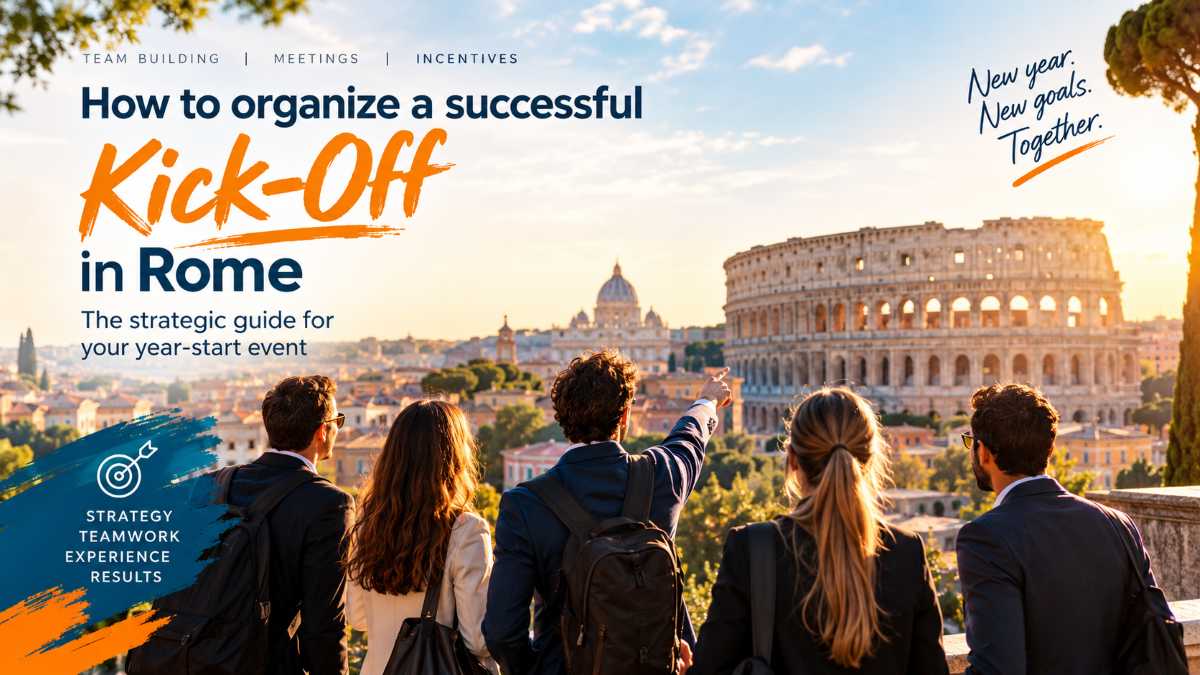
How to organize a successful Kick-Off in Rome: the strategic guide for start-of-year events
The first day of the working year can change the rest of the year
There is a moment at the beginning of every new business cycle when a team finds itself in front of a page that still needs to be written.
The results from the previous year are now behind us. Some goals were achieved, others remained unfinished. There are new projects, new strategies, new clients, and often new people who have joined the organization.
This is the moment of the corporate Kick-Off.
But organizing a Kick-Off doesn’t simply mean booking a room, preparing a few slides, and ending the day with an aperitif.
An effective start-of-year event must do something even more important: turn a corporate strategy into shared energy.
It must help people understand where the company is going, but above all make them feel part of the journey.
And which city can represent this concept better than Rome?
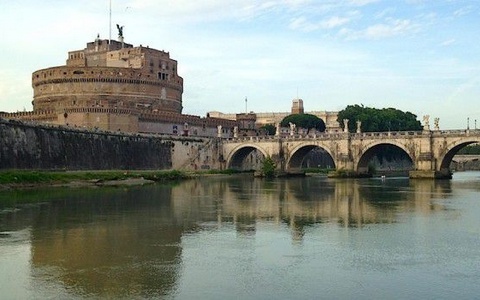
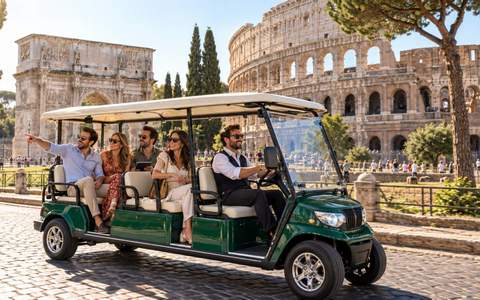
Rome is a city built through eras, transformations, changes, and new visions—a place where the past and the future coexist continuously. From the great architectures of antiquity to contemporary creativity hubs, the Capital can become the ideal stage to begin a new business chapter.
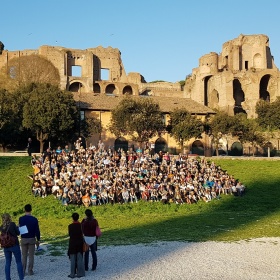
Organizing a Kick-Off in Rome therefore means bringing strategy, training, experience, emotion, and team building together in a single event.
What is a corporate Kick-Off really?
Not just a bigger meeting than usual
The term Kick-Off is often used to refer to the meeting that kicks off a new year, a new project, or a new strategic phase.
But a true corporate Kick-Off should answer some fundamental questions:
-
Where are we today?
-
Where do we want to go?
-
What are the priorities?
-
What changes do we need to face?
-
What role will each person have?
-
How do we want to work together?
The Kick-Off is therefore a moment of strategic alignment, but also a time for building company culture.
People don’t just need to know the goals.
They need to understand what those goals mean.
An objective communicated through a slide can be clear.
An objective lived through an experience can become memorable.
And this is where team building can turn a traditional corporate event into something far more engaging.
Why organize the Kick-Off in Rome?
Rome as a metaphor for vision, change, and the future
A city can simply be a destination.
Or it can become an integral part of the event’s message.
Rome offers this second possibility.
Let’s think about the relationship between past and future that characterizes the city. Alongside the monuments of ancient Rome, we find contemporary architecture, innovative museums, creative neighborhoods, and large spaces dedicated to culture and events.
The MAXXI – National Museum of the 21st Century Arts, for example, represents one of the symbolic places of contemporary Rome and offers spaces for conventions, conferences, workshops, business presentations, cocktails, and other business events. (MAXXI)
Choosing the venue can therefore become part of the storytelling.
A Kick-Off focused on innovation can take place in a contemporary space.
An event focused on vision and creativity can use Rome as a grand stage set.
An activity focused on leadership can draw inspiration from the city’s history.
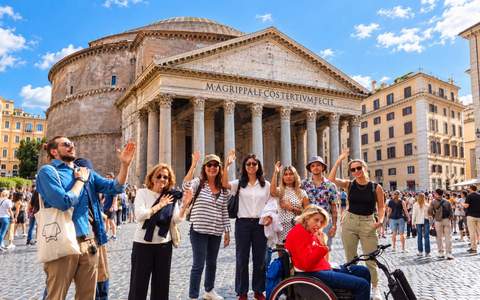
A program dedicated to collaboration can turn into a treasure hunt or an urban game among squares, monuments, and symbolic places throughout the Capital.
Rome isn’t only the place where the event happens.
It can become part of the experience.
How to organize a successful Kick-Off: strategy before the venue
1. Define a clear objective
The first mistake in designing a Kick-Off is to start from the question:
“Where can we organize it?”
The first question should be:
“What do we want people to take away by the end of the day?”
Objectives can be very different.
Strategic alignment
Presenting the new company vision and the year’s goals.
Motivation
Create enthusiasm after a complex period or before launching a new challenge.
Change Management
Support the team through an organizational transformation.
Integration
Foster relationships between departments, new people, or teams that usually work separately.
Leadership
Strengthen managers’ role and their ability to guide change.
Collaboration
Improve communication, trust, and the ability to work toward shared goals.
A well-designed Kick-Off must have a clear direction.
Every moment of the day should help reinforce it.
2. Create a concept that makes the event memorable
The Kick-Off must tell a story
People remember a story more easily than a sequence of information.
That’s why a Kick-Off can be built around a narrative concept.
Let’s imagine a company that wants to tackle a year of transformation.
The concept could be:
“The new route”
The team starts from a familiar situation and must face new scenarios.
Or:
“Rome: building on the past, designing the future”
A journey through symbolic places in the city to reflect on the relationship between experience and innovation.
Or still:
“One team, a thousand perspectives”
A format dedicated to collaboration among people, different departments, and generations.
The concept can become the common thread for:
-
set design;
-
communication;
-
presentations;
-
team building activities;
-
event materials;
-
awards;
-
final dinner.
When all elements tell the same story, the Kick-Off becomes more coherent.
3. Choose the right venue for the event message
Rome offers very different settings
The venue shouldn’t be chosen only based on capacity.
It’s important to ask:
Does this place communicate something that matches our event?
For a large meeting, convention, or corporate event, it may be worth considering the Auditorium Parco della Musica Ennio Morricone, a major multifunctional complex designed to host not only conventions, congresses, business meetings, incentives, and product launches, with rooms of different sizes. (Auditorium Morricone)
For an innovation-focused event, however, the aforementioned MAXXI can offer a highly contemporary setting, with spaces that can be used for workshops, meetings, presentations, cocktails, and corporate events. (MAXXI)
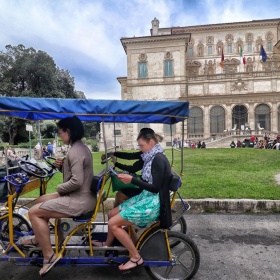
For a Kick-Off that leans more toward outdoor experience, Rome also offers symbolic locations such as Villa Borghese and the Terrace of the Pincio, which can provide a particularly striking setting and a strong connection to the city. (Turismo Roma)
Of course, the final choice will depend on the number of participants, the season, the budget, and the designed format.
4. Alternate strategic content and experience
No one wants eight consecutive hours of slides
A Kick-Off must communicate.
But it must also keep attention high.
One of the most common mistakes is to concentrate the entire day into a sequence of:
-
presentations;
-
numbers;
-
charts;
-
manager interventions;
-
corporate videos.
Information is important.
But the brain needs to alternate different moments.
An effective format can include:
Morning: the vision
-
event opening;
-
results from the previous year;
-
strategy;
-
new goals;
-
leadership interventions.
Midday: the experience
-
team building;
-
collaborative activities;
-
urban game;
-
creative workshop;
-
strategic challenge.
Afternoon: connection
-
activity debrief;
-
linking the experience to business objectives;
-
sharing;
-
final messages.
Evening: celebration
-
aperitif;
-
dinner;
-
awards;
-
entertainment.
The event’s pace is essential.
A Kick-Off must include moments of focus, but also energy.
Moments for listening, but also participation.
Formal moments, but also informal ones.
Team Building: the moment when strategy becomes experience
From words to behaviors
Tell a team:
“This year we have to collaborate more”
is different from putting the team in a situation where collaboration becomes indispensable.
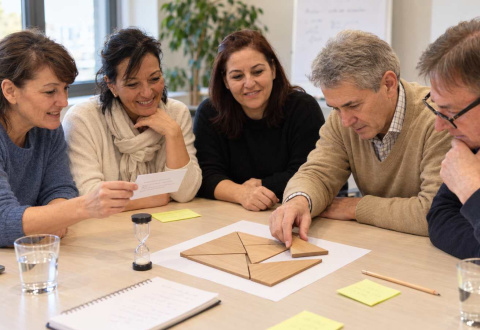
An experiential activity can turn an abstract concept into a concrete behavior.
For example, a urban treasure hunt in Rome can become an experience dedicated to:
-
communication;
-
leadership;
-
problem solving;
-
time management;
-
collaboration;
-
creativity;
-
decision making.
The city becomes the playground.
The teams receive missions.
They must make decisions.
They must share information.
They must use individual skills.
They must work toward a common goal.
This is exactly the value of experiential learning.
The metaphor isn’t just told.
It’s lived.
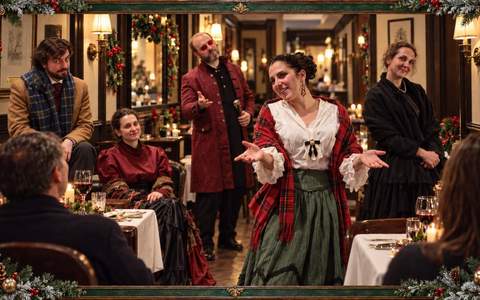
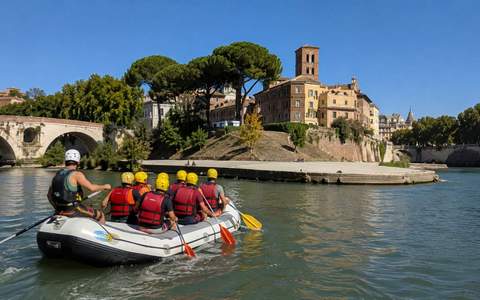
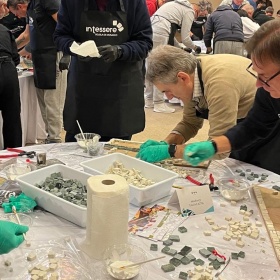
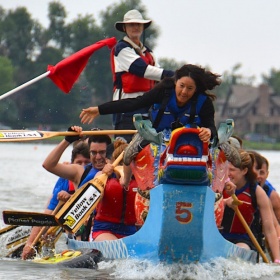
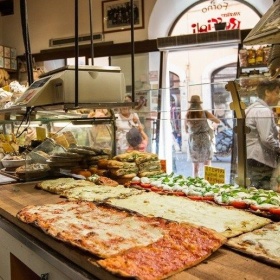
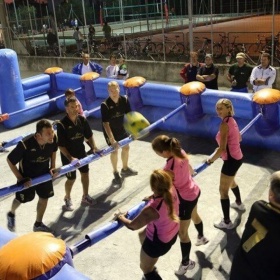
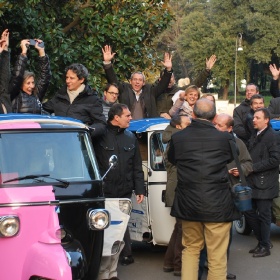
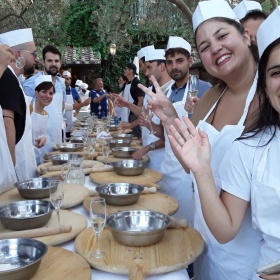
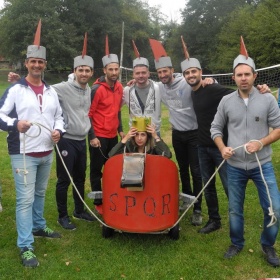
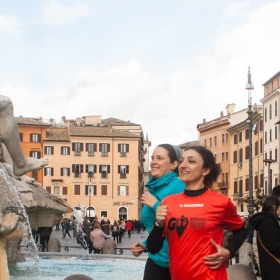
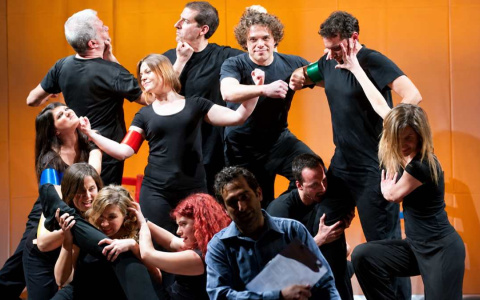
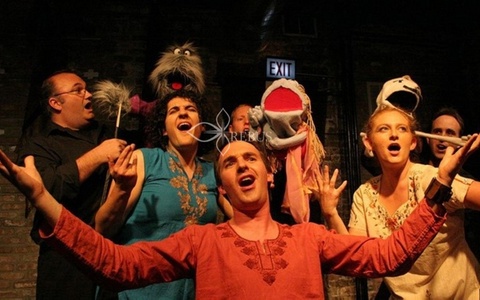
Among the many proposals dedicated to corporate events, Team Building Rome offers activities that use Rome through play, experiences, theatre, sports, adventure, and creative formats—ranging from treasure hunts to urban games, from artistic activities to food and outdoor experiences. (teambuildingrome.com)
Rome as a major stage for the Kick-Off
The historic center becomes a collaboration lab
Let’s imagine a group of participants starting from a Roman square.
Each team receives a mission.
They don’t have all the information.
They have to observe.
They have to choose a strategy.
They have to compare with the other team members.
Then Rome begins telling its story.
One team crosses the historic center.
Another must solve a riddle.
Another still has to complete a creative challenge.
People who normally work in different departments start communicating.
Someone who’s used to speaking less makes an important decision.
Someone who usually leads discovers they must listen.
Someone who thinks they’re not creative finds an unexpected solution.
At the end of the activity, everyone has something to share.
And this is one of the advantages of an experiential Kick-Off.
The next day, in the office, people don’t just remember the slides.
They remember what they did together.
The best ingredients of a corporate Kick-Off
Vision
People must know where the company is going.
Engagement
The Kick-Off shouldn’t be only something to watch.
People should be able to participate.
Emotion
A memorable event creates an emotional reaction.
It can be enthusiasm, surprise, pride, or a sense of belonging.
Coherence
The concept must connect strategy, activities, and communication.
Experience
Team Building allows business messages to be turned into observable behaviors.
Celebration
The start of a new year or a new phase also deserves a moment of recognition.
The Kick-Off as a Change Management tool
When the company needs to start something new
A Kick-Off is especially important during times of change.
It can be used to support:
-
a new strategy;
-
a reorganization;
-
a rebranding;
-
the introduction of new technologies;
-
integration across teams;
-
launching a new project;
-
a leadership change.
In these moments, communication must be clear.
But clarity alone isn’t enough.
People must understand:
Why are we changing?
What will change concretely?
What will my role be?
How will we work together?
A well-designed Kick-Off can provide a space to begin building these answers.
A strategic format for a successful Kick-Off in Rome
Program example
09:00 – Welcome and reception
Participant registration, welcome coffee, and a first moment of networking.
10:00 – Opening
Leadership intervention and presentation of the year’s topic.
10:30 – The vision
Results, goals, and strategy.
11:30 – Inspiration moment
An inspiring talk, a workshop, or an introductory activity connected to the concept.
13:00 – Lunch
An informal moment to encourage relationships among people and departments.
14:30 – Team Building in Rome
Urban game, treasure hunt, creative activities, strategic challenge, or other experiences designed around the company’s objectives.
17:30 – Debriefing
Analysis of the experience and connection to the behaviors required for the new year.
18:30 – Closing
Final message from leadership.
20:00 – Aperitif or dinner
Celebration, networking, and awards.
The debriefing: the moment that turns the game into strategy
A Team Building without debriefing can be a wonderful experience.
A Team Building with a good debriefing can become an organizational development tool.
After the activity, it’s possible to reflect together on a few questions:
-
How did we make decisions?
-
Who took on leadership?
-
Did we listen to all ideas?
-
How did we handle unexpected situations?
-
Did we truly collaborate?
-
Which behaviors can we bring into our day-to-day work?
This step makes it possible to connect the Kick-Off to the company’s real-world situation.
The activity thus becomes a concrete metaphor for the year that is starting.
Errors to avoid when organizing a Kick-Off
Not having a specific objective
An event without a strategic direction risks turning into a simple day away from the office.
Thinking only about the venue
An extraordinary venue can’t compensate for a content-free format.
Overloading the program
Too many interventions can reduce attention and energy.
Completely separating meetings and Team Building
The experiential activity should be linked to the strategic message.
Forgetting the follow-up
The Kick-Off shouldn’t end when people leave the venue.
The main messages can be reinforced in the months afterward through communications, meetings, and internal initiatives.
How to measure the success of a corporate Kick-Off?
Success shouldn’t be assessed only by asking:
“Did you like the event?”
It’s also useful to observe other elements:
-
understanding of the objectives;
-
participation;
-
level of engagement;
-
quality of interactions;
-
participant feedback;
-
perception of the strategy;
-
ability to remember the main messages.
A spectacular event can be highly appreciated.
But a strategic Kick-Off must leave something behind even after the final applause.
FAQ – Organizing a corporate Kick-Off in Rome
How far in advance should you organize a Kick-Off?
Ideally, it’s advisable to start planning several months in advance, especially for large events or very in-demand venues. Early planning allows you to work better on concept, logistics, activities, and communication.
What is the best time period for a corporate Kick-Off?
The first months of the year are traditionally the most used, but a Kick-Off can also be organized when launching a new project, a new strategy, or a major company change.
How many participants can a Kick-Off involve?
The format can be designed for small teams, mid-sized companies, or large conventions. The choice of venue and activities should be adapted to the number of participants.
Is it possible to combine meetings and Team Building?
Yes, and it’s one of the most effective formulas. The strategic part communicates goals and vision, while the Team Building turns some business messages into a concrete experience.
Why choose Rome for a Kick-Off?
Rome offers a unique historical and cultural heritage, contemporary venues and event spaces, as well as the opportunity to turn the city into a setting for urban games, treasure hunts, and experiential activities.
What Team Building activity should you choose for a Kick-Off?
It depends on the objectives. A treasure hunt can work on collaboration and problem solving, a creative workshop on shared vision, a theatre activity on communication and adaptability—while a strategic challenge can focus on leadership and decision making.
The Kick-Off isn’t the start of a meeting: it’s the start of a story
Every business year begins with a choice.
We can limit ourselves to telling people what they have to do.
Or we can involve them in a story.
We can show a destination.
Or we can start the journey together.
A successful Kick-Off in Rome can become exactly that: a moment where strategy, people, places, and experience come together.
In front of a new year, no one knows exactly all the challenges that will come.
But a team that starts with a shared vision, stronger relationships, and a common goal has something essential.
Not a script that’s already written.
But the ability to write the next chapter together.
If you want to experience this or something similar, click here—you’ll find our proposals:
Request a free quote and receive all the information about your Team Building experience.
Request a quote and get all the information to organize your corporate Kick-Off and your Team Building experience.