























Slow Team Building: low-anxiety activities to rediscover the pleasure of working together
Not all team building has to start with a timer.
Not always is a competition needed.
You don’t need to run faster than the others, capture a flag, or solve a riddle before the competing team.
Sometimes, to bring back the joy of being together, you have to do exactly the opposite.
Slow down.
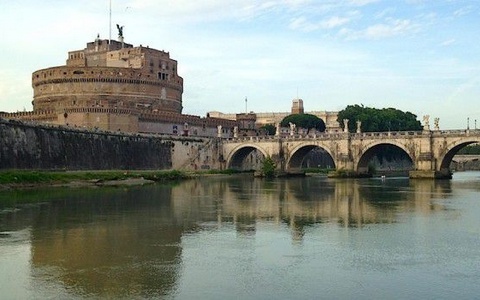
Let’s imagine a morning in Rome.
Traffic flows along the Tiber, people cross the streets of the historic center, and a little further on, a group of colleagues enters a bright location. On the table there are no computers, reports, or presentations.
There’s clay.
Colors.
Paintbrushes.
Aromatic herbs.
Ingredients.
Glasses.
For a few hours, no one has to reach a KPI.
No one has to reply to an email right away.
No one has to prove they’re the fastest.
The group simply has to do something together.
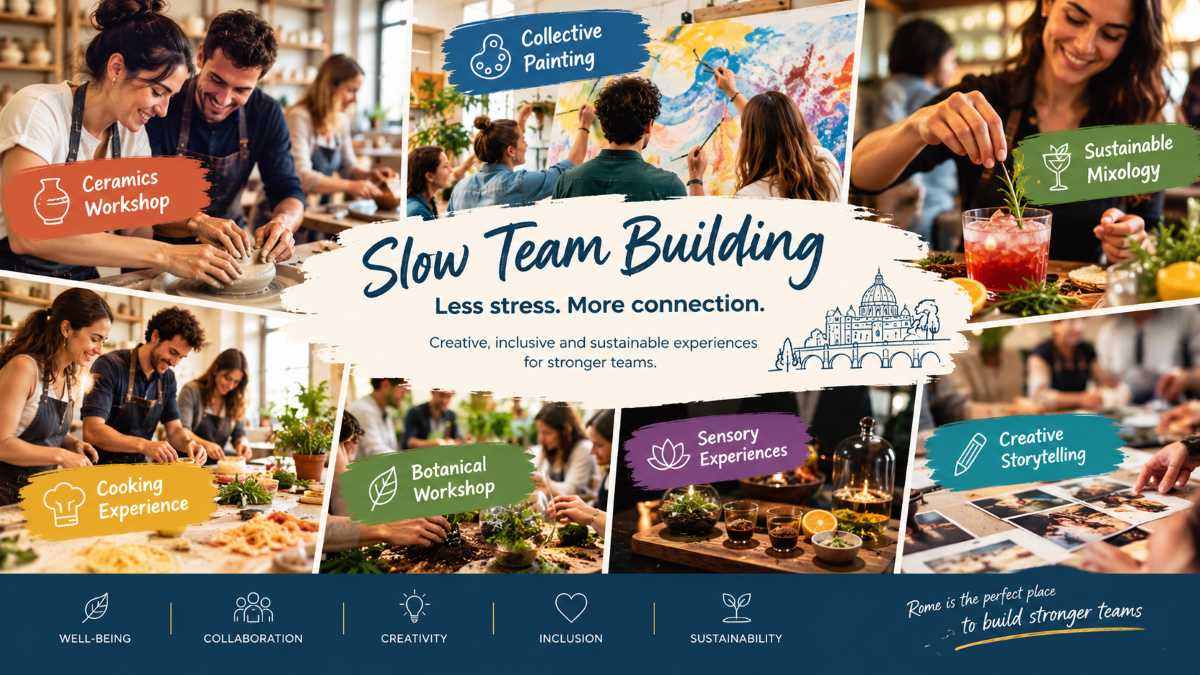
It’s from this idea that one of the most interesting trends of Team Building 2026: Slow Team Building is born.
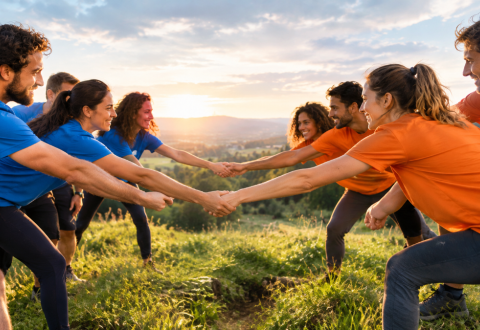
An approach that puts creative, sensory, and collaborative experiences at the center—designed to reduce competitive pressure and encourage presence, listening, conversation, and connection among people.
What is Slow Team Building?
Slow Team Building is a set of corporate activities characterized by a more relaxed pace than traditional competitive formats.
The goal isn’t to completely eliminate challenge.
It’s to change how it’s experienced.
The question doesn’t become:
“Who will win?”
But:
“What will we manage to create together?”
The activities may include:
-
ceramics workshops;
-
collective painting;
-
art experiences;
-
relaxed cooking experiences;
-
sustainable mixology;
-
sensory labs;
-
manual activities;
-
nature-related experiences;
-
creative workshops;
-
social moments designed to encourage conversation.
The result is a Team Building less focused on individual performance and more oriented toward the quality of the shared experience.
Why in 2026 are companies looking for less anxiety-inducing activities?
From continuous performance to relationship quality
In recent years, the world of work has sped up.
Online meetings.
Continuous messages.
Deadlines.
Notifications.
Consecutive calls.
In many companies, people spend much of the day moving quickly from one activity to the next.
In this context, even a company event risks becoming just another experience to “perform.”
Slow Team Building, instead, introduces a different principle:
the time of the experience is part of the experience itself.
Not everything has to be immediate.
Not everything has to produce a result in just a few minutes.
Creating a ceramic object, painting a canvas, or preparing a drink using selected ingredients requires attention.
And attention creates space.
Space to talk.
Space to observe.
Space to listen.
Space to get to know colleagues you normally only share meetings and documents with.
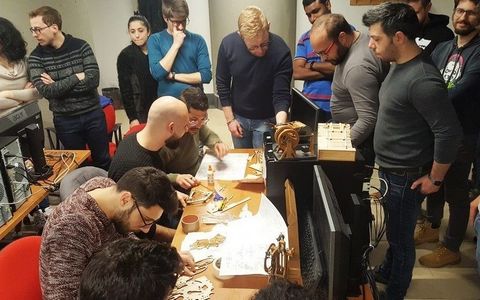
1. The ceramics workshop: molding clay and building relationships
Hands do what words, sometimes, can’t manage
There’s something special about clay.
It doesn’t rush.
It can’t be commanded.
If you apply too much force, it changes shape.
If you try to speed up too much, the result may break.
Working with it requires balance.
And it’s precisely this feature that makes a ceramics workshop for companies an interesting metaphor for teamwork.
Participants can create:
-
small objects;
-
mugs;
-
b owls;
-
decorative elements;
-
collective works;
-
installations made up of multiple individual contributions.
An inclusive Team Building
You don’t need to be an artist.
You don’t need experience.
Each participant can contribute according to their own pace.
This makes ceramics especially interesting for groups made up of people with different ages, roles, and personalities.
A manager used to making quick decisions may find themselves facing a material that requires patience.
A more reserved colleague can discover a new way of expressing themselves.
And while hands work, the conversation naturally changes tone.
2. Collective painting: when a hundred people create a single image
No panel is truly independent
One of the most effective formats for visually representing the idea of collaboration is collective painting.
A coherent example of this philosophy is Nuance – Artistic Team Building, an experience in which participants create different parts of a large artwork that will only be assembled at the very end.
Each group works on its own panel.
At the beginning, the individual fragments may seem disconnected.
Different colors.
Interrupted lines.
Shapes that apparently have no meaning.
Then comes the assembly moment.
And suddenly the group sees the complete image.
The business metaphor is immediate
Every department can work well.
Every person can achieve their own goals.
But if there’s no shared vision, the final result may end up incoherent.
Collective painting makes this concept visible.
Not through a PowerPoint presentation.
But through a work created with your own hands.
3. Art Attack and creativity without pressure
The right to experiment without fear of making mistakes
Another form of Slow Team Building is represented by creative workshops in which the group is invited to build, paint, assemble, or reinterpret an image.
Formats like Art Attack – artists for a day turn Team Building into a space where creativity becomes a shared language.
The interesting part is that, during an artistic activity, mistakes can become part of the final result.
An unexpected brushstroke.
A color chosen differently.
An element that changes position.
In a professional environment, many people are used to avoiding mistakes.
In a creative workshop, however, the unexpected can generate a new idea.
It’s an important skill for work too
Innovative companies need people who can:
-
experiment;
-
change perspective;
-
accept uncertainty;
-
propose ideas;
-
build solutions together.
Slow Team Building can become a safe space where these abilities are practiced.
Rome as a source of inspiration for Slow Team Building
A city that teaches you to observe
Rome is particularly suited to this type of experience.
Because Rome is not a city you can understand by running.
You have to stop.
Look at a facade.
Step into a courtyard.
Notice a detail.
Walk without necessarily having an immediate destination.
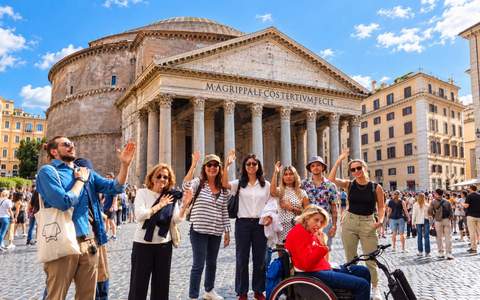
A creative activity can be preceded, for example, by a moment of inspiration near the Pantheon, amid the atmosphere of Piazza Navona, or along the streets of Trastevere.
Even a stroll inside Villa Borghese can become an opportunity to introduce a workshop focused on colors, shapes, and nature.
Rome constantly offers material for a creative narrative.
A fountain can suggest movement.
A dome can become a geometric shape.
An alley can inspire a color palette.
So the Team Building can begin outside the venue and continue within it.
4. Sustainable mixology: create, taste, and reduce waste
A cocktail can tell a story, too
sustainable mixology is one of the most interesting ideas for contemporary Slow Team Building.
The goal isn’t simply to prepare a drink.
It’s about reflecting on ingredients.
On seasonality.
On creative reuse.
On reducing waste.
Teams can work with:
-
seasonal ingredients;
-
aromatic herbs;
-
citrus fruits;
-
botanical elements;
-
recoverable and safe food scraps;
-
natural decorations;
-
local ingredients;
-
non-alcoholic alternatives.
Sustainability becomes a concrete experience
Instead of listening to a lesson about ESG, participants can directly experiment with how an ingredient that seems secondary can gain new value.
A peel.
An aromatic leaf.
An element normally destined to be discarded.
Creativity is exactly in asking:
“Can we use it differently?”
It’s the same question many companies ask when searching for new solutions.
5. Slow Mixology and conversation: the value of shared time
Preparing something together changes the way you talk
The difference between a regular aperitivo break and a mixology experience is involvement.
Participants don’t simply receive something to drink.
They take part in the creation.
They choose.
They measure.
They smell.
They taste.
They compare ideas.
This dynamic creates an especially natural type of interaction.
There’s no pressure to immediately come up with a conversation topic.
The activity itself becomes the starting point.
Particularly effective for international groups
Manual and sensory experiences can reduce reliance on language.
A gesture.
A scent.
An ingredient.
A visual choice.
They can become immediate communication tools.
That’s why Slow Team Building can be especially interesting for:
-
multinational companies;
-
multicultural teams;
-
international groups;
-
conventions with participants from different countries.
6. Cooking Team Building without competition
Getting your hands in the dough, without turning everything into a contest
The Cooking Team Building world offers many opportunities to build slow experiences.
You don’t always need to organize a challenge.
Sometimes the value of the activity is simply preparing something together.
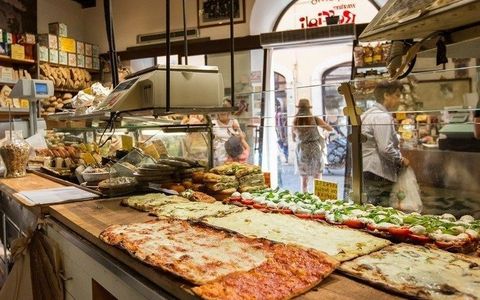
A format like Pizza Fun shows how food preparation can become a moment of togetherness, collaboration, and discovering Italian food culture.
A group can:
-
prepare the ingredients;
-
work the dough;
-
share techniques;
-
help those who are less experienced;
-
personalize their creations;
-
sit down at the same table at the end.
The most important moment comes afterward
When everything is ready.
When hands stop working.
When the group sits down.
Lunch or dinner becomes an integral part of the Team Building.
Because the relationship doesn’t start only during the activity.
Often, it’s exactly when people begin telling stories that it deepens.
7. Sensory workshops: rediscovering listening
Not everything has to be seen to understand better
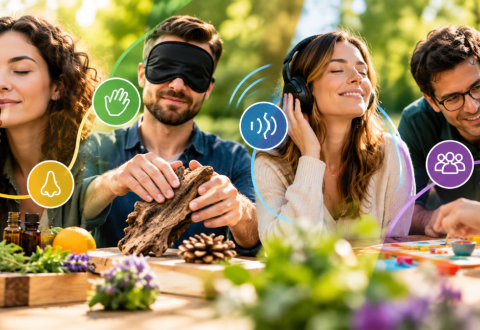
Another branch of Slow Team Building is represented by sensory experiences.
Activities that invite the group to focus on:
-
sounds;
-
scents;
-
textures;
-
flavors;
-
perceptions.
An example of a sensory experience included among the proposals is Dinner in the Dark, which puts perception, listening, and mutual trust at the center.
In a professional setting, we’re used to looking all the time.
Screens.
Slides.
Numbers.
Documents.
A sensory activity completely changes your point of view.
Or, perhaps, it would be more accurate to say:
it changes the way we use our senses.
8. The botanical workshop: nature, creativity, and well-being
Bringing a small piece of nature into the corporate event
A botanical workshop can be another excellent solution for companies looking for relaxing and creative activities.
Participants can work with:
-
plants;
-
aromatic herbs;
-
natural compositions;
-
small gardens;
-
decorative elements;
-
sustainable materials.
The philosophy is similar to that of Slow Team Building.
There isn’t necessarily a single solution.
Each person contributes.
Each composition can be different.
And the group can build a shared project while respecting individual differences.
A lesson from nature
An ecosystem works because its elements are different.
Not because they’re all the same.
A team works better too when it manages to value different skills, personalities, and points of view.
9. Creative storytelling: telling the company in a different way
What if the company story became a work of art?
Slow Team Building can also be used during:
-
company anniversaries;
-
conventions;
-
kick-offs;
-
end-of-year events;
-
employer branding programs.
Participants can be invited to represent the company’s story through:
-
a large canvas;
-
an artistic composition;
-
photographs;
-
words;
-
symbolic materials;
-
objects built together.
Each person can tell a piece.
The final result becomes a collective narrative.
Not a story told from above
But a story built by the group.
This approach is particularly interesting because it makes it possible to involve people who normally participate passively in company events.
Here, instead, each participant leaves a mark.
10. Slow Team Building and sustainability: do less, but do it better
The real luxury of 2026 could be time
In the world of corporate events, we’re often used to adding.
More activities.
More moments.
More content.
More stimuli.
Slow Team Building proposes a different question:
What if, instead of constantly adding something, we chose to live better what we’re already doing?
A two-hour workshop can be more memorable than a full day of activities if it allows people to truly be present.
A collective canvas can say more than many presentations.
A ceramics workshop can create a conversation that a meeting would never be able to generate.
A shared cooking moment can shrink distances built over months of remote work.
In this sense, sustainability isn’t only about materials.
It’s also about how we use:
-
time;
-
energy;
-
attention;
-
resources.
Why choose Slow Team Building?
An activity designed to include, not to select
One of the main benefits of this approach is inclusivity.
Not everyone likes competition.
Not everyone feels comfortable in sports activities.
Not everyone wants to expose themselves in front of colleagues.
Slow Team Building allows for a more gradual participation.
People can contribute through:
-
manual skills;
-
creativity;
-
observation;
-
listening;
-
organization;
-
conversation.
This doesn’t mean the experience is passive.
On the contrary.
It means involvement isn’t forced through adrenaline.
It’s built through curiosity.
What skills does Slow Team Building develop?
Soft skills that emerge when pressure decreases
A low-competitive-impact activity can help the group work on:
Communication
People talk and collaborate in a less formal context.
Listening
Without the need to win quickly, more space is created for other people’s ideas.
Creativity
The absence of a single solution encourages divergent thinking.
Collaboration
The result is built through different contributions.
Trust
People learn to make room for colleagues’ skills.
Relational well-being
The experience supports a more authentic relationship among participants.
The expert angle: slowing down doesn’t mean doing less Team Building
It’s important to clarify one concept.
Slow Team Building doesn’t mean weak Team Building.
It doesn’t simply mean organizing a calm activity.
An effective format must still have:
-
a goal;
-
planning;
-
a narrative;
-
real engagement;
-
a sharing moment;
-
a meaning connected to teamwork.
The difference is in the type of energy required.
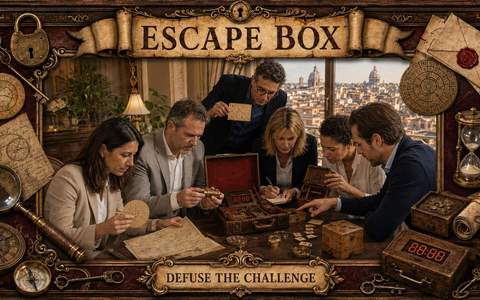
In an Escape Game, energy can come from the pressure of time.
In an artistic activity, it can come from building.
In a ceramics workshop, it can come from concentration.
In a cooking experience, it can come from togetherness.
There is no single way to create engagement.
How to organize a Slow Team Building in Rome
The ideal formula for a balanced corporate event
Rome makes it possible to build very interesting programs by combining creativity, culture, and togetherness.
A possible program could be:
Morning
Corporate meeting or strategic session.
Break
Coffee break with local and seasonal products.
Afternoon
Collective painting workshop, ceramics, or a creative workshop.
End of activities
Presentation of the artwork created by the group.
Evening
Gastronomic experience or a moment of sustainable mixology.
The day can be enriched with a walk through the historic center, between Pantheon, Piazza Navona, Campo de' Fiori, and the atmosphere of Trastevere.
In this way, Rome isn’t just the city hosting the event.
It becomes part of the story.
FAQ – Slow Team Building and low-anxiety activities
1. What is a Slow Team Building?
It’s a Team Building approach that prioritizes creative, sensory, and collaborative activities—with reduced competitive pressure and greater attention to the quality of the shared experience.
2. Is Slow Team Building suitable for large companies too?
Yes. Activities like collective painting can involve large groups as well, creating a single final project made up of many contributions.
3. Do you need artistic skills?
No. The activities are designed to allow everyone to participate, regardless of artistic or manual experience.
4. Why choose a less competitive activity?
Because it allows you to involve people who don’t like sports challenges or high-pressure games—promoting inclusivity, conversation, and collaboration.
5. Is it possible to connect Slow Team Building to sustainability?
Yes. You can use sustainable materials, seasonal ingredients, natural elements, and design experiences aimed at reducing waste.
6. What’s the best time to organize it?
Slow Team Building can be organized throughout the year and is especially interesting for indoor events, conventions, meetings, and corporate programs where you want to create a relaxed, engaging atmosphere.
Conclusion: maybe the team simply needed to stop
At the end of the workshop, dirty color-streaked brushes remain on the table.
Someone looks at the finished artwork.
Someone else photographs a detail.
There’s someone who laughs while looking at their ceramic object—definitely different from how they imagined it at the start.
Then someone says:
“I didn’t think we’d manage to create all this.”
And that may be the most interesting part.
During the activity, no one had to prove they were the best.
No one had to run.
No one had to come first.
And yet, in the end, the group created something.
Together.
Slow Team Building starts right from here.
From the idea that, in a world that constantly asks people to speed up, even a company can choose to give its team something increasingly rare.
Time to truly be there.