






















Team Building and Disability: how to create truly inclusive business experiences
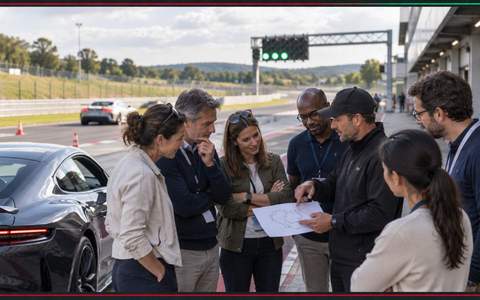
A corporate team building event should have one fundamental feature: make every participant feel like part of the team.
It sounds like a simple principle, but when there are people with disabilities in the group, designing a truly inclusive experience requires more than simply choosing an accessible location. It means rethinking activities, spaces, communication, timing, tools, and ways of participating so that every person can contribute, have fun, and feel like a main character.
Inclusion, in fact, does not mean creating a “special” activity for the person with a disability. It means designing an experience in which individual differences do not become an obstacle to collaboration.
According to the World Health Organization, about 1.3 billion people worldwide live with a significant disability, and restrictions on participation often depend on the interaction between the person and the barriers present in the environment, in transportation, in buildings, and in social attitudes. (World Health Organization)
This is where the new concept of Inclusive Team Building starts.
What does inclusive team building really mean?
An inclusive team building event is not simply an activity that a person with a disability can attend.
It is an experience in which everyone can actively participate, with different methods but with the same value within the group.
This principle aligns with the UN Convention on the Rights of Persons with Disabilities, which calls for the right to participate in social, cultural, recreational, and sports life on an equal basis with others. (United Nations)
So the concept of accessibility must be interpreted broadly.
It is not only about:
-
ramps and elevators;
-
wheelchair access;
-
accessible restrooms;
-
parking;
-
transportation.
It also includes information, communication, sensory perception, timing, game rules, tools, and interpersonal relationships.
The UN, in fact, talks about “universal design,” meaning the design of environments, programs, and services that can be used by the greatest possible number of people without the need for later adaptations, together with the principle of “reasonable accommodation,” i.e., modifications and adjustments necessary to enable the participation of the individual person. (United Nations)
Inclusion doesn’t mean doing something different
One of the most frequent mistakes is to create a parallel activity for the participant with a disability.
For example, if the group participates in a treasure hunt and a person cannot take a specific route, separating them from the rest of the team does not necessarily represent an inclusive solution.
It’s much more interesting to rethink the challenge.
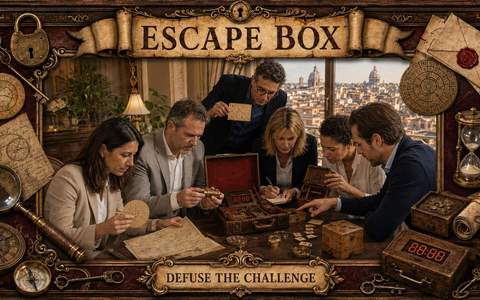
The person could handle decoding clues, strategy, managing a digital map, photography, communication with the other teams, or a specific task.
In this way, disability is not turned into the center of the activity: it simply becomes one of the elements to consider when designing a team made up of different people.
Why can team building become a tool for inclusion?
A well-designed business activity can turn into a concrete lab for collaboration.
During day-to-day work, in fact, people often interact within clearly defined professional roles. Team building, instead, allows you to observe the group in a new situation, where different abilities emerge compared to those normally used in the office.
A particularly creative person can become a reference point for an artistic task.
A colleague with excellent communication skills can coordinate the group.
A participant with a mobility limitation can have a decisive strategic role.
A person with a sensory disability can contribute through different ways of perceiving.
So the real question should not be:
“How can we enable the person with a disability to participate?”
But:
“How can we design an activity where each person has something important to offer?”
This is the difference between simple accessibility and genuine inclusion.
How to design an Inclusive Team Building
Design should begin long before the day of the event.
1. Understand the needs of the participants
Before choosing the activity, it’s important to gather—discreetly and in respect of privacy—the participants’ potential needs.
There is, in fact, not just one type of disability.
An activity suitable for a person with a mobility disability might require completely different changes for someone with a visual, hearing, cognitive, or sensory disability.
That’s why it’s essential to avoid assumptions.
It’s better to ask directly what the person’s needs are and what adjustments could make their participation easier.
The World Health Organization also highlights the importance of involving people with disabilities in decision-making processes related to their needs. (World Health Organization)
2. Actually check the venue
“Accessible location” should not be just a line on the technical sheet.
You need to verify concretely:
-
access from the entrance;
-
door widths;
-
presence of elevators;
-
any steps;
-
restrooms;
-
maneuvering spaces;
-
flooring;
-
parking;
-
transportation;
-
refreshment areas;
-
the ability to reach all areas used during the activity.
In Rome, it can be particularly useful to consult the Rome Accessible section by Turismo Roma, which collects information on the accessibility of museums, monuments, and places of interest—allowing you to filter services such as accessible entrance, wheelchair routes, and services for people who are blind or visually impaired. (Turismo Roma)
This type of check is especially important when the team building takes place in historic places.
Rome, in fact, offers extraordinary settings, but not all ancient spaces automatically have the same accessibility conditions.
Which team building activities are best suited for inclusion?
There is no universal ranking of the best activities.
Choice depends on the group’s composition, individual needs, and business objectives.
However, there are some formats that—if designed correctly—can offer excellent participation opportunities.
Creative and artistic team building
Collective painting, photography, visual storytelling, collage, sculpture, street art, and creative workshops are especially interesting because they make it possible to distribute roles.
Not everyone necessarily needs to paint.
One person can design, another choose the colors, a third handle composition, a fourth tell the story of the project.
The final result then truly becomes collective.
The value of shared creativity
In an inclusive art workshop, physical performance doesn’t matter.
What matters is the ability to imagine, communicate, listen, and build together.
This makes the format easily adaptable to different abilities and participation styles.
Gastronomic and culinary team building
Activities related to cooking can also become highly effective inclusive experiences.
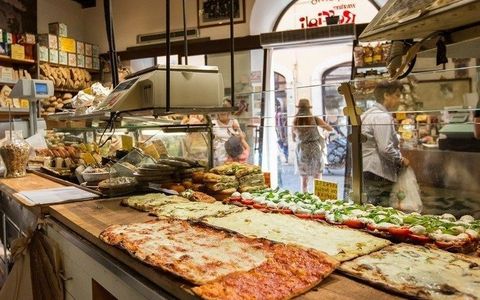
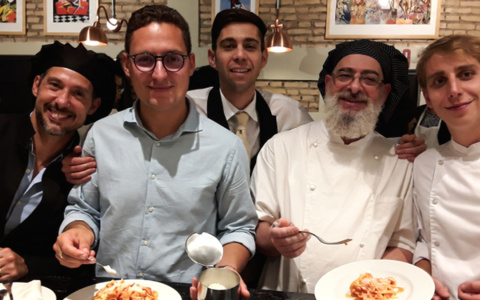
A format like a fresh pasta-making workshop can be organized by distributing tasks such as:
-
preparing the ingredients;
-
dough making;
-
plating design;
-
decoration;
-
coordination;
-
telling the recipe;
-
final presentation.
The goal is not to determine who cooks the fastest.
It’s about making a recipe together.
In this sense, an activity like Mani in Pasta can be turned into a collaboration experience in which each participant contributes according to their own abilities.
Cultural team building accessible in Rome
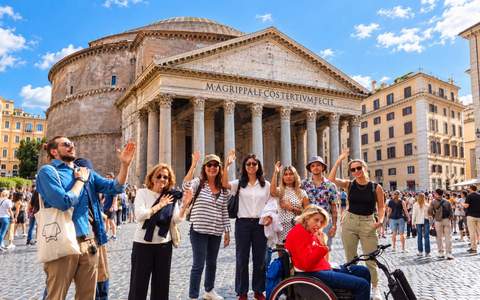
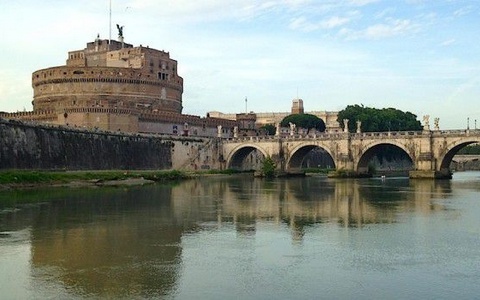
Rome offers an enormous cultural heritage that can become the setting for inclusive activities.
The official section Rome Accessible is a useful starting point for identifying museums, monuments, and cultural places with accessibility information. (Turismo Roma)
Among the realities included in the information network dedicated to accessibility are, for example, the Imperial Forums, the Auditorium Parco della Musica, the MAXXI, the Capitoline Museums, the Ara Pacis, and other cultural facilities. (Turismo Roma)
This opens up interesting opportunities to create:
-
cultural treasure hunts;
-
history quizzes;
-
photo challenges;
-
storytelling;
-
art activities;
-
multisensory routes;
-
observation games;
-
team challenges.
An example: an inclusive treasure hunt
Let’s imagine a business group divided into teams in the center of Rome.
The mission is to reconstruct a story through a series of clues.
Not all clues have to be physical.
Some can be:
-
audio;
-
images;
-
texts;
-
QR codes;
-
puzzles;
-
questions;
-
architectural details;
-
elements to recognize through touch;
-
short creative tasks.
This way, the team does not depend on the ability of a single person to run, climb stairs, or quickly cover a specific route.
Winning depends on collaboration between different skills.
Multisensory team building: when the rules of the game change
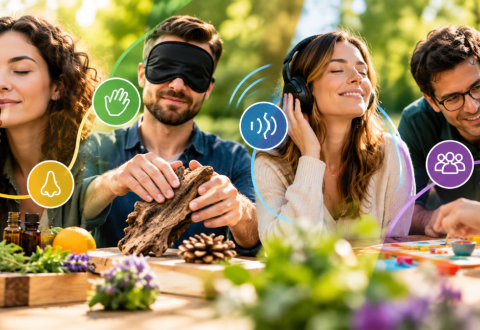
One of the most interesting developments in inclusive team building is the shift from simple “accessible” activities to a multisensory experience.
An activity can be designed using at the same time:
-
sounds;
-
images;
-
tactile materials;
-
scents;
-
tastings;
-
words;
-
movement;
-
technology.
This way, you avoid building the experience around a single sensory channel.
A team game based on the senses
A group could be given a set of objects, scents, or materials and have to match them to specific places or stories from Rome.
Another team might build a narrative exclusively through sounds.
Another team could create a collective artwork starting from different materials.
Disability is therefore not considered as a limitation to compensate for, but as a stimulus to make the game richer.
Sports and outdoor activities: inclusion means adapting the format
Sports activities require more attention, but they don’t have to be automatically excluded.
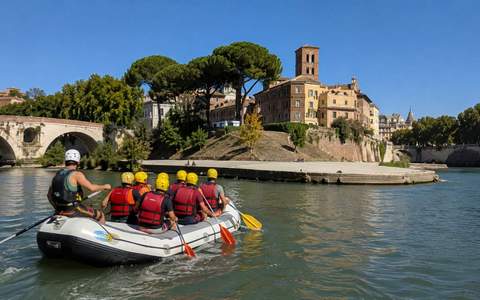
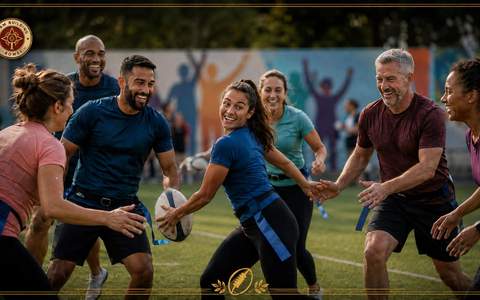
Dragon Boat, team games, orienteering, outdoor routes, and motor activities can be adapted through:
-
dividing roles;
-
different timing;
-
stations;
-
adapted tools;
-
alternative routes;
-
strategic tasks;
-
professional support.
The key is to avoid simply turning the person with a disability into a spectator.
Even sport can become an inclusive experience if the structure of the challenge rewards coordination, strategy, and collaboration, not exclusively speed or physical strength.
sensory disabilities: how to make communication accessible
An inclusive team building event must also take care of what happens before the event.
Communication should be designed by considering different ways of receiving information.
Information can be provided through clear text, images, audio, and other accessible formats.
The UN Convention explicitly emphasizes the importance of making information available in accessible formats and facilitating the use of different languages and communication methods. (United Nations)
For a corporate event, this can translate, for example, into:
-
accessible digital materials;
-
readable text;
-
advance instructions;
-
subtitles in videos;
-
visual aids;
-
spoken communication;
-
LIS interpreter when necessary;
-
verbal explanations of information that is only visual.
Accessibility, therefore, starts even before arriving at the venue.
Cognitive inclusion and neurodiversity
The concept of inclusion should not be limited to mobility disability.
Activities that are too noisy, excessively chaotic, characterized by very fast timing, or by unclear rules can create difficulties for certain participants.
That’s why it may be helpful to design:
-
simple instructions;
-
predictable timing;
-
breaks;
-
not too-large groups;
-
quieter environments;
-
the possibility to receive information in advance;
-
rules that are easy to understand.
The goal is not to make team building less fun.
On the contrary, it’s about making it more accessible to a wider variety of people.
Mistakes to avoid in a Team Building with people with disabilities
Consider accessibility only as a ramps issue
A venue can have an accessible entrance but present obstacles inside.
That’s why it’s necessary to verify the entire route of the experience.
Create a separate activity
Where possible, it’s preferable to avoid placing the participant with a disability in a completely different activity from that of the colleagues.
Inclusion comes from shared participation.
Ask the person to “adapt”
The format should be designed to accommodate the group, not the other way around.
Deciding without asking
Don’t assume what a person’s abilities or needs are.
The simplest question is often the best:
“How can we make this experience comfortable and truly participatory for you?”
Confusing inclusion and patronizing support
A person with a disability shouldn’t be treated as someone who needs to be continuously protected.
They should be considered first of all as a team member, with skills, preferences, autonomy, and decision-making abilities.
The role of the team: from assistance to collaboration
Team building can become especially powerful when it also changes how colleagues perceive collaboration.
Let’s imagine a challenge in which a group has to solve a riddle.
A participant can’t physically move through a certain area, but has a tablet with the complete map.
Another component observes the elements on site.
A third interprets the clues.
A fourth connects all the information.
No one can solve the challenge alone.
So the person with a disability is not “helped” by the others.
They are essential to the others.
This is a huge difference.
This is where team building stops being just a corporate day and becomes a concrete experience of organizational culture.
Inclusive Team Building and corporate culture
Inclusion shouldn’t be limited to the day of the event.
Team building can be an opportunity to introduce a broader reflection on corporate culture.
The ILO has collected numerous best practices from multinational companies committed to building more inclusive workplaces for people with disabilities, showing how the topic can be addressed through concrete policies, processes, and practices. (International Labour Organization)
So a team building experience can be connected to broader company paths dedicated to:
-
Diversity & Inclusion;
-
Disability Inclusion;
-
corporate welfare;
-
inclusive leadership;
-
communication;
-
collaboration;
-
employee engagement;
-
organizational culture.
In this way, the activity doesn’t remain an isolated episode, but becomes part of a journey.
Rome as a lab for Inclusive Team Building
The Capital offers a particularly interesting setting because it allows you to combine history, art, gastronomy, nature, and innovation.
An inclusive team building can be organized in a museum, in a cultural space, in a conference venue, in a creative workshop, or outdoors.
The same database of Turismo Roma dedicated to accessible places makes it possible to identify numerous cultural and tourist locations with accessibility information. (Turismo Roma)
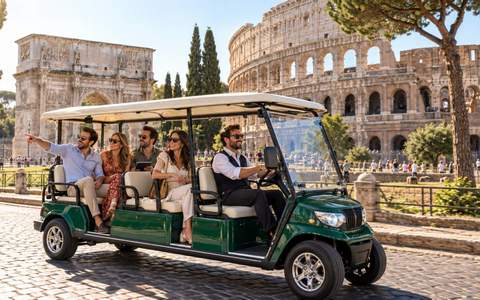
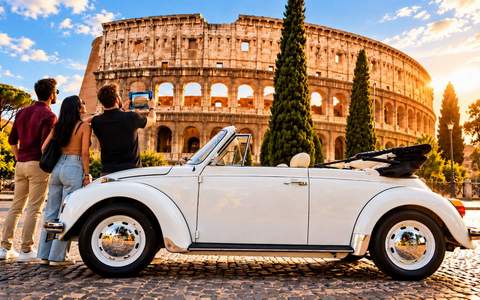
For example, the Colosseum Archaeological Park appears among the facilities for which Turismo Roma reports an accessible entrance, as do other cultural realities in the city. (Turismo Roma)
Of course, the presence of an accessibility information note does not replace the specific verification of the conditions needed for the individual group and the specific format.
It’s always recommended to conduct a site visit and verify every requirement in advance.
The future of Team Building is inclusive
In contemporary team building, the concept of “group” is changing.
A group is not made up of identical people who have to face the same challenge in the same way.
It is made up of different people who must reach a result together.
The real challenge of inclusive team building is therefore to design experiences in which motor, sensory, cognitive, or communication differences do not prevent participation.
The question is no longer:
“Is this activity suitable for people with disabilities?”
The correct question becomes:
“How can we design this activity so it can be experienced together by as many people as possible?”
It’s a small shift in perspective in words, but a huge one in design.
And Rome, with its cultural heritage, green spaces, museums, squares, gastronomy, and countless opportunities to create experiential experiences, can become a true lab for Inclusive Team Building.
Because the success of a team is not measured by how similar its members are.
It’s measured by how well they manage to value differences to achieve a common goal.