






















Generation Bridge: activities designed to make Boomer, Gen X, Millennials and Gen Z collaborate
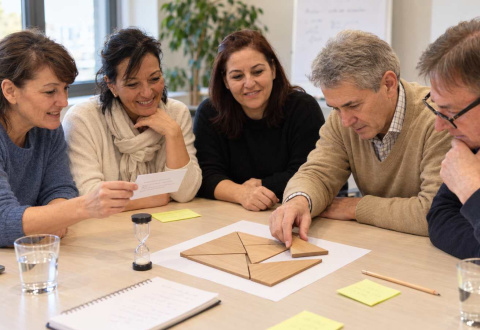
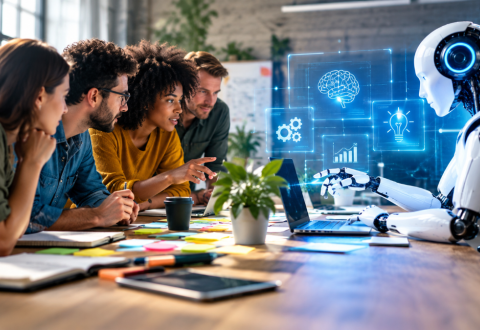
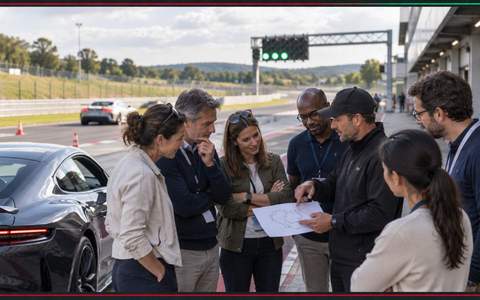
In a meeting room, there are four people.
One began working when the computer was not yet a daily tool.
Another lived through the shift from analog to digital.
A third grew up with the internet and smartphones.
The fourth entered the world of work in an era dominated by social networks, artificial intelligence, and instant communication.
They have different ages, professional experiences, and habits.
But they also have something in common: they have to collaborate.
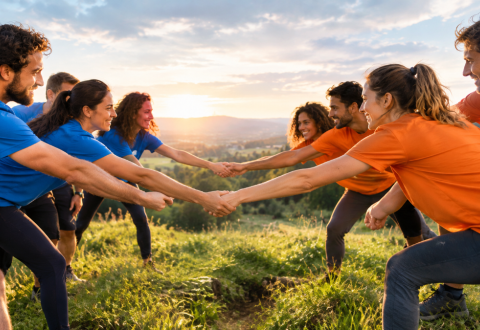
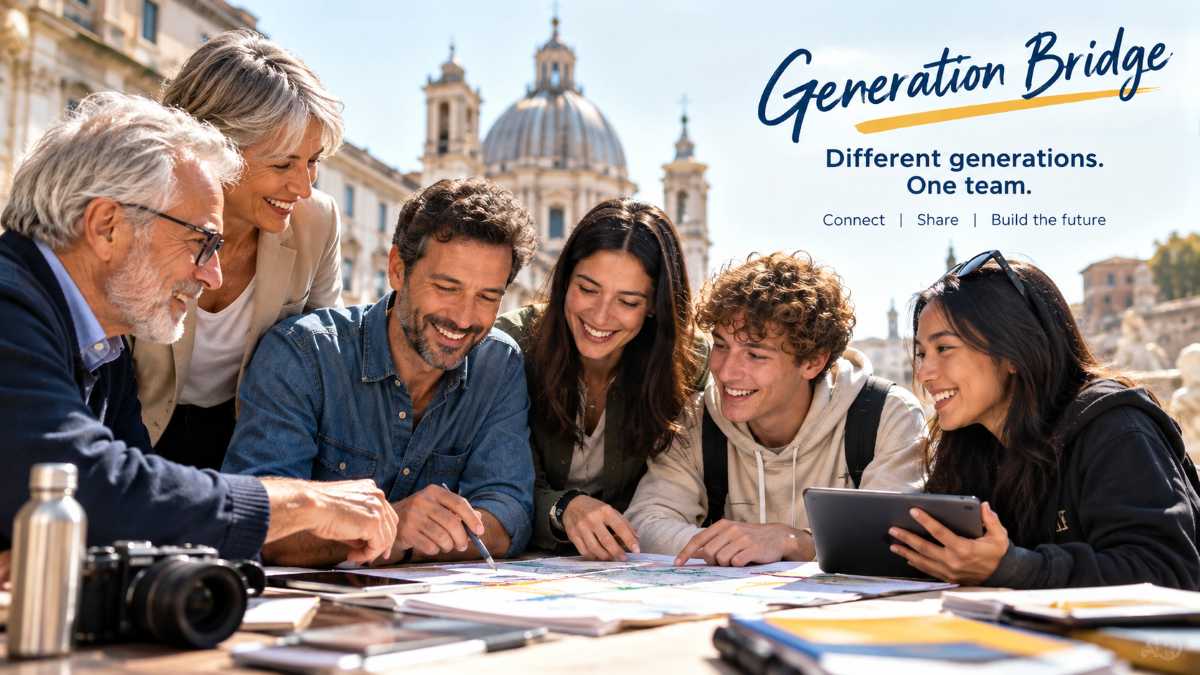
It is from this increasingly common situation in today’s companies that the concept Generation Bridge was born: a Team Building format designed to turn generational diversity into a concrete opportunity for collaboration.
Baby Boomers, Generation X, Millennials, and Generation Z are not put in competition based on their age. Instead, they are involved in activities where experience, creativity, digital skills, memory, intuition, listening, and knowledge of the context can become complementary resources.
The result is not simply a fun day.
It is the building of a bridge between generations, through experiences in which each participant can contribute their own point of view.
Why Generation Bridge Team Building is created
Contemporary companies can bring together people from different generations.
This situation can create different expectations regarding communication, the relationship with technology, time management, feedback, leadership, and ways of collaborating.
But it would be simplistic to think that every person in the same generation necessarily behaves in the same way.
An effective Generation Bridge starts precisely from this assumption.
It is not about saying:
“This generation works like this.”
Instead, it is about creating situations in which people with different experiences can practically discover how to work better together.
Generational differences thus become a narrative and organizational element of the Team Building.
One person can know a method.
Another can find a technological solution.
Another may have a creative intuition.
And another can remember a detail everyone overlooked.
The solution comes from the meeting of minds.
From generational difference to complementarity
Let’s imagine a team working on a mission.
The group receives a series of pieces of information that seem apparently unrelated.
There is a photograph.
An old document.
A QR code.
An audio recording.
A map.
A physical object.
An enigma.
The team has limited time to reconstruct the story and reach the solution.
There is no one person who has all the necessary skills.
And this is the key point.
The most experienced participant can recognize a historical reference or identify a logic that escapes the others.
A colleague used to digital tools can quickly turn information into a new lead.
The younger person can propose a completely different interpretation.
Another participant can become the facilitator who connects all the information.
The Generation Bridge works when the team stops asking who is “better” and starts asking who can contribute best in that moment.
Four generations, one team
The format can involve, in principle, four main generational groups:
-
Baby Boomer;
-
Generation X;
-
Millennials;
-
Generation Z.
These categories are useful for building the storytelling, but they must not turn into stereotypes.
The goal is not to assign a fixed role to each generation.
On the contrary, the activities are designed precisely to allow roles to change continuously.
Baby Boomer: experience and memory
In the Generation Bridge story, experience becomes a resource.
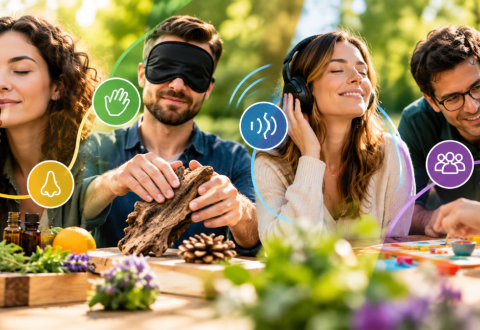
A challenge can use historical photographs, objects from the past, cultural references, music, advertisements, technology, or events that marked different eras.
Personal memory can become a source of information for the group.
But it does not necessarily mean that the oldest participant will know the answer.
The challenge is built so that everyone can contribute.
Generation X: a bridge between worlds
Generation X can be incorporated into the storytelling as a generation that lived through a long technological and social transformation.
It is possible to design challenges that alternate analog and digital tools.
A paper map leads to a digital clue.
A photograph must be compared with a contemporary version.
A recorded message must be interpreted through an application.
The group must continuously move from one language to another.
Millennials: creativity and digital culture
For Millennials, the format can introduce activities related to storytelling, digital communication, content production, photography, video, and social creativity.
A team could, for example, receive a mission:
to tell Rome in 60 seconds.
But the result does not depend only on the ability to use a smartphone.
You need to decide what to tell, choose the point of view, assign roles, organize the filming, and build a story.
Technology therefore becomes a tool.
The team remains the protagonist.
Generation Z: new languages and new perspectives
Generation Z can bring contemporary languages into the game, familiarity with digital tools, and fast, visual ways of communicating.
Even in this case, however, the goal is not to confirm a stereotype.
A well-designed activity can put a very young participant in the position of having to listen to the experience of a more senior colleague.
And at the same time it can put the senior colleague in the position of relying on a digital skill owned by a younger colleague.
This is exactly where the bridge is formed.
Generation Bridge activities
The heart of the format is represented by the activities.
There is no single test that works for all companies.
The program can be built by combining different difficulty levels and different languages.
1. Generational Treasure Hunt
A real intergenerational treasure hunt.
Each team receives a set of clues.
Some are digital.
Others are analog.
Some require memory.
Others require observation.
Still others require orientation skills.
A photograph can lead to a square.
A QR code can contain a recording.
A sentence can hide a historical reference.
An object can become the key to solving the final enigma.
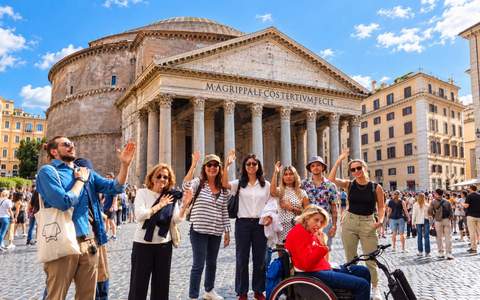
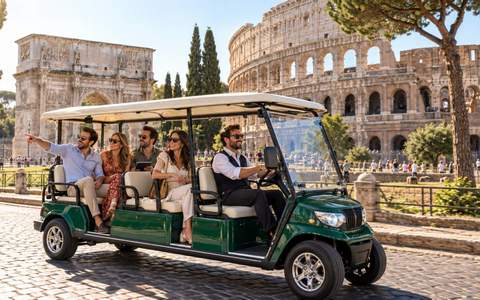
In Rome, a format like this can be built across locations such as Piazza Navona, Campo de’ Fiori, the Pantheon, or other points in the historic center.
In this way, the city becomes a large experiential map.
2. Analog vs Digital Challenge
One of the most interesting activities can put two worlds side by side, comparing them without opposing them.
On one side:
-
paper;
-
maps;
-
photographs;
-
codes;
-
objects;
-
handwriting.
On the other side:
-
smartphone;
-
QR code;
-
video;
-
digital tools;
-
research;
-
multimedia content.
The team must use both systems.
The solution is not found only online.
And it is not found only on paper.
You need to combine the information.
The implied message is simple:
no single language is enough on its own.
3. Rome Generations in One Shot
Rome can become the set for an intergenerational photography challenge.
The format can connect to an activity like Rome in One Shot, turning it into a mission dedicated to collaboration between generations.
Each team receives a set of themes.
“Rome yesterday and today.”
“A tradition reinterpreted.”
“The future of the city.”
“An image that tells the story of teamwork.”
“Four generations, one team.”
Participants must decide together how to represent the theme.
Who takes the shots?
Who interprets?
Who directs?
Who chooses the location?
Who builds the story?
In just a few minutes, a simple photograph becomes an exercise in communication, negotiation, and creativity.
4. The Story Exchange
This activity starts with the person.
Each participant receives a question.
“What is the first technology you used to work?”
“What is a professional change that taught you something?”
“Which invention has most changed the way you work?”
“Which skill would you like to learn from a colleague from another generation?”
The answers are shared within the team.
After that, the team must turn them into a shared story.
You do not tell it as four separate people anymore.
You tell it as one team.
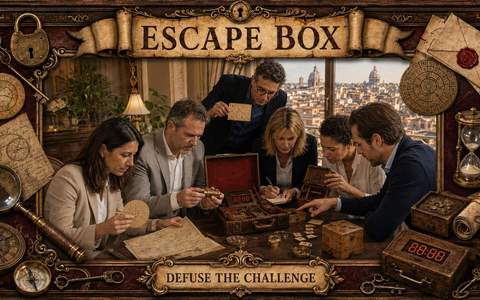
5. Generational Escape Challenge
An escape challenge can be built specifically to alternate codes and languages.
One task might require interpreting a paper document.
The next one might use a digital device.
A third might require logical skills.
The fourth could be based on communication.
The final solution comes only by putting all the information together.
It is a particularly interesting model because it prevents a single skill from dominating the entire experience.
6. Future Lab: designing the future together
In this case, the teams receive a mission:
“Imagine the company in ten years.”
Each group must design a product, a service, or a future work environment.
But there is a rule.
The project must integrate at least one idea from each generation represented in the team.
The final phase includes a presentation.
This is where creativity, listening, synthesis, communication, and public speaking come into play.
Generation Bridge in Rome: when the city becomes the fourth component of the team
One of the advantages of organizing an intergenerational Team Building in Rome is the ability to use the city as a narrative element.
Rome has places capable of representing the past, the present, and the future.
It is a perfect feature for a concept based on dialogue between generations.
Piazza Navona: the past that continues to live
Piazza Navona is one of the most recognizable places in baroque Rome and still today preserves the shape of the Stadium of Domitian.
For the Generation Bridge, it can become the starting point for a mission dedicated to the relationship between past and present.
A historical photograph.
An architectural detail.
Some research.
A contemporary element.
The team must connect information from different eras.
Villa Borghese: movement, creativity, and collaboration
Villa Borghese offers large green spaces, paths, monuments, museums, and cultural places.
It is a particularly suitable venue for a format that alternates movement and creative activities.
One part of the group can handle orientation.
Another can handle storytelling.
Another can handle photographic documentation.
The route thus becomes a metaphor for collaboration.
MAXXI: dialogue with the future
The MAXXI – National Museum of the 21st Century Arts is instead a natural reference for a challenge dedicated to innovation, creativity, and new languages.
A mission can ask participants to observe an artwork or a space and turn it into an idea for the company’s future.
The question becomes:
“What can we learn from the way contemporary culture interprets the future?”
Centrale Montemartini: when different eras coexist in the same space
The Centrale Montemartini is particularly interesting for the Generation Bridge concept because it connects industrial archaeology and Roman art.
Industrial machinery, architecture, and ancient artifacts coexist in the same environment.
It is almost a perfect metaphor for the format.
Old and new do not necessarily have to replace each other.
They can coexist.
They can complement each other.
They can produce something new.
The venue can therefore become the ideal setting for a challenge based on observation, storytelling, and innovation.
From Team Building to reverse mentoring
Generation Bridge can also become an opportunity to introduce a very interesting dynamic: reverse mentoring.
Normally, we think of mentoring as a transfer of knowledge from the more experienced professional to the younger one.
Reverse mentoring changes the direction.
Knowledge becomes circular.
One person can teach professional experience.
Another can share digital skills.
Another can explain new communication tools.
And another can bring a perspective developed over decades of work.
Team Building therefore creates a situation in which everyone can be, at the same time:
mentor and learner.
A challenge: “Teach me something in 10 minutes”
Each participant receives a simple mission:
to teach a skill to a colleague from another generation in ten minutes.
It can be anything.
An application.
A professional trick.
A technique.
An organizational method.
A way to tackle a problem.
A practical skill.
In the end, the person who learned must demonstrate that they can use what they received.
The activity makes a fundamental concept visible:
knowledge does not belong to a generation. It belongs to people.
Why games facilitate collaboration between generations
During a normal workday, people are often defined by their role.
Manager.
Senior.
Junior.
Sales.
Technician.
Responsible person.
When a Team Building begins, these labels become less important.
In front of an enigma, a manager may not have the solution.
In front of a digital challenge, a younger colleague can become the reference point.
During a memory challenge, someone else’s experience can become decisive.
During a creative challenge, a skill that no one had ever noticed can emerge.
It is precisely this change of context that makes the game interesting.
The role changes, the person remains
A good Team Building does not need to prove that one generation is better than another.
It should create situations in which roles can change.
The leader can become a follower.
The expert can become a learner.
The young person can become a mentor.
The more silent colleague can become a strategist.
The manager may need to listen.
The new hire may have the decisive idea.
This mechanism makes the Generation Bridge particularly useful also for companies that are dealing with organizational transformation processes.
How to design an effective Generation Bridge
To work, the format must be built with care.
It is not enough to put together people of different ages.
You need to design activities in which differences can actually become useful.
1. Avoid stereotypes
Skills should not automatically be assigned to generations.
“The young person is good with technology.”
“The senior knows the past.”
These are simplifications.
The game must allow people to surprise the group.
2. Alternate physical, creative, and cognitive activities
A balanced program can include:
-
problem solving;
-
creativity;
-
orientation;
-
photography;
-
storytelling;
-
technology;
-
communication;
-
manual activities;
-
strategic challenges.
This increases the chance that different skills will have room to shine.
3. Continuously change roles
Each challenge should offer the opportunity to take on a different role.
Leader.
Observer.
Strategist.
Creative.
Communicator.
Coordinator.
Executor.
4. Plan a final debriefing
The most important moment can come after the game.
The team gathers.
Dynamics are observed.
Decisions are analyzed.
Moments are identified in which a skill made the difference.
And, above all, the experience is transferred into the professional world.
The final question could be:
“What did we learn today that we can bring to the office tomorrow?”
Generation Bridge and corporate inclusion
Dialogue between generations can fit into a broader inclusion project.
A workplace in which people with different ages, experiences, skills, and backgrounds collaborate can benefit from opportunities where differences are lived out concretely, not just stated.
Team Building can become an experimental space.
It is not only about collaboration.
Collaboration is put to the test.
It is not only about listening.
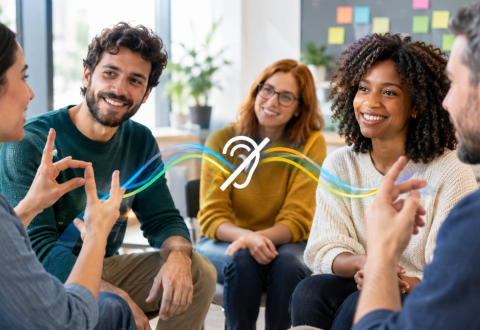
Listening becomes necessary to solve the mission.
It is not only about valuing skills.
Skills become truly decisive.
The Generation Bridge as a business experience
A convention can present a strategy.
A workshop can transfer knowledge.
A meeting can make decisions.
A Team Building can do something different:
create a situation in which people must collaborate to achieve a common goal.
Generation Bridge uses this dynamic exactly.
It does not ask generations to become the same.
It asks them to become complementary.
And this difference is fundamental.
Because an organization does not need identical people.
It needs people who can bring different perspectives together.
One team, four generations, one shared mission
Let’s imagine the final moment.
The teams are gathered.
On the table there are photographs, notes, maps, and objects used during the challenges.
Someone remembers a solution found at the beginning.
Another person discovers that an apparently insignificant detail was fundamental.
A colleague explains how another person taught them something.
One participant admits:
“I never would have thought of this.”
And maybe that is the sentence that best represents the Generation Bridge.
Because the real goal is not to prove that one generation can do something better than another.
It is to discover that when people share different experiences and perspectives, they can reach solutions that they would not have found individually.
Boomers, Gen X, Millennials, and Gen Z can speak different languages.
Team Building creates a space in which those languages can become part of the same story.
A story made of experience and innovation.
Of memory and the future.
Of technology and relationships.
Of different skills.
But above all, of one single word:
together.
FAQ – Generation Bridge and intergenerational Team Building
What is the Generation Bridge?
It is a Team Building format designed to encourage collaboration between people from different generations through creative, strategic, digital, physical, and narrative activities.
Is the format suitable for Baby Boomers, Gen X, Millennials, and Gen Z?
Yes. The activities can be designed to engage participants at the same time with different ages and professional experiences.
Are the activities based on generational stereotypes?
No. Generations can be used as a narrative element, but the challenges must highlight individual skills and promote collaboration without automatically assigning certain abilities to an age group.
Where can a Generation Bridge be organized in Rome?
The format can be carried out in company locations, outdoor spaces, museums, historic villas, or through an urban game in the center of Rome. Piazza Navona, Villa Borghese, MAXXI, and Centrale Montemartini can offer different settings for customized activities.
Is it possible to include digital tools?
Yes. QR codes, smartphones, video, photography, digital maps, and other tools can be integrated with analog challenges to create activities in which technology and experience work together.
Can the Generation Bridge be customized for the company?
Yes. The program can be built based on the number of participants, company goals, event duration, venue, and the desired level of involvement.
If you want to experience this or other similar ones, click here—you’ll find our proposals:
Request a free quote and receive all the information about your Team Building experience.
Request a free quote and receive all the information about your Team Building experience.