

































Why use gamification in companies? How play improves teams, motivation, and results
There comes a moment during many business meetings when attention drops. Ideas slow down, engagement decreases, and participation becomes passive. Then all it takes is a change in perspective.
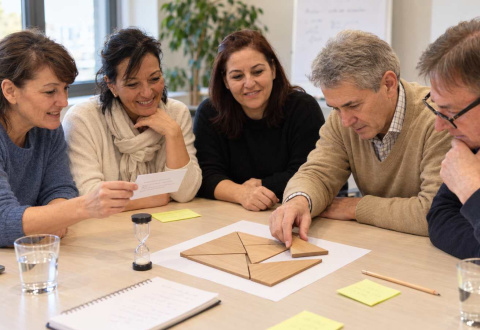
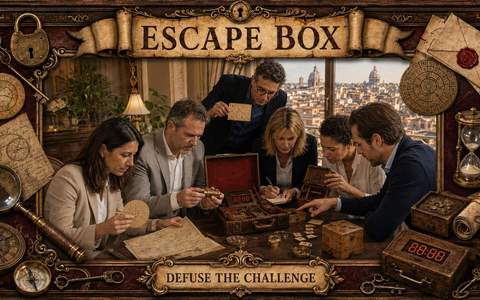
A team challenge. A puzzle to solve. A mission to complete within a set time. Suddenly people start collaborating, discussing, noticing details, making decisions, and supporting one another. The energy changes completely.
This is the principle of gamification: using typical game dynamics to achieve concrete goals, improving people’s engagement and promoting learning through experience.
In recent years, gamification has become one of the most effective tools for team building, corporate training, and the development of cross-cutting skills. And a city like Rome, with its historic districts, its monuments, and its outdoor spaces, is the ideal place to turn teamwork into a memorable experience.
What is gamification?
Gamification consists of applying elements typical of games – such as missions, objectives, points, levels, challenges, and rewards – to non-game contexts, like the world of work.
The goal isn’t to “make employees play,” but to encourage positive behaviors through engaging experiences.
When a person faces a challenge in a safe and fun environment, they tend to participate with greater enthusiasm, developing skills that will also be useful in everyday work.
Why gamification works in companies
It naturally involves people
Play is a universal form of learning.
During a gamification activity, participants don’t experience the experience as an obligation, but as an exciting challenge. This increases attention and fosters genuine participation.
It strengthens teamwork
Game dynamics require continuous collaboration.
Each group member brings different skills, ideas, and perspectives, helping to achieve the shared goal.
Improves problem solving
The tests require teams to observe, analyze information, form hypotheses, and make decisions quickly.
These are skills that also find direct application in professional activities.
Encourages shared leadership
During a challenge, leadership naturally shifts based on the skills required.
Whoever has a particular ability leads the group during that phase, leaving room for other members in the next moments.
Gamification as a team-building tool
When it’s included in a team-building program, gamification becomes an extremely effective tool.
The activities can include:
-
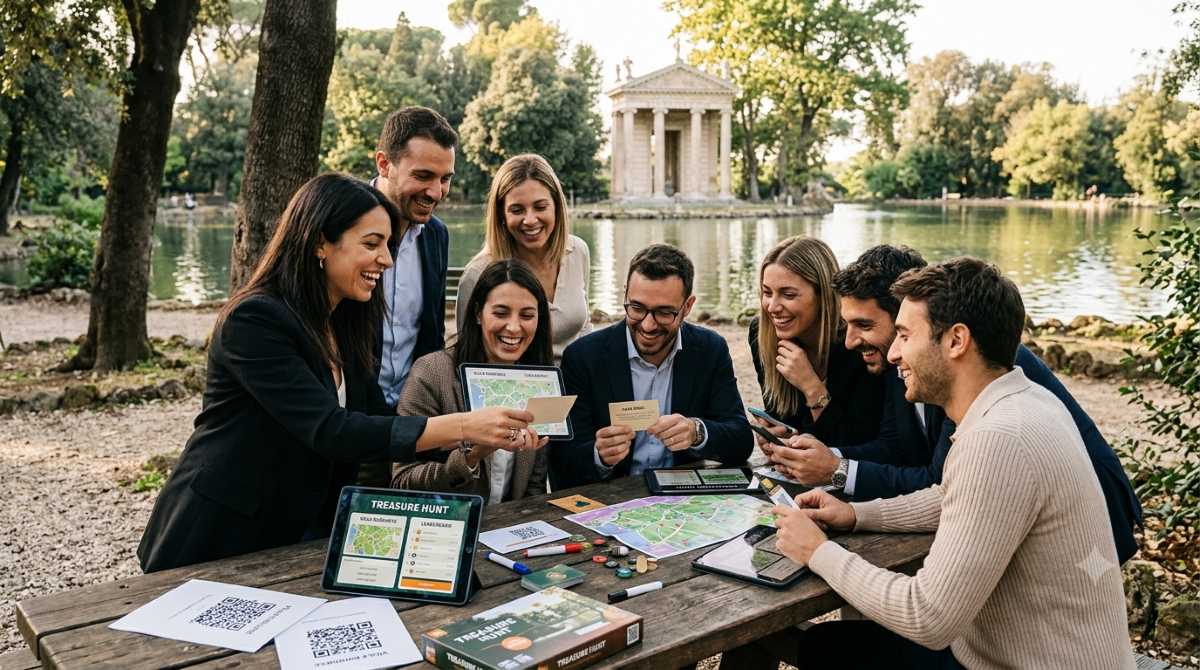
treasure hunts;
-
urban escape games;
-
photo challenges;
-
time-based missions;
-
interactive quizzes;
-
creative challenges;
-
experiential routes.
Each challenge is designed to promote communication, listening, trust, and collaboration.
Rome: a city that makes the game even more engaging
Few places in the world offer such rich historical and cultural heritage that it can naturally turn into a huge playing field.
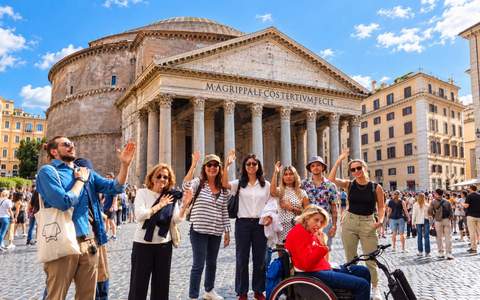
The Historic Center makes it possible to build missions between Piazza Navona, the Pantheon, and Campo de’ Fiori, where every monument can become a clue to interpret.
Trastevere offers alleys, courtyards, and views that are perfect for exploration and observation activities.
Villa Borghese makes it possible to alternate dynamic games and reflection moments immersed in greenery.
The EUR, with its modern architecture and wide spaces, is ideal for large corporate events and team challenges.
Even places like Castel Sant’Angelo, the Gianicolo, the Garden of Oranges, and the Coppedè District can become perfect settings for gamification experiences capable of surprising even those who already know Rome.
The key elements of effective gamification
Clear missions
Each team must know its objective and understand the game rules immediately.
Difficulty levels
The challenges should be progressive, keeping motivation high without causing frustration.
Immediate feedback
Knowing whether you’re going in the right direction keeps participation high.
Collaboration before competition
Competition makes the game more engaging, but the real goal remains collaboration among team members.
Memorable experience
Every activity should leave positive emotions, helping build shared memories.
Digital gamification and live activities
Today, gamification can integrate technological tools that make the experience even more engaging.
Among the most used solutions we find:
QR Codes
They allow you to unlock clues, videos, and exclusive content.
Smartphones and tablets
They turn the city into an interactive platform through maps, quizzes, and missions.
Augmented reality
Adds virtual elements to the real environment, increasing engagement.
Real-time leaderboards
Boost motivation without losing sight of collaboration.
Benefits for businesses
Organizations that use gamification often report improvements in many organizational aspects.
Among the main benefits we find:
Higher motivation
People participate enthusiastically and face challenges with a positive attitude.
More effective communication
Teams learn to share information and strategies quickly.
Development of soft skills
Leadership, time management, creativity, listening, and decision-making ability emerge spontaneously during the game.
More positive workplace atmosphere
Sharing engaging experiences strengthens relationships between colleagues and increases the sense of belonging.
Experiential learning
Skills are acquired through action, making training more effective than traditional methods.
When to use gamification
Gamification is especially suitable during:
-
corporate events;
-
conventions;
-
meetings;
-
incentives;
-
onboarding of new employees;
-
training pathways;
-
team-building days.
Each activity can be customized according to business goals, the number of participants, and the available time.
Conclusion
Gamification shows that learning, collaborating, and achieving important objectives doesn’t necessarily mean giving up fun.
When the game is designed with method and specific goals, it becomes a tool capable of transforming people’s behavior, improving communication, and strengthening team spirit.
In a city like Rome, where history, culture, and unique settings offer endless possibilities, every square, every park, and every district can become part of an engaging experience. It’s not the game itself that makes the difference, but the way the game connects people—bringing out talent, trust, and collaboration.