




























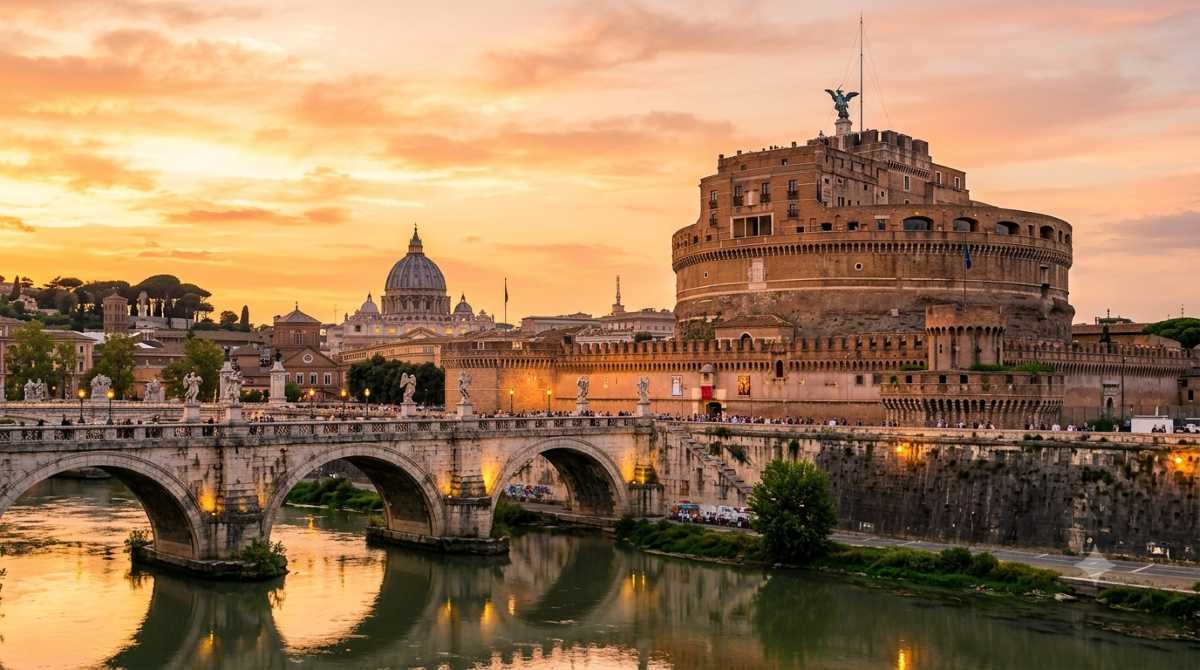
Castel Sant'Angelo: from mausoleum to fortress, a journey through the history of Rome
A monument that has changed shape over the centuries
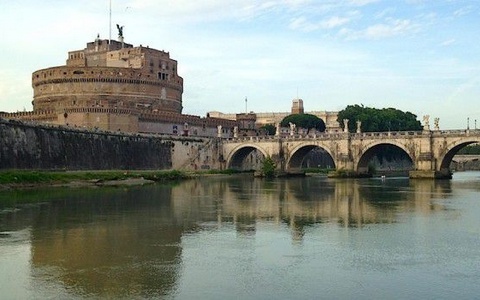
Few places tell the story of Rome like Castel Sant'Angelo. Born as an imperial mausoleum, transformed into a military fortress, a papal residence, a prison, and today a museum, this extraordinary building represents one of the symbols of the City Eternal’s ongoing evolution.
While walking along the Ponte Sant'Angelo, among the angel statues sculpted by Gian Lorenzo Bernini and his school, it’s impossible not to picture the Roman emperors, the pontiffs, the soldiers, and the pilgrims who, over the centuries, crossed this place full of charm and mystery.
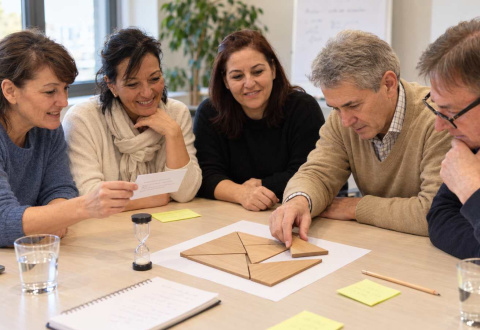
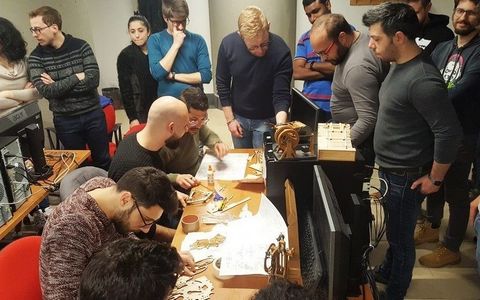
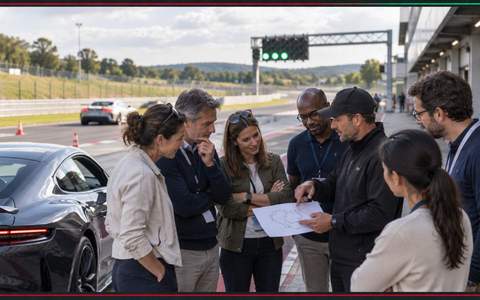
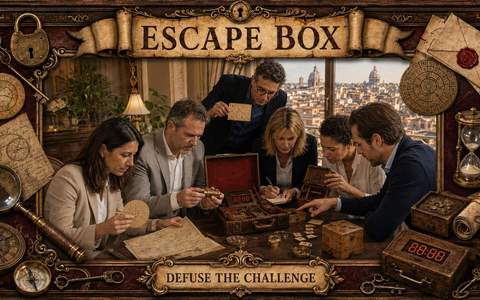
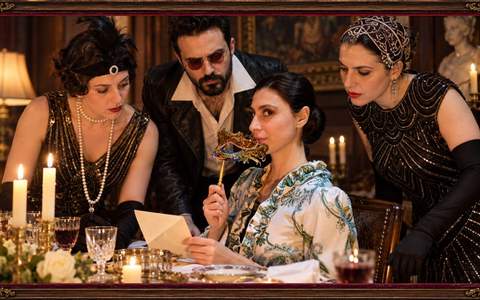
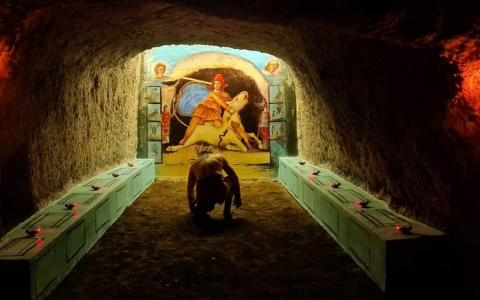
Today, Castel Sant'Angelo is also an ideal stop for a team building experience, where history, culture, and collaboration come together in an engaging journey of riddles, curiosities, and team activities.
From an emperor’s ashes to the fortress of the Popes
Adrian’s mausoleum
The history of Castel Sant'Angelo begins in the 2nd century AD, when the emperor Adrian had an imposing mausoleum built to house his remains and those of the imperial family.
Facing the Tiber, the monument represented one of the greatest symbols of Rome’s power.
Over the centuries, however, the fate of the building changed radically.
From funerary monument to defensive bastion
During the Middle Ages, the mausoleum was incorporated into the city walls and turned into a strategic fortress for the defense of the city.
Later, the Popes connected it to the Vatican through the famous Passetto di Borgo, the elevated corridor that allowed them to take refuge in case of danger.
Even today, this passage remains one of the most fascinating elements of Roman history.
Rome tells its stories at every step
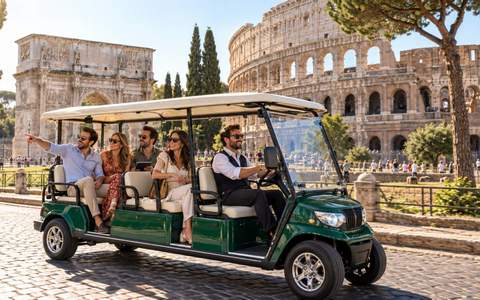
A team building activity near Castel Sant'Angelo makes it possible to experience Rome from a different perspective.
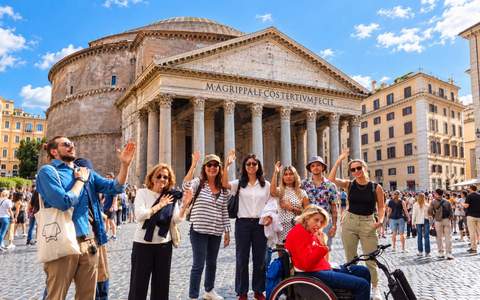
From the castle, you can easily reach some of the city’s most iconic places: St. Peter’s Square, Via della Conciliazione, Piazza Navona, the Pantheon, Campo de’ Fiori, and the evocative neighborhood of Trastevere.
Each stop can become a mission, each monument an enigma to solve, each alley a new discovery.
It’s exactly this combination of culture and play that makes the journey engaging and memorable.
What you will discover
During the experience, you can:
-
learn the true history of Castel Sant'Angelo;
-
discover the mysterious Passetto di Borgo;
-
observe hidden details of Ponte Sant'Angelo;
-
listen to curiosities about emperors and Popes;
-
explore some of the most evocative places in Rome’s historic center;
-
take on team challenges inspired by the city’s history.
A legend that crosses the centuries
The name "Castel Sant'Angelo" comes from an episode handed down through tradition.
In 590 AD, during a terrible plague epidemic, Pope Gregory the Great led a prayer procession through Rome. Reaching the mausoleum of Adrian, the legend says that he saw the Archangel Michael appear on top of the building as he put his sword back into its sheath—a gesture interpreted as the sign that the plague was ending.
From that moment on, the mausoleum became Castel Sant'Angelo, the name it still keeps today.
This story continues to fascinate millions of visitors and makes the monument one of the capital’s most symbol-rich places.
The experts’ point of view
Historians consider Castel Sant'Angelo one of Europe’s most extraordinary buildings for its ability to tell almost two thousand years of history without ever losing its symbolic purpose.
For this reason, it is an ideal stop within cultural itineraries and team building activities: the historical setting fosters curiosity, participation, and emotional engagement—key elements in experiential learning.
Why include it in a Team Building
A treasure hunt or an interactive route near Castel Sant'Angelo allows participants to develop skills such as collaboration, observation, problem solving, and communication.
Each clue invites the group to compare ideas, share thoughts, and find solutions together—turning the history of Rome into a tangible experience of personal and professional growth.
This is precisely the added value of team building: learning while having fun, in a setting that continues to surprise for almost two thousand years.
Conclusion
Castel Sant'Angelo is not only one of Rome’s most spectacular monuments.
It is the symbol of a city capable of reinventing itself, adapting to change, and turning every era into a new chapter of its own story.
Discovering this place through a team building activity means experiencing Rome authentically, sharing emotions, and building memories that will accompany the team long after the day spent together.