


































Cooking Team Building: far more than a simple dinner
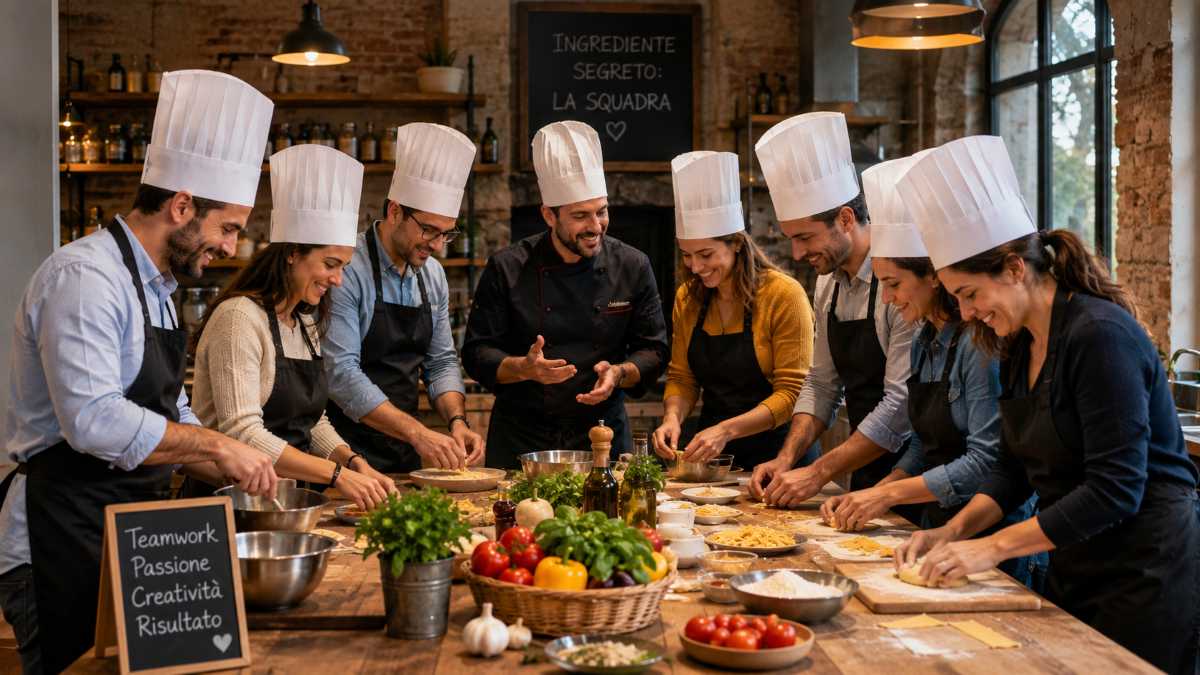
The scent of freshly prepared pasta, the sound of pots and pans, the laughter as you roll out dough and the satisfaction of sharing the dish you made together. Cooking Team Building is far more than a get-together moment: it’s an experience that turns an improvised group into a close-knit team.
In the kitchen, as in business, no one can achieve the result alone. Each participant has a role, every gesture affects the work of others, and final success depends on the ability to collaborate, communicate, and adapt to unexpected events.
In Rome, the city that symbolizes Italian culinary culture, Cooking Team Building becomes a journey through traditions, flavors, and human relationships—one that leaves an authentic, lasting memory.
Why cooking together strengthens the team
Culinary activities are one of the most effective Team Building formats because they engage the mind, manual skills, and emotions all at once.
In the kitchen, there are no rigid hierarchies.
Managers, executives, and colleagues work side by side, sharing the same goal.
Each person brings their own skills to the table.
Someone handles the ingredients.
Someone manages the timing.
Someone takes care of the presentation.
Someone encourages the group during difficult moments.
Just like it happens in the workplace.
A story that starts with an apron
Luca looks at the table full of flour.
He has never made fresh pasta.
Next to him there’s a colleague he barely knows.
On the other side of the counter, the marketing manager is trying to figure out how to close the ravioli.
The first jokes break the ice.
Someone laughs.
Someone else suggests a better technique.
Hands begin working together.
In just a few minutes, the group stops talking about work.
They focus on the shared result.
When it’s time to taste the dish they’ve prepared together, everyone understands that real success isn’t the flavor of the pasta.
It’s the collaboration that was born along the way.
That’s the heart of Cooking Team Building.
More than a cooking lesson
A lab for collaboration
Preparing a dish requires organization, communication, and trust.
Each phase depends on the previous one.
If an ingredient is missing or the timing is off, the entire result changes.
That’s why Cooking Team Building becomes a perfect metaphor for teamwork.
The skills you develop are many:
-
collaboration;
-
shared leadership;
-
time management;
-
effective communication;
-
creativity;
-
problem solving;
-
active listening.
Emotions are built around a table
The value of sharing
Eating together is one of the oldest gestures in human history.
The table removes distance.
It encourages dialogue.
It builds trust.
During a Cooking Team Building, each dish tells a story.
Each recipe represents the contribution of the whole team.
The final moment of tasting becomes a celebration of shared work.
Rome: the ideal capital for Cooking Team Building
Very few cities can offer a culinary heritage comparable to Rome’s.
Roman culinary tradition becomes an integral part of the experience.
Preparing recipes that symbolize the city means immersing yourself in its culture.
Among the most loved specialties we find:
-
fresh pasta;
-
handmade ravioli;
-
fettuccine;
-
cavatelli;
-
gnocchi;
-
supplì;
-
tiramisu;
-
traditional desserts.
Every preparation is a fun, engaging challenge.
From historic markets to the kitchen: a journey through tradition
POIs that inspire the experience
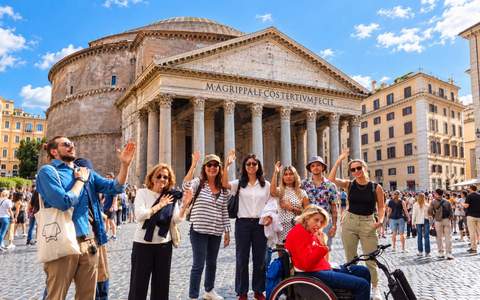
Many Cooking Team Building sessions begin with a walk through some of the emblematic places of Roman food culture.
Among the most fascinating we find:
Campo de’ Fiori
Historic market where colors, scents, and local products tell the story of Roman cuisine.
Testaccio
Considered the neighborhood of Rome’s culinary tradition, it still preserves its popular and culinary soul.
Trastevere
Its historic trattorias and the alleyways full of atmosphere are the meeting point between history and flavors.
Jewish Ghetto
A place where Roman tradition meets a centuries-old culinary culture, famous for iconic dishes such as artichokes alla giudia.
The kitchen becomes a metaphor for the company
Every recipe teaches something
Planning
Each team must organize timing and activities.
Communication
Information must be shared continuously.
Leadership
Each participant can lead the group in a different phase.
Problem Solving
Unexpected events are part of the kitchen.
Knowing how to react together is the real added value.
Trust
Delegating some tasks to colleagues becomes essential.
Gamification at the stove too
Many Cooking Team Building sessions introduce game elements that increase engagement.
Teams can receive special missions, mysterious ingredients, or timed challenges.
A final jury evaluates creativity, collaboration, organization, and the presentation of the dish.
The goal isn’t just to win.
It’s to learn how to work better together.
Why everyone likes Cooking Team Building
One of the most appreciated features of this activity is its inclusiveness.
No culinary skills are required.
Each participant can contribute according to their own abilities.
Those who cook.
Those who organize.
Those who plate the food.
Those who coordinate.
Those who support the group.
Everyone becomes the star.
The real secret ingredient is teamwork
Recipes can change.
Ingredients can be different.
Locations can be transformed.
What remains is the shared experience.
Cooking Team Building shows that collaboration is built through the simplest actions.
Kneading together.
Laughing at a mistake.
Solving an unexpected problem.
Sharing the result.
That’s how a simple culinary activity turns into one of the most effective tools for building strong professional relationships, improving the workplace atmosphere, and strengthening the sense of belonging.
Because the best dish isn’t the one made by the best cook.
It’s the one made by a team that has learned to collaborate.