













































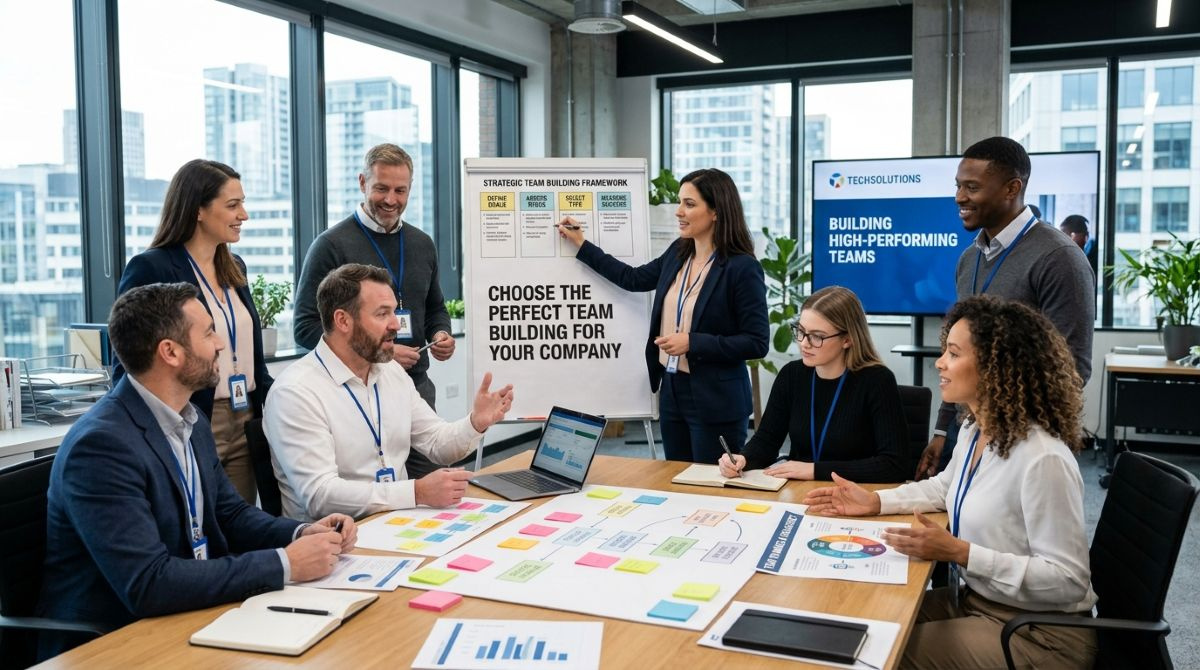
How to choose the perfect Team Building for your company
Choosing a Team Building may seem simple.
You look for an engaging activity, you find an interesting proposal, you set a date, and that’s it.
But organizing an experience that is truly effective requires something more.
Because the perfect Team Building for a company isn’t necessarily the most spectacular, the most competitive, or the most original. It’s the one that manages to involve the right people, at the right time, with an experience that aligns with the organization’s objectives.
A group that needs to improve communication will have different needs than a team that has just been formed. An international company might look for an activity that introduces Rome to its collaborators, while a group that works together every day may need to break out of routine and take on a completely new challenge.
So the question shouldn’t be only:
“Which Team Building do we choose?”
But above all:
“What does our team truly need?”
With that answer, you can start building an experience capable of turning a few hours spent together into a shared memory and, above all, into a concrete opportunity for growth.
The perfect Team Building doesn’t exist: there’s the right one for your team
Let’s imagine two companies.
The first has just onboarded new collaborators. People know each other very little, departments still work separately, and there’s a need to build relationships.
The second, instead, is made up of a consolidated group. Colleagues have worked together for years, but routine has made some dynamics predictable and communication isn’t always effective.
Offering the same activity to both groups might not be the best choice.
An effective Team Building is born from the ability to adapt the experience to the people.
Before choosing the activity, choose the goal
Every project should start with a fundamental question:
What do we want to achieve?
Goals can be very different:
-
improve communication;
-
encourage collaboration;
-
develop problem solving;
-
integrate new employees;
-
strengthen trust;
-
stimulate leadership;
-
increase engagement;
-
celebrate a result;
-
build relationships between people who don’t work together much;
-
offer a fun moment after a meeting or a convention.
Having a clear goal makes it easier to choose with greater awareness.
A fun activity can certainly create enthusiasm, but if it’s completely disconnected from the group’s needs, it risks remaining just a nice memory.
A well-designed Team Building, on the other hand, manages to combine engagement, experience, and meaning.
Know your team: the first step to choosing well
Before deciding to organize a treasure hunt, a cooking Team Building, an outdoor activity, or a creative challenge, it’s useful to observe the group.
Not all teams react in the same way.
There are people who love competition and others who prefer collaborative activities. Some groups are used to working together, while others only meet occasionally.
There are international teams, groups made up of people of different ages and backgrounds, and companies where different departments need to learn to communicate better.
Questions to ask yourself before organizing a Team Building
To choose the most suitable experience, it can help to start with a few elements:
-
How many people will participate?
-
Do the people already know each other?
-
What is the current level of collaboration?
-
Are there international teams?
-
Is the main goal educational, relational, or celebratory?
-
How much time is available?
-
Should the activity take place indoor or outdoor?
-
Does the group prefer a dynamic challenge or a more relaxed experience?
-
Is the event part of a meeting, a convention, or an incentive?
The answers help define the format.
And often they allow you to avoid one of the most common mistakes: choosing the activity before you’ve understood the group’s needs.
Outdoor or indoor? The choice depends on the experience you want to create
One of the first doubts concerns the location where the Team Building will take place.
Is it better to do an outdoor activity or an indoor experience?
The answer isn’t always the same.
Outdoor Team Building: movement, discovery, and spontaneous dynamics
Outdoor activities allow participants to step out of their usual environment and experience a new space.
In Rome, the possibilities are particularly numerous.
The historic center can turn into a large playground, while parks and historic villas can offer ideal spaces for challenges, strategic activities, and team games.
Rome as a location for Team Building
A route can pass through some of the city’s most fascinating POIs.
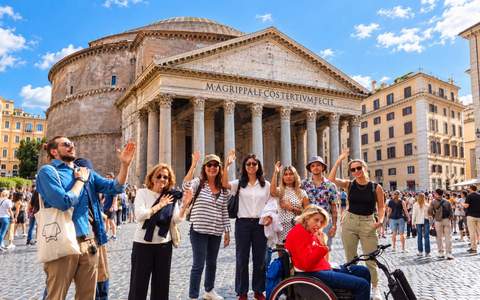
The Pantheon can become a stop to reach through clues and trials. Piazza Navona can turn into a strategic point in a treasure hunt. The alleys around Campo de' Fiori can test your sense of direction.
An activity can then guide the teams toward Castel Sant'Angelo, along the Tiber, or lead them through green areas like Villa Borghese.
In these cases, the city isn’t just the backdrop of the experience.
It becomes part of the challenge.
When to choose an outdoor activity
An outdoor Team Building can be especially suitable when you want to:
-
encourage movement;
-
create a dynamic experience;
-
involve large groups;
-
introduce Rome to Italian or international participants;
-
use gamification;
-
alternate competition and collaboration;
-
get out of the business routine.
Indoor Team Building: creativity, relationships, and comfort
Not all experiences necessarily have to take place outdoors.
An indoor activity can be equally engaging and offer a more controlled setting.
Cooking Team Building, creative workshops, investigative games, music activities, and collaborative challenges can turn a room, a historic venue, or a dedicated space into an environment for play and sharing.
When to choose an indoor activity
An indoor Team Building can be the ideal solution when:
-
the available time is limited;
-
the activity is included within a meeting;
-
the group wants a more contained experience;
-
creative activities are planned;
-
you want to avoid uncertainty related to weather conditions;
-
the event takes place in a specific venue.
So the choice shouldn’t be between outdoor and indoor in an absolute sense.
It should depend on the goal and on the type of experience you want participants to live.
Competition or collaboration? The right balance makes the difference
Competition can be a powerful element of engagement.
A timed challenge, a leaderboard, or a mission to complete can increase the group’s energy.
But competition must be carefully designed.
A Team Building shouldn’t create divisions that are hard to overcome once the activity ends.
Competition that brings people together
The most effective experiences are often the ones where participants must collaborate within their own team to face an external challenge.
That’s the principle behind many gamification activities.
People have a shared goal.
They must organize themselves, assign tasks, share information, and make decisions.
Competition becomes a tool to stimulate collaboration.
Not the other way around.
Choose a Team Building based on the skills you want to develop
Every activity highlights different dynamics.
For this reason, it’s helpful to match the format to the skills you want to stimulate.
If the goal is to improve communication
Activities in which information is distributed among participants can be effective.
No one person alone has all the necessary elements.
To achieve the goal, communication is essential.
Treasure hunts, investigative games, and mystery-based challenges can work very well.
If the goal is to develop problem solving
It’s useful to choose experiences that present obstacles, unexpected situations, and decisions.
It’s not enough to just follow instructions.
The group must analyze a situation and find a solution.
If the goal is to increase trust
The activities should create a situation where people truly depend on each other’s collaboration.
Trust isn’t built through a statement.
It grows by living through situations where others’ contributions become necessary.
If the goal is to stimulate creativity
Art workshops, music activities, cooking experiences, and creative challenges can allow people to express themselves outside their usual professional roles.
Sometimes it’s precisely by observing a colleague in a completely different context that you discover skills that remain invisible in the office.
Duration matters: how long should a Team Building last?
There’s no perfect duration.
There are short activities, ideal for completing a meeting, and more structured programs that can take up a whole day.
The important thing is that the time is proportionate to the goal.
Can a short activity be effective?
Yes—especially when the goal is to create energy, encourage interaction, or provide an engaging moment during a corporate event.
A challenge lasting just a few hours can be intense and memorable.
When to choose a full day?
A longer program allows you to build a more structured experience.
It’s possible to alternate moments of activity, reflection, discovery, and socializing.
For example, a day in Rome might begin with a meeting, continue with a treasure hunt among the POIs in the historic center, and end with a dinner or a food-related activity.
In this way, the Team Building becomes part of a broader narrative.
Team Building in Rome: choose an activity that highlights the destination
When the event takes place in Rome, the city offers an extraordinary opportunity.
The Team Building can be designed using the territory.
A team can move between squares and monuments, solve history-related riddles, and discover places they would normally never visit.
A route through the Capital’s POIs
Let’s imagine an international group.
Many participants are coming to Rome for the first time.
Instead of offering a traditional guided tour, people are divided into teams and given a mission.
The route can lead to the Pantheon, pass through Piazza Navona, reach Campo de' Fiori, and continue toward the Tiber.
Every location becomes a stop.
Every stop includes a challenge.
Every challenge requires collaboration.
In the end, participants won’t just have visited Rome.
They will have experienced it together.
And that’s exactly what makes an experiential activity easier to remember.
Personalization: the real secret of an effective Team Building
A standard Team Building can be fun.
A customized Team Building can become meaningful.
Personalization can involve different aspects:
-
company goals;
-
number of participants;
-
duration;
-
activity language;
-
level of competition;
-
type of challenges;
-
venue;
-
event theme;
-
company messages.
A company can decide to include elements related to its own history, values, or an important project.
In this way, the activity becomes even closer to the people taking part.
Budget shouldn’t be the only criterion for choosing
The cost is naturally an important factor.
But choosing a Team Building exclusively based on price can be limiting.
It’s more useful to evaluate the ratio between investment and experience.
A well-organized activity should take into account the design, group management, materials, the venue, personalization, and the overall quality of the experience.
So the question isn’t only:
“How much does it cost?”
But also:
“What kind of experience are we offering our team?”
A Team Building represents a moment when the company invests in people.
And people mainly remember what they experienced firsthand.
Mistakes to avoid when choosing a Team Building
Even a potentially interesting activity can lose effectiveness if it’s designed without a clear vision.
Choosing only because it “seems fun”
Fun is important, but it should be paired with a goal.
Not considering the characteristics of the group
A highly competitive activity might not be suitable for all teams.
It’s important to know the participants.
Ignoring timing and logistics
A perfect experience on paper must be feasible in practice.
Travel, duration, and organization must be carefully planned.
Forgetting personalization
Even small details can make an activity much more engaging.
Assuming everyone must participate in the same way
Each person can contribute differently.
An effective Team Building creates opportunities where different skills can emerge.
How to tell if you chose the right Team Building?
The answer doesn’t depend only on the final standings or the number of photos taken during the event.
A Team Building has achieved its goal when, once the activity is over, people keep talking about it.
When they remember a decision made together.
When they share a funny moment.
When they discover something new about their colleagues.
And above all, when the experience has created new opportunities for relationships.
The perfect Team Building isn’t the one that tries to completely change a company in just a few hours.
It’s the one that manages to ignite something.
A conversation.
A new trust.
A different perspective.
A shared memory.
The perfect Team Building starts with a question
In the end, choosing the right activity means putting people at the center.
Before the venue.
Before the challenge.
Even before the activity.
You need to ask who the participants are, what they experience every day, and what kind of experience could help them—at least for a moment—step out of their usual roles.
Maybe the team needs to run together toward a goal.
Maybe they need to pause and listen to each other.
Maybe they need to learn how to make decisions.
Or simply, they need to live through an experience that reminds everyone that behind roles, meetings, and objectives there are people.
And when people experience something together, they often start to get to know each other a bit better.
That’s where the real teamwork work can begin.
FAQ: how to choose the perfect Team Building for a company
How do I choose the best Team Building for my company?
The first step is to define the goal of the experience. Communication, collaboration, problem solving, integration, or simple engagement all require different activities.
Is an outdoor or indoor Team Building better?
It depends on the group, the time of year, the available duration, and the goals. Outdoor activities encourage movement and discovery, while indoor ones can be ideal for workshops, creativity, and more contained moments.
Is the Team Building also suitable for international groups?
Yes. Activities can be designed in different languages and turn Rome itself into part of the experience through routes, POIs, challenges, and gamification activities.
How many people can participate in a Team Building?
Activities can be adapted for small groups, large corporate teams, conventions, and big corporate events, by choosing the format and the team breakdown that fits best.
How much time is needed to organize a Team Building?
It depends on the complexity of the event, the number of participants, the venue, and the level of personalization required. Careful planning makes it possible to build a more effective experience.
Is it possible to customize a Team Building activity?
Yes. You can adapt challenges, content, duration, language, venue, and dynamics to the company’s objectives and the group’s characteristics.




