


























Escape Museum: Team Building in the museum where to win you must find the painting and escape
Imagine walking into a museum.
All around you are artworks, inventions, extraordinary machines, and ideas that have crossed the centuries.
But this time, you’re not there just to look.
Something has changed.
You have a mission.
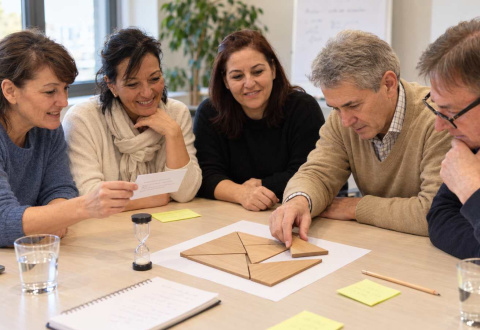
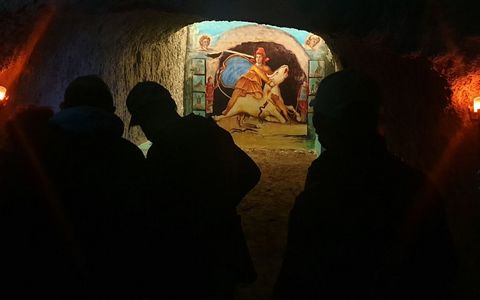
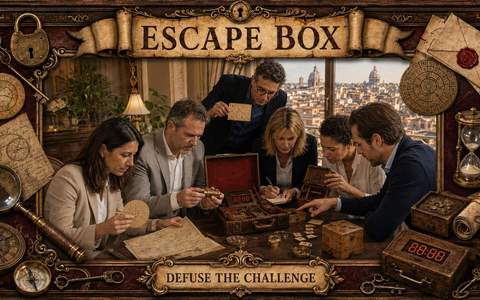
Sometime somewhere inside the museum, the solution to a mystery is hidden. A famous painting must be found. To succeed, you’ll need to carefully observe what surrounds you, interpret clues, solve codes, decipher riddles, and make decisions together.
But time is running out.
And as the hands keep moving, one thing becomes increasingly clear: no one can do it alone.
Welcome to Escape Museum, the Team Building that turns a real museum into a big team game.
An experience inspired by the world of escape rooms, but with one fundamental difference: the challenge doesn’t take place in a room specially built for the game.
It takes place inside a museum dedicated to one of the greatest geniuses in history.
And to complete the mission, you must learn to look at what everyone else sees… but from a different perspective.
Escape Museum: when the museum becomes a playground
A museum is normally a place where you observe.
You walk.
You listen.
You discover.
With Escape Museum, participants become active players in the experience.
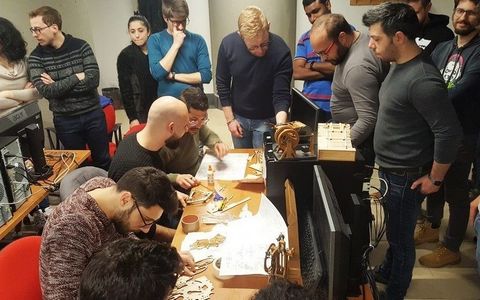
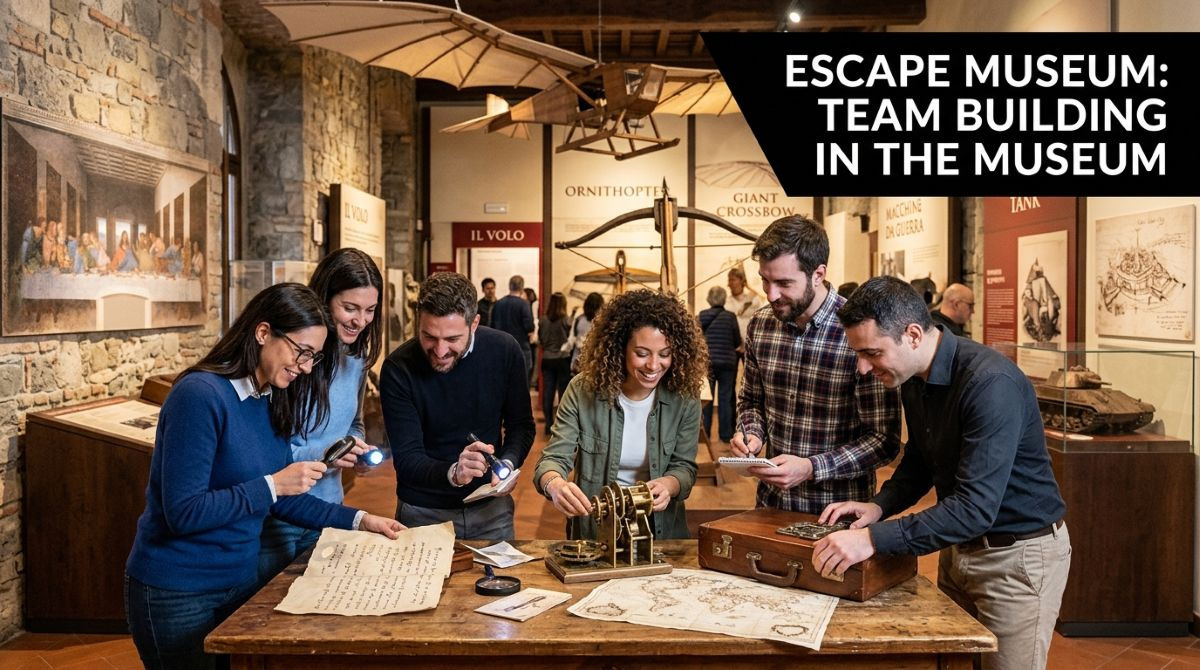
The exhibition route turns into an investigative scenario. Leonardo’s machines, the details of the display, and the elements along the path can become part of the challenge.
Every detail may hide an answer.
Every answer can open a new path.
Every mistake can make you lose time.
One mission, many clues, and a single goal
Participants are involved in a real mission.
The objective is to find a famous painting and manage to complete the escape within the set time.
To do this, teams must:
-
search for clues inside the museum;
-
solve codes and riddles;
-
interpret information that appears mysterious;
-
put together the insights of the different participants;
-
make decisions within limited time;
-
collaborate to reach the final solution.
The team that manages to complete the mission first takes the win.
But the real challenge isn’t only about finishing first.
It’s understanding how to turn a group of people into a team capable of reasoning together.
A Team Building inspired by escape games, but in a real place
Escape rooms have won over millions of people over the years thanks to a simple and irresistible mechanism: you lock a group inside a scenario and ask them to find a way out.
Escape Museum brings this logic into a completely different dimension.
Here there are no artificial walls built to simulate a story.
There is a real museum.
There is a historical context.
And there is the world of Leonardo da Vinci.
When ingenuity meets teamwork
Even today, Leonardo da Vinci remains one of the most fascinating figures in history.
Artist, inventor, observer, and experimenter, he devoted his life to finding connections between disciplines that seem far apart.
Art and science.
Anatomy and engineering.
Observation and imagination.
It’s precisely this ability to connect different elements that becomes one of the keys of the experience.
To solve a riddle, you need to change perspective
A clue may seem insignificant.
A detail may look accidental.
An answer may be in front of everyone’s eyes, without anyone being able to recognize it immediately.
During Escape Museum, the group must learn to compare different points of view.
One person may notice a detail.
Another may understand its meaning.
A third may connect it to information discovered just a few minutes earlier.
The solution comes from combining the insights.
And this is exactly where the game becomes Team Building.
Time is running out: pressure turns a group into a team
At the beginning of the experience, each participant may have their own method.
There’s someone who wants to observe everything.
Someone who prefers to analyze every single clue.
Someone who looks for a solution right away.
Someone who takes notes.
Someone who needs to discuss things with the others.
But time is limited.
And this condition quickly changes the dynamics.
When collaboration becomes necessary
In a situation with a shared goal and a set amount of time, communication becomes essential.
It’s not enough to find information.
You have to share it.
It’s not enough to have an intuition.
You have to explain it to the others.
It’s not enough to solve a single riddle.
You have to understand how that solution connects to the entire mission.
The risk of working alone
One of the most common mistakes in a group challenge is thinking that the solution has to be found individually.
A participant may be convinced they have the answer.
Another may have discovered a fundamental clue but failed to communicate it.
A third may keep working on a problem that another team member has already solved.
The result?
Lost time.
Escape Museum makes immediately visible a fundamental principle of teamwork: knowledge is useful only when it manages to circulate.
Problem solving, logic, and creativity: the skills that come into play
Escape Museum is an activity that tests the group through different challenges.
There isn’t just one type of intelligence useful for completing the mission.
Logic
Some riddles require analytical and reasoning skills.
You must identify connections, sequences, and relationships.
Observation
Other clues require attention.
A specific detail can make the difference.
An element that seems secondary can turn into the key to keep going.
Creativity
Not always is the most obvious solution the correct one.
Sometimes you need to change perspective.
Make an unusual connection.
Try a different path.
Communication
The team must continuously share what they discover.
Isolated information may seem useless.
But, when combined with another clue, it can become decisive.
The ability to handle pressure
When time gets shorter, the group must avoid chaos.
Organization is needed.
You need the ability to decide which problems to tackle first.
You need someone who keeps an overall view.
These are dynamics that, in different forms, can also emerge in everyday professional life.
The Leonardo da Vinci museum: a location that becomes part of history
Escape Museum takes place in the Leonardo da Vinci exhibition in Rome, inside Palazzo della Cancelleria, in the heart of the city. The venue and the display are not just the backdrop of the activity: they become an integral part of the experience and the search for clues. (Team Building Rome)
Palazzo della Cancelleria: in the historic center of Rome
Palazzo della Cancelleria is located in one of the most fascinating areas of the historic center.
A few steps away, Campo de' Fiori unfolds—an area for meeting, markets, and everyday Roman life.
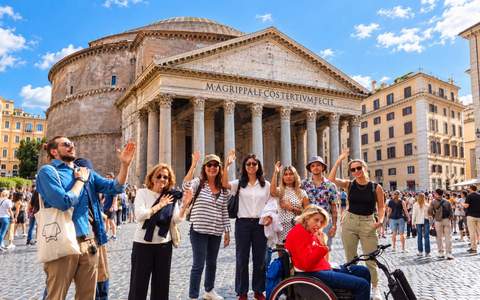
Not far off are also Piazza Navona and the route toward the Pantheon.
This makes Escape Museum an activity that can easily fit into a broader business day, perhaps combined with a city tour, a treasure hunt, an aperitif, or a dinner in the historic center.
A challenge within history
The charm of the experience also comes from the contrast.
On one side, a contemporary game based on logic, riddles, and collaboration.
On the other, the world of Leonardo, a universal symbol of curiosity, observation, and ingenuity.
Participants move through a dimension where history is not simply told.
It becomes part of the game.
What happens when the team faces a problem with no immediate solution?
It’s one of the most interesting moments of the experience.
At the beginning, everyone looks for an answer.
Then the first hypotheses appear.
Someone is convinced they’ve figured it out.
Someone else doesn’t agree.
A clue seems to point in one direction, while a second element suggests the opposite.
This is where the group must decide how to proceed.
The value of different opinions
In an effective Team Building, differences don’t necessarily have to be an obstacle.
They can become a resource.
During Escape Museum, a solution can emerge precisely from the interaction of different interpretations.
The most rational person can analyze the problem.
The most creative person can propose an unexpected connection.
Someone with strong observation skills can spot a detail that others overlooked.
The solution doesn’t belong to just one person
When the group finally manages to get past a riddle, it’s often hard to tell who actually found the answer.
Maybe someone noticed the detail.
Someone else interpreted it.
Another then connected it to the previous clue.
Victory is the result of collaboration.
And that’s one of the most interesting metaphors of the activity.
Competition or collaboration? In Escape Museum you need both
Escape Museum also introduces a competitive element.
Teams go head to head.
Time becomes an opponent.
Every group wants to be the first to complete the mission.
But within each team, competition alone isn’t enough.
To win against others, you must first collaborate with your teammates
It’s a balance very similar to what can exist in many business realities.
Outside, there are goals, markets, and competitors.
Inside, though, the outcome depends on people’s ability to work in the same direction.
During the game, this dynamic becomes immediately evident.
The team that can better organize its resources, communicate quickly, and leverage each person’s strengths increases its chances of success.
Each participant can have a decisive role
It’s not necessary for everyone to do the same thing.
In fact.
In many moments, it’s precisely the spontaneous distribution of roles that makes the group more effective.
There’s someone who observes.
Someone who thinks.
Someone who remembers information.
Someone who connects clues.
Someone who keeps track of time.
Someone who helps maintain high concentration.
Team Building thus becomes an opportunity to observe group dynamics in a context completely different from the office.
Why Escape Museum is a memorable experience
The most effective activities are often the ones that manage to engage people emotionally.
A challenge against the clock creates attention.
A mystery generates curiosity.
An unusual place increases the sense of immersion.
And the chance to reach a goal together creates engagement.
The memory of a shared mission
After the game ends, participants can keep talking about the experience.
Remembering that clue that seemed impossible.
Revisiting the strategy used.
Laughing about a completely wrong solution.
Reliving the moment when, suddenly, everything became clear.
These memories help create a shared narrative.
An experience that continues even after the game
Team Building doesn’t necessarily end when the winning team is announced.
The experience can become a common reference.
A shared episode.
A language the group continues to use even afterwards.
And it’s precisely this continuity that can make a playful experience meaningful also for relationships between people.
For which companies is Escape Museum ideal?
Escape Museum can be an interesting solution for companies looking for an activity:
-
original and different from the classic Team Building;
-
based on riddles and problem solving;
-
able to engage people with different skills;
-
held in an unusual location;
-
suitable for those who want to combine play, culture, and discovery;
-
perfect for a business event in central Rome;
-
engaging also for international teams, thanks to the universal structure of the challenge;
-
ideal as an indoor activity.
The format, in fact, makes it possible to combine different elements into a single experience: game, culture, logic, competition, and collaboration.
Escape Museum: a hidden lesson behind every clue
In the end, the real question isn’t only:
Who managed to escape first?
The most interesting question is another.
How did they do it?
Did they listen to everyone?
Did they distribute tasks well?
Did they manage to change strategy?
Did they share the information?
Did they stay calm when time was about to run out?
Every answer tells something about the group.
Escape Museum is much more than a simple museum visit and much more than a classic escape room.
It’s a challenge in which people must learn to observe, think, and act together.
In a place where Leonardo’s genius keeps reminding us of a fundamental lesson: often, the solution doesn’t come from looking longer.
It comes from looking differently.
And when time is running out and the clues seem to make no sense, a single shared intuition can be enough to change everything.
Because in Escape Museum, the painting isn’t just something to find.
It’s a metaphor for a shared goal.
And to reach it, every team member can have a piece of the solution in their hands.
If you want to experience this or similar ones, click here—you’ll find our proposals:
Request a free quote and get all the information about your Team Building experience.
You can also request a quote and receive all the information about your next Team Building experience.